THE ADVENTURE COLLECTIVE® · Independent discovery and booking for outdoor travel

A high-altitude trek through the Khumbu to Everest Base Camp balances rugged terrain, Sherpa culture and glacier vistas. This 13–14 day teahouse route demands acclimatization, solid fitness and flexible timing for Lukla flights.
A high-altitude trek through the Khumbu to Everest Base Camp balances rugged terrain, Sherpa culture and glacier vistas. This 13–14 day teahouse route demands acclimatization, solid fitness and flexible timing for Lukla flights.
You step off a small aircraft into a high, thin air that feels sharp as a blade—Lukla’s runway drops away and the valley narrows. The Dudh Koshi river calls you down a trail of suspension bridges, stone villages and prayer flags that tap the sky like small colored hands.
Verified experiences and guided adventures in the surrounding area.
Operated by Happyland Treks · Kathmandu, Bagmati Province
You step off a small aircraft into a high, thin air that feels sharp as a blade—Lukla’s runway drops away and the valley narrows. The Dudh Koshi river calls you down a trail of suspension bridges, stone villages and prayer flags that tap the sky like small colored hands.
This classic Khumbu route follows ancient Sherpa trade paths through Sagarmatha National Park, a UNESCO-listed landscape carved by glacial ice and the collision of the Indian and Eurasian plates. Villages—Namche Bazaar, Tengboche, Dingboche—are living nodes of Buddhist culture, monasteries and yak caravans. The geology shifts from river cobble to moraine and glacial ice as the trail rises toward Gorakhshep and the wide, exposed Khumbu Glacier below Everest.
Expect long walking days (5–8 hours typical), steep acclimatization days and tea-house lodging: simple rooms, shared bathrooms and hearty dal bhat. Weather swings fast—sun can warm a ridge while wind slices through layers.
Practical guidance: prioritize gradual ascent and the scheduled acclimatization days; drink frequently, eat well, and watch for headache or breathlessness. Footwear should be sturdy, broken-in boots with good ankle support; gaiters and microspikes are useful above 4,500 m. Flights to and from Lukla are weather-dependent—build buffer days into your schedule.
The summit of the day is Kalapatthar’s sunrise panorama: Everest looms like a relentless presence, glaciers and peaks rearranging perspective. The trek is as much endurance as it is reward—prepare for thin air, long approaches, and the quiet thrill of standing where earth folds upward.
challenging.
13–14 days.
Good cardiovascular fitness with experience in multi-day trekking and the ability to hike 5–8 hours on consecutive days; prior high-altitude exposure recommended.
Typical itineraries are 13–14 days including Kathmandu, a Lukla flight, approach through Namche, acclimatization days and the Gorakhshep/EBC loop with return to Lukla.
No technical mountaineering skills are required for EBC via the standard trail—however, experience with high-altitude trekking and crampon use for icy patches is helpful.
Tea houses offer basic private rooms or dorms, shared bathrooms and simple meals—expect limited hot water and rustic conditions at higher elevations.
Altitude illness is a real risk above 3,000 m; follow acclimatization protocols, ascend slowly, hydrate and descend immediately if symptoms worsen.
The Khumbu is Sherpa homeland and gateway to Everest; modern mountaineering surged after the 1953 ascent by Sir Edmund Hillary and Tenzing Norgay.
Sagarmatha National Park regulates permits and park fees; trekkers should pack out waste, use local services and avoid single-use plastics to reduce impact.
Happyland Treks operates guided outdoor trips and adventures with an emphasis on safety, stewardship, and memorable experiences.
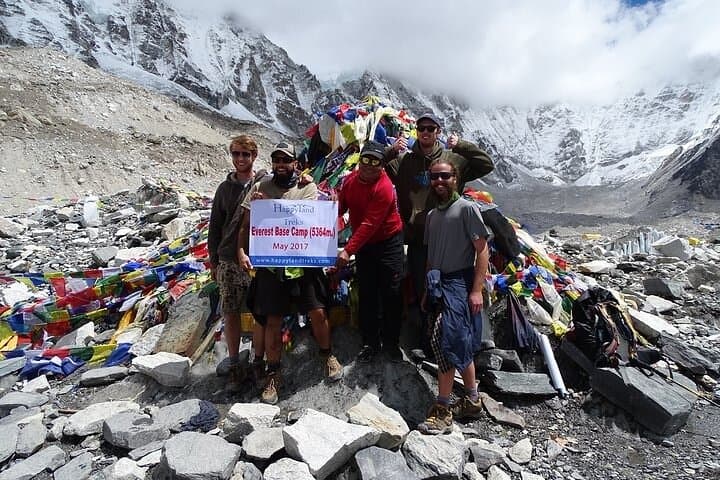
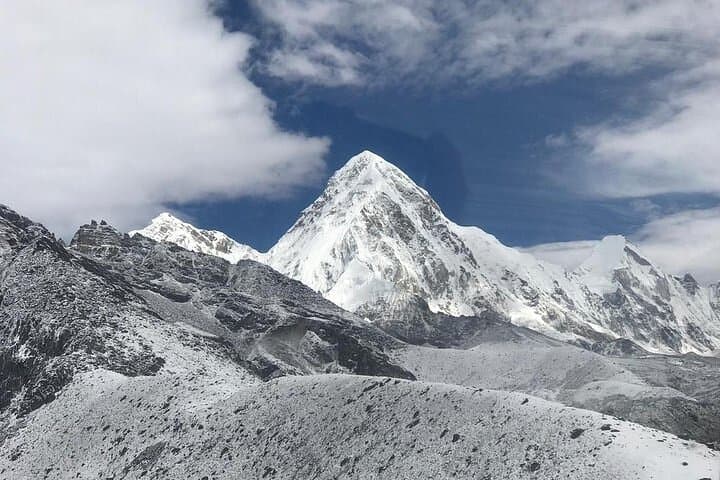
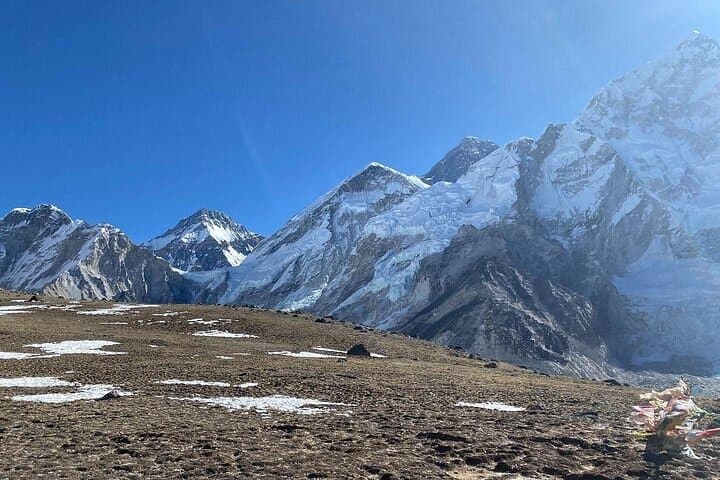
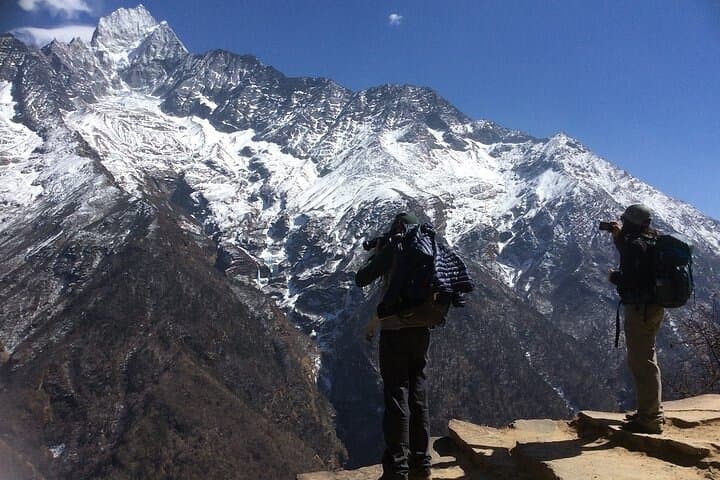
You step off a small aircraft into a high, thin air that feels sharp as a blade—Lukla’s runway drops away and the valley narrows. The Dudh Koshi river calls you down a trail of suspension bridges, stone villages and prayer flags that tap the sky like small colored hands.
You step off a small aircraft into a high, thin air that feels sharp as a blade—Lukla’s runway drops away and the valley narrows. The Dudh Koshi river calls you down a trail of suspension bridges, stone villages and prayer flags that tap the sky like small colored hands.
This classic Khumbu route follows ancient Sherpa trade paths through Sagarmatha National Park, a UNESCO-listed landscape carved by glacial ice and the collision of the Indian and Eurasian plates. Villages—Namche Bazaar, Tengboche, Dingboche—are living nodes of Buddhist culture, monasteries and yak caravans. The geology shifts from river cobble to moraine and glacial ice as the trail rises toward Gorakhshep and the wide, exposed Khumbu Glacier below Everest.
Expect long walking days (5–8 hours typical), steep acclimatization days and tea-house lodging: simple rooms, shared bathrooms and hearty dal bhat. Weather swings fast—sun can warm a ridge while wind slices through layers.
Practical guidance: prioritize gradual ascent and the scheduled acclimatization days; drink frequently, eat well, and watch for headache or breathlessness. Footwear should be sturdy, broken-in boots with good ankle support; gaiters and microspikes are useful above 4,500 m. Flights to and from Lukla are weather-dependent—build buffer days into your schedule.
The summit of the day is Kalapatthar’s sunrise panorama: Everest looms like a relentless presence, glaciers and peaks rearranging perspective. The trek is as much endurance as it is reward—prepare for thin air, long approaches, and the quiet thrill of standing where earth folds upward.