THE ADVENTURE COLLECTIVE® · Independent discovery and booking for outdoor travel

A demanding 19‑day itinerary that pairs the classic Everest Base Camp trek with a guided summit of Island Peak (Imja Tse). Expect high-altitude days, teahouse nights, glacier moraines and Sherpa monasteries en route to panoramic Himalayan summits.
A demanding 19‑day itinerary that pairs the classic Everest Base Camp trek with a guided summit of Island Peak (Imja Tse). Expect high-altitude days, teahouse nights, glacier moraines and Sherpa monasteries en route to panoramic Himalayan summits.
You step off the 35‑minute Lukla flight into thin, glacier-cooled air and the trail immediately pulls you toward the ragged horizon of the Khumbu.
Verified experiences and guided adventures in the surrounding area.
Operated by Ace the Himalaya · Lukla, Solukhumbu District
You step off the 35‑minute Lukla flight into thin, glacier-cooled air and the trail immediately pulls you toward the ragged horizon of the Khumbu.
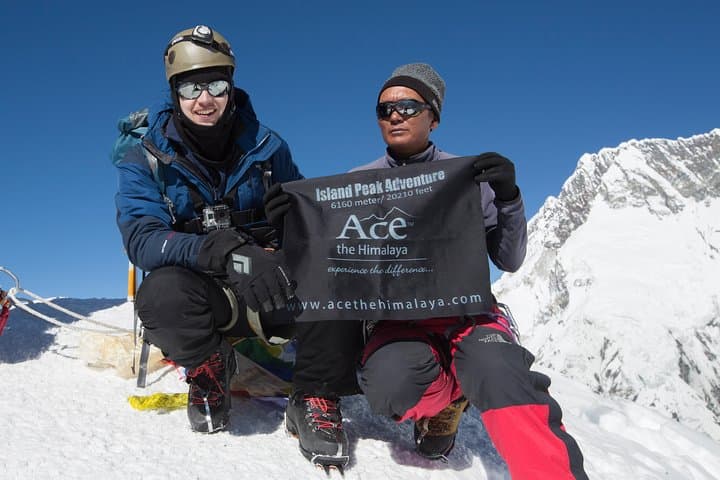
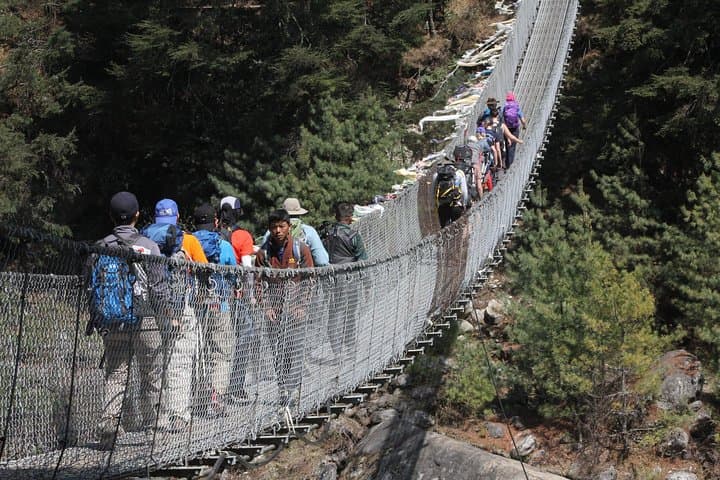
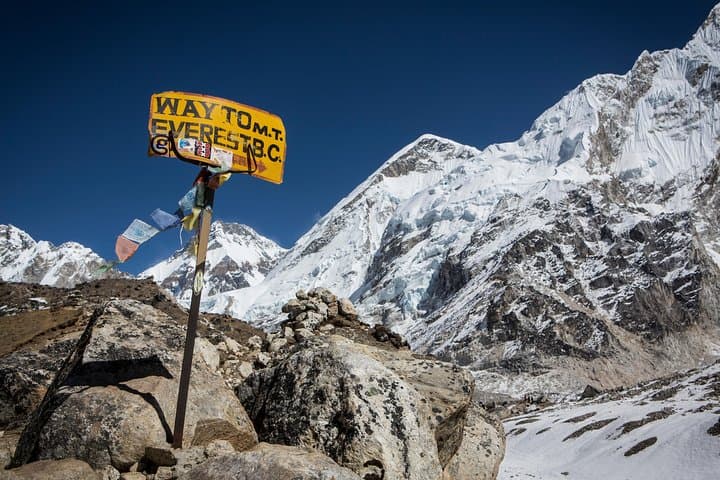
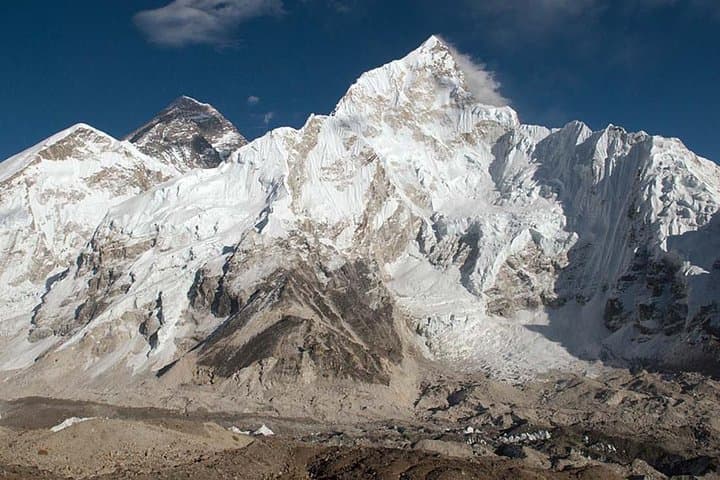
The route threads river gullies, bridges draped in prayer flags and villages carved into steep slopes: Phakding, Namche Bazaar, Tengboche, Dingboche and Lobuche. The itinerary pushes to Everest Base Camp (5,365 m) and Kala Patthar (5,555 m) for crystalline views of Everest, then pivots east into the Imja Valley to bag Island Peak / Imja Tse (6,187 m) — named by Eric Shipton in 1952 because it appears like an island in a sea of ice.
Geology is visible at every step: lateral moraines from the Khumbu Glacier, glacial outwash plains and jagged seracs that define the upper valleys. Culturally the trail travels Sagarmatha National Park (est. 1976, UNESCO since 1979), past mani walls and Tengboche Monastery where morning pujas animate the air.
Practically: expect 3–8 hour walking days, repeated altitude gains reaching 6,187 m on summit day, and teahouse lodging with a two-night tented camp at Island Peak Base Camp. Acclimatization days (Namche, Dingboche) are built in — don’t skip them. Bring layered clothing, a warm sleeping bag, crampons and an ice axe for the climb (training provided), and carry a reliable water-treatment method despite guides using Katadyn filters. Lukla flights are weather-dependent; build buffer days into travel plans.
This itinerary demands solid fitness, careful hydration and patience with mountain weather, but rewards with close-up high-altitude panoramas and a genuine encounter with Sherpa culture.
difficult.
18–19 days.
High level of cardiovascular fitness and endurance; experience with multi‑day trekking at altitude strongly recommended.
You need the Sagarmatha National Park permit and a TIMS card for trekking; Island Peak climbing requires additional climbing permits and potentially a government climbing registration — the operator includes these in the itinerary.
Lukla flights are frequently delayed by mountain weather; the itinerary includes buffer days and operators typically rebook flights the next flyable morning — budget extra time before and after the trek.
You don’t need technical alpinist experience, but you should be comfortable on steep snow slopes; the Sherpa climbing leader provides ropework and crampon training before the summit push.
Teahouse guesthouses with basic hot meals are standard on the route; Island Peak Base Camp uses a tented camp with cooked meals by the support team.
Island Peak was named by Eric Shipton in 1952; the region sits within the Sherpa homeland and Sagarmatha National Park, established in 1976 and a UNESCO site since 1979.
Visitor pressure and waste have been issues; many operators follow Leave No Trace practices, and Sagarmatha Park limits and fees support ongoing conservation and community programs.
Ace the Himalaya operates guided outdoor trips and adventures with an emphasis on safety, stewardship, and memorable experiences.
You step off the 35‑minute Lukla flight into thin, glacier-cooled air and the trail immediately pulls you toward the ragged horizon of the Khumbu.
You step off the 35‑minute Lukla flight into thin, glacier-cooled air and the trail immediately pulls you toward the ragged horizon of the Khumbu.
The route threads river gullies, bridges draped in prayer flags and villages carved into steep slopes: Phakding, Namche Bazaar, Tengboche, Dingboche and Lobuche. The itinerary pushes to Everest Base Camp (5,365 m) and Kala Patthar (5,555 m) for crystalline views of Everest, then pivots east into the Imja Valley to bag Island Peak / Imja Tse (6,187 m) — named by Eric Shipton in 1952 because it appears like an island in a sea of ice.
Geology is visible at every step: lateral moraines from the Khumbu Glacier, glacial outwash plains and jagged seracs that define the upper valleys. Culturally the trail travels Sagarmatha National Park (est. 1976, UNESCO since 1979), past mani walls and Tengboche Monastery where morning pujas animate the air.
Practically: expect 3–8 hour walking days, repeated altitude gains reaching 6,187 m on summit day, and teahouse lodging with a two-night tented camp at Island Peak Base Camp. Acclimatization days (Namche, Dingboche) are built in — don’t skip them. Bring layered clothing, a warm sleeping bag, crampons and an ice axe for the climb (training provided), and carry a reliable water-treatment method despite guides using Katadyn filters. Lukla flights are weather-dependent; build buffer days into travel plans.
This itinerary demands solid fitness, careful hydration and patience with mountain weather, but rewards with close-up high-altitude panoramas and a genuine encounter with Sherpa culture.