THE ADVENTURE COLLECTIVE® · Independent discovery and booking for outdoor travel

Trek classic Khumbu trails to Everest Base Camp, sleep in Sherpa guesthouses, and finish with a helicopter flight over the Khumbu Glacier. This 12-day itinerary balances rigorous high-altitude hiking with cultural stops and an unforgettable aerial return.
Trek classic Khumbu trails to Everest Base Camp, sleep in Sherpa guesthouses, and finish with a helicopter flight over the Khumbu Glacier. This 12-day itinerary balances rigorous high-altitude hiking with cultural stops and an unforgettable aerial return.
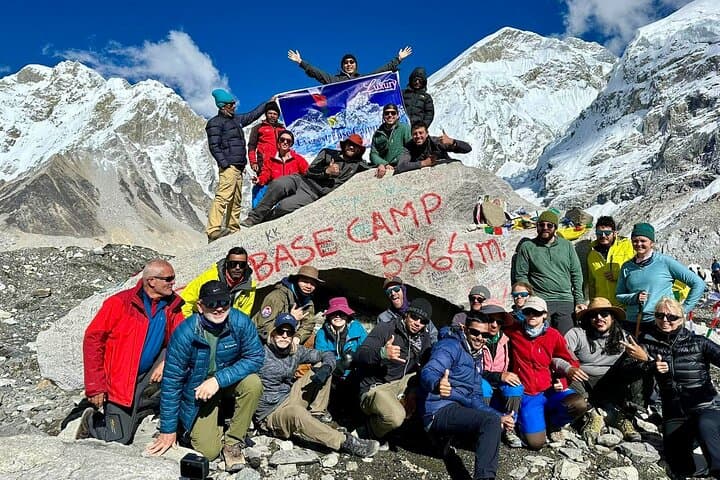
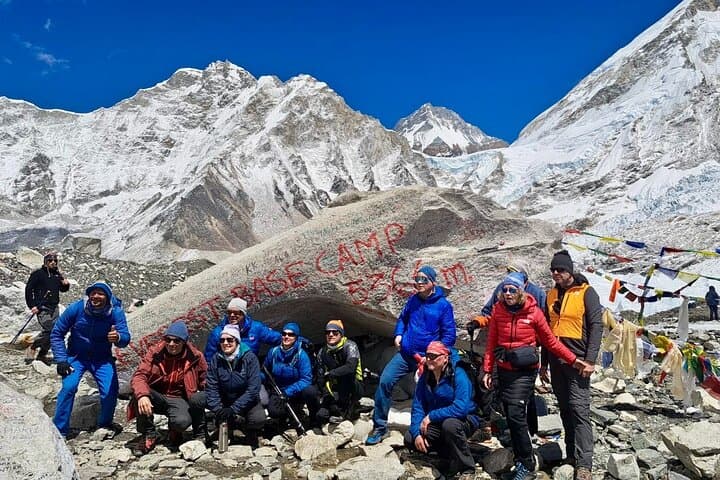
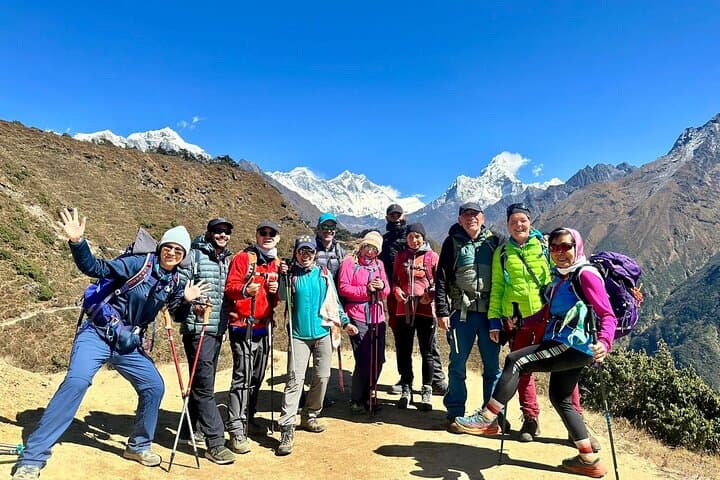
You arrive in Lukla to a runway carved into the mountain and prayer flags snapping in a brittle, high-altitude wind. Each step from Phakding into the Khumbu pulls you higher: rhododendron forests give way to yak pastures, stone-strewn moraines, and the thin blue of Tibetan sky. By Gorak Shep, tents and teahouses hunker under the shadow of glaciers while Everest dominates the horizon, an unblinking ridge of ice and rock.
Verified experiences and guided adventures in the surrounding area.
Operated by Luxury Holidays Nepal Pvt. Ltd. · Kathmandu, Bagmati Province
You arrive in Lukla to a runway carved into the mountain and prayer flags snapping in a brittle, high-altitude wind. Each step from Phakding into the Khumbu pulls you higher: rhododendron forests give way to yak pastures, stone-strewn moraines, and the thin blue of Tibetan sky. By Gorak Shep, tents and teahouses hunker under the shadow of glaciers while Everest dominates the horizon, an unblinking ridge of ice and rock.
This route threads Sherpa villages, Buddhist monasteries, and sections of Sagarmatha National Park—a UNESCO-protected landscape shaped by glaciation and uplift. The trail’s history is human as much as geological: years of mountaineering expeditions established routes and lodges, and local Sherpa culture remains central to every village stop.
Logistics matter: expect flights to Lukla (2,860 m), acclimatization days in Namche Bazaar (3,440 m) and Dingboche (4,410 m), EBC at about 5,364 m, and a sunrise climb to Kala Patthar for panoramic views before boarding the helicopter back to Lukla. Permits (Sagarmatha NP, TIMS) are required and are typically handled by the operator. Nights are in basic guesthouses—hot meals, simple dormitories—and weather can close Lukla flights, so build buffer time.
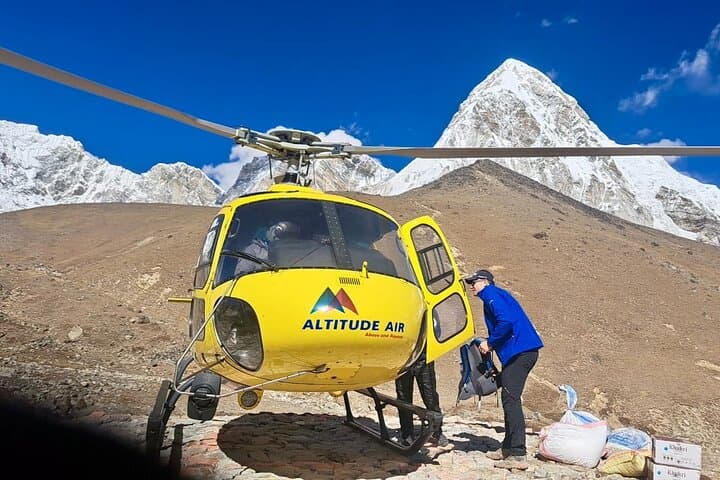
Prepare for altitude, layered cold, and variable trail conditions—rocky ascents, icy patches, and frequent short steep sections. The helicopter return transforms the descent into a scenic finale over the Khumbu Glacier, offering a rare aerial sense of scale. For trekkers who want the classic Everest approach without retracing every step down, this itinerary balances grit, culture, and a dramatic escape by air.
challenging.
12 days.
Good aerobic fitness with experience hiking 6–8 hours a day; must tolerate steep terrain and high altitude.
You should have regular cardiovascular fitness and experience with multi-day hikes; expect 5–8 hours walking on uneven ground and steep sections.
Helicopters operate in variable weather; operators schedule them when conditions allow, but delays can occur—always have contingency plans.
Sagarmatha National Park permit and TIMS card are required and typically arranged by the operator; Pasang Lhamu entry is also included in many packages.
Acute Mountain Sickness is a real risk above 3,000 m; gradual ascent, acclimatization days, hydration, and notifying guides of symptoms are essential.
The Khumbu valley has been home to Sherpa communities for centuries and became central to Himalayan mountaineering after mid-20th-century expeditions that opened routes to Everest.
Sagarmatha National Park protects fragile alpine ecosystems; trekkers should minimize waste, use lodge services, and avoid single-use plastics to reduce impact.
Luxury Holidays Nepal Pvt. Ltd. operates guided outdoor trips and adventures with an emphasis on safety, stewardship, and memorable experiences.
You arrive in Lukla to a runway carved into the mountain and prayer flags snapping in a brittle, high-altitude wind. Each step from Phakding into the Khumbu pulls you higher: rhododendron forests give way to yak pastures, stone-strewn moraines, and the thin blue of Tibetan sky. By Gorak Shep, tents and teahouses hunker under the shadow of glaciers while Everest dominates the horizon, an unblinking ridge of ice and rock.
You arrive in Lukla to a runway carved into the mountain and prayer flags snapping in a brittle, high-altitude wind. Each step from Phakding into the Khumbu pulls you higher: rhododendron forests give way to yak pastures, stone-strewn moraines, and the thin blue of Tibetan sky. By Gorak Shep, tents and teahouses hunker under the shadow of glaciers while Everest dominates the horizon, an unblinking ridge of ice and rock.
This route threads Sherpa villages, Buddhist monasteries, and sections of Sagarmatha National Park—a UNESCO-protected landscape shaped by glaciation and uplift. The trail’s history is human as much as geological: years of mountaineering expeditions established routes and lodges, and local Sherpa culture remains central to every village stop.
Logistics matter: expect flights to Lukla (2,860 m), acclimatization days in Namche Bazaar (3,440 m) and Dingboche (4,410 m), EBC at about 5,364 m, and a sunrise climb to Kala Patthar for panoramic views before boarding the helicopter back to Lukla. Permits (Sagarmatha NP, TIMS) are required and are typically handled by the operator. Nights are in basic guesthouses—hot meals, simple dormitories—and weather can close Lukla flights, so build buffer time.
Prepare for altitude, layered cold, and variable trail conditions—rocky ascents, icy patches, and frequent short steep sections. The helicopter return transforms the descent into a scenic finale over the Khumbu Glacier, offering a rare aerial sense of scale. For trekkers who want the classic Everest approach without retracing every step down, this itinerary balances grit, culture, and a dramatic escape by air.