THE ADVENTURE COLLECTIVE® · Independent discovery and booking for outdoor travel

A high-altitude classic from Lukla to Everest Base Camp, this 15–17 day trek combines rugged moraine, Sherpa culture and panoramic summits. Plan for long days, altitude acclimatisation, and variable mountain weather.
A high-altitude classic from Lukla to Everest Base Camp, this 15–17 day trek combines rugged moraine, Sherpa culture and panoramic summits. Plan for long days, altitude acclimatisation, and variable mountain weather.
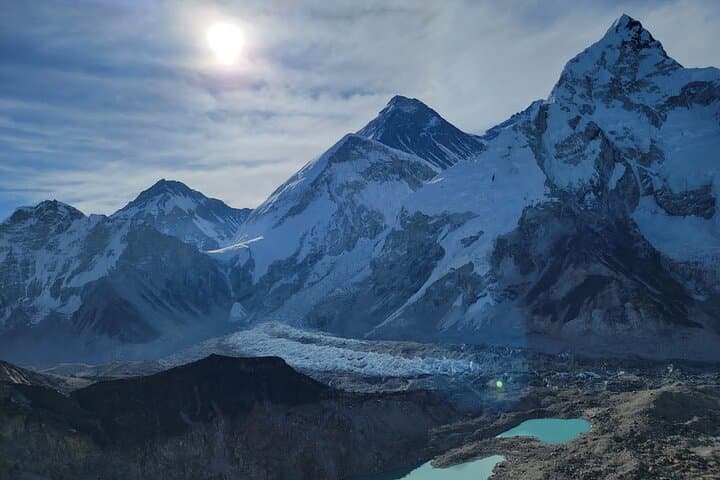
The morning air at 5,500m is thin and bright; you stand on Kala Patthar and the mountain range commands the horizon. Prayer flags snap like a chorus line, the Khumbu Glacier glints below, and Everest—sharp, indifferent—looms beyond a band of serrated peaks.
Verified experiences and guided adventures in the surrounding area.
Operated by Top of The World Treks Pvt.Ltd · Lukla, Province No. 1
The morning air at 5,500m is thin and bright; you stand on Kala Patthar and the mountain range commands the horizon. Prayer flags snap like a chorus line, the Khumbu Glacier glints below, and Everest—sharp, indifferent—looms beyond a band of serrated peaks.
This classic route follows the Dudh Kosi valley from Lukla (2,800m) through Sherpa villages, rhododendron forests, alpine meadows and moraine to Gorak Shep (5,160m) and Everest Base Camp (≈5,364m). The trail traces geological history: uplifted sedimentary and metamorphic rock, active glacial systems and moraine fields carved by ice. Culturally the trek moves through Sagarmatha National Park, where Sherpa monasteries at Tengboche and Khumjung offer insight into Buddhist practice and mountain life.
Expect long walking days—3 to 9 hours on most legs—with total ascent over multiple days from 2,800m to 5,545m (Kala Patthar). Terrain alternates packed dirt, stone staircases, suspension bridges and loose moraine near high camps. Acclimatisation days in Namche and Pheriche are built into the itinerary; altitude, not distance, is the primary challenge.
Practical guidance: carry a layered system, a 4-season sleeping bag for tea-house nights at higher elevations, and 2–3 liters of water with purification options. Pace conservatively, watch for early symptoms of altitude sickness, and keep daily elevation gains modest. Flights to Lukla are weather-dependent; build buffer days. Respect local culture—ask before photographing in villages—and pack out non-biodegradable trash where possible. The route is demanding but structured: with good fitness, proper gear and patience, reaching Base Camp is an achievable, unforgettable high-altitude journey.
challenging.
15–17 days.
Good aerobic fitness with experience on multi-day hikes; able to walk 4–8 hours over uneven terrain daily
No technical climbing skills are required; however, you must be fit for long days at high altitude and comfortable on rocky, uneven trails.
Spring (April–May) and autumn (Sept–Nov) offer the most stable weather, clearer views and active climbing seasons.
Daily trekking ranges from short 3-hour transfers to demanding 8–9 hour days; the itinerary builds acclimatisation days in Namche and Pheriche.
Tea houses are basic: shared rooms, simple heating and fixed menus; standards improve in larger villages like Namche and Lukla.
The Khumbu region is home to the Sherpa people and Sagarmatha National Park (est. 1976), an area central to mountaineering history and early Everest expeditions.
Sagarmatha National Park enforces permit systems and waste rules; visitors should minimize single-use plastics and carry out non-biodegradable waste.
Top of The World Treks Pvt.Ltd operates guided outdoor trips and adventures with an emphasis on safety, stewardship, and memorable experiences.
The morning air at 5,500m is thin and bright; you stand on Kala Patthar and the mountain range commands the horizon. Prayer flags snap like a chorus line, the Khumbu Glacier glints below, and Everest—sharp, indifferent—looms beyond a band of serrated peaks.
The morning air at 5,500m is thin and bright; you stand on Kala Patthar and the mountain range commands the horizon. Prayer flags snap like a chorus line, the Khumbu Glacier glints below, and Everest—sharp, indifferent—looms beyond a band of serrated peaks.
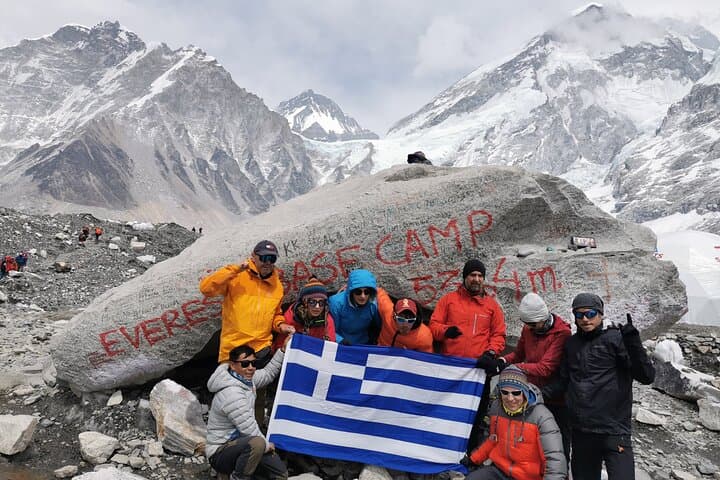
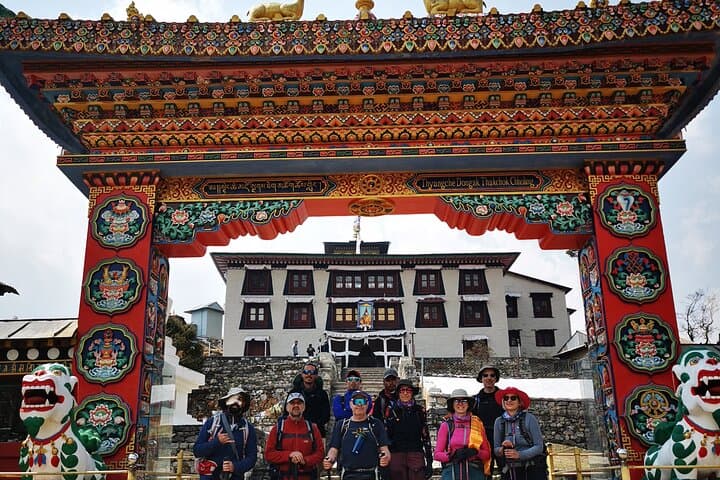
This classic route follows the Dudh Kosi valley from Lukla (2,800m) through Sherpa villages, rhododendron forests, alpine meadows and moraine to Gorak Shep (5,160m) and Everest Base Camp (≈5,364m). The trail traces geological history: uplifted sedimentary and metamorphic rock, active glacial systems and moraine fields carved by ice. Culturally the trek moves through Sagarmatha National Park, where Sherpa monasteries at Tengboche and Khumjung offer insight into Buddhist practice and mountain life.
Expect long walking days—3 to 9 hours on most legs—with total ascent over multiple days from 2,800m to 5,545m (Kala Patthar). Terrain alternates packed dirt, stone staircases, suspension bridges and loose moraine near high camps. Acclimatisation days in Namche and Pheriche are built into the itinerary; altitude, not distance, is the primary challenge.
Practical guidance: carry a layered system, a 4-season sleeping bag for tea-house nights at higher elevations, and 2–3 liters of water with purification options. Pace conservatively, watch for early symptoms of altitude sickness, and keep daily elevation gains modest. Flights to Lukla are weather-dependent; build buffer days. Respect local culture—ask before photographing in villages—and pack out non-biodegradable trash where possible. The route is demanding but structured: with good fitness, proper gear and patience, reaching Base Camp is an achievable, unforgettable high-altitude journey.