THE ADVENTURE COLLECTIVE® · Independent discovery and booking for outdoor travel

From the adrenaline of Lukla’s airstrip to the glacial plain beneath Everest’s flanks, this 15-day Lukla-to-EBC expedition pairs Himalayan culture with high-altitude trekking. Expect long, stony approaches, acclimatization days in Namche, and a final climb to Kala Patthar for sunrise views.
From the adrenaline of Lukla’s airstrip to the glacial plain beneath Everest’s flanks, this 15-day Lukla-to-EBC expedition pairs Himalayan culture with high-altitude trekking. Expect long, stony approaches, acclimatization days in Namche, and a final climb to Kala Patthar for sunrise views.
You step off the tiny plane at Lukla and the air feels thin and immediate — prayer flags snap at the edge of the runway while sherpas sort gear and the trail drops into rhododendron forest and rushing glacial streams.
Verified experiences and guided adventures in the surrounding area.
Operated by Nepal Everest Base Camp Trekking Company Pvt.Ltd · Lukla, Province No. 1
You step off the tiny plane at Lukla and the air feels thin and immediate — prayer flags snap at the edge of the runway while sherpas sort gear and the trail drops into rhododendron forest and rushing glacial streams.
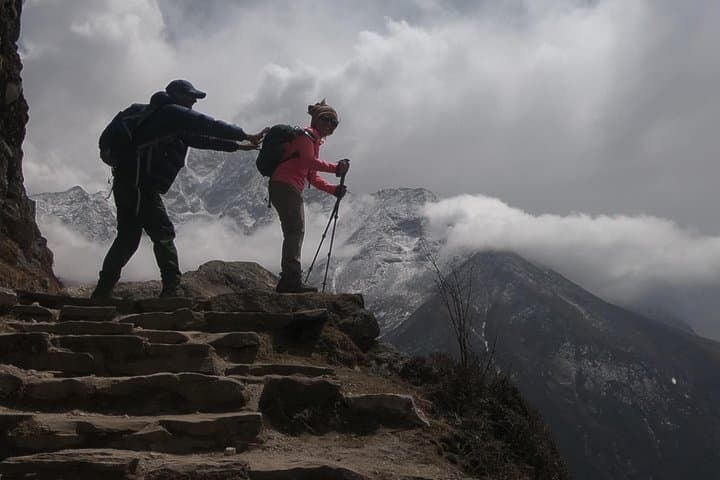
The classic Lukla-to-Everest Base Camp route threads through Sagarmatha National Park, crossing suspension bridges, stone steps and high alpine moraine as it climbs from roughly 2,860 m in Lukla to Everest Base Camp at 5,364 m. The trail follows ancient trade and pilgrimage corridors used by Sherpa communities; monasteries like Tengboche offer cultural rest stops where prayer wheels turn against the wind.
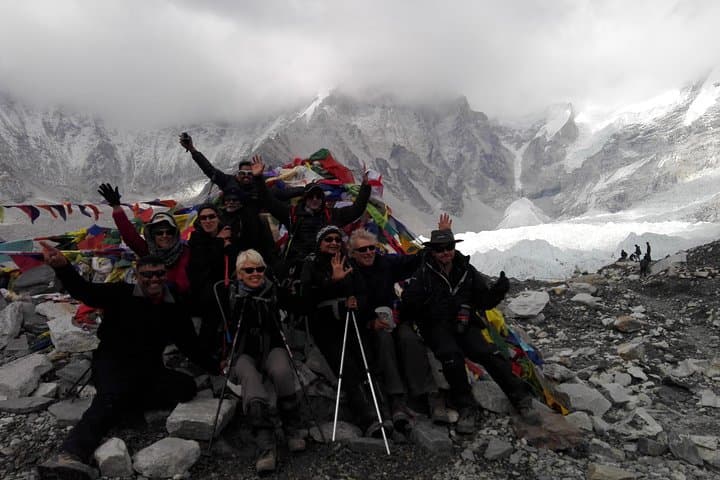
Geologically the route skirts the Khumbu Glacier system; moraines and exposed rock tell a recent story of glacial retreat. Namche Bazaar is the logistical and social hub — a place to acclimatize, swap route news and sample local tea houses. Kalapathar, a short climb above Gorakshep, provides the clearest sunrise view of Everest’s south face.
Expect long days on uneven terrain, total trekking distance of about 130 km round-trip, and net elevation gain to EBC of roughly 2,500 m from Lukla. The itinerary runs about 14–15 days on the trail with built-in acclimatization days.
Practical guidance: prioritize gradual ascent and hydration, carry cash for tea-house services, and plan for Lukla flight delays or alternatives through Ramechhap. Good footwear, a warm down layer, and a sleeping bag rated for subzero nights will keep the trip safe and comfortable. Timing your departure for spring or autumn improves weather windows and visibility.
challenging.
14–15 days.
Good cardiovascular fitness and experience with multi-day hikes at altitude; ability to walk 5–8 hours daily on uneven terrain
Yes — you need a TIMS card and Sagarmatha National Park permit; these are typically arranged by your operator before or upon arrival in Lukla/Namche.
Lukla flights are short but weather-sensitive; cancellations are common and operators may reroute flights via Ramechhap or add buffer days.
Symptoms include headache, nausea and fatigue; prevention focuses on slow ascent, hydration, rest days, and seeking descent/medical help if symptoms worsen.
Spring (March–May) and autumn (September–November) offer the clearest weather windows and most stable trail conditions.
Sherpa villages along the route grew as trade and mountaineering hubs in the 20th century; the region’s modern trekking culture accelerated after early Everest expeditions.
Sagarmatha National Park enforces permits and waste rules; minimize impact by carrying out non-burnable waste and using refillable water systems.
Nepal Everest Base Camp Trekking Company Pvt.Ltd operates guided outdoor trips and adventures with an emphasis on safety, stewardship, and memorable experiences.
You step off the tiny plane at Lukla and the air feels thin and immediate — prayer flags snap at the edge of the runway while sherpas sort gear and the trail drops into rhododendron forest and rushing glacial streams.
You step off the tiny plane at Lukla and the air feels thin and immediate — prayer flags snap at the edge of the runway while sherpas sort gear and the trail drops into rhododendron forest and rushing glacial streams.
The classic Lukla-to-Everest Base Camp route threads through Sagarmatha National Park, crossing suspension bridges, stone steps and high alpine moraine as it climbs from roughly 2,860 m in Lukla to Everest Base Camp at 5,364 m. The trail follows ancient trade and pilgrimage corridors used by Sherpa communities; monasteries like Tengboche offer cultural rest stops where prayer wheels turn against the wind.
Geologically the route skirts the Khumbu Glacier system; moraines and exposed rock tell a recent story of glacial retreat. Namche Bazaar is the logistical and social hub — a place to acclimatize, swap route news and sample local tea houses. Kalapathar, a short climb above Gorakshep, provides the clearest sunrise view of Everest’s south face.
Expect long days on uneven terrain, total trekking distance of about 130 km round-trip, and net elevation gain to EBC of roughly 2,500 m from Lukla. The itinerary runs about 14–15 days on the trail with built-in acclimatization days.
Practical guidance: prioritize gradual ascent and hydration, carry cash for tea-house services, and plan for Lukla flight delays or alternatives through Ramechhap. Good footwear, a warm down layer, and a sleeping bag rated for subzero nights will keep the trip safe and comfortable. Timing your departure for spring or autumn improves weather windows and visibility.