THE ADVENTURE COLLECTIVE® · Independent discovery and booking for outdoor travel

A classic high-altitude trek that climbs from Lukla through Sherpa villages and monasteries to Everest Base Camp (5,364 m). This 14-day teahouse route balances acclimatization, culture, and close-up views of the Khumbu Icefall.
A classic high-altitude trek that climbs from Lukla through Sherpa villages and monasteries to Everest Base Camp (5,364 m). This 14-day teahouse route balances acclimatization, culture, and close-up views of the Khumbu Icefall.
The path narrows and the air thins; prayer flags whip at attention as you step onto the high trail toward Everest Base Camp. Early mornings smell of yak butter tea and wood smoke in the teahouses, while ridgelines and glacier faces loom like deliberate hosts, daring you onward. By late afternoon the Khumbu Valley settles into a blue hush and the summit of Sagarmatha (Everest) sits, aloof but insistently present.
Verified experiences and guided adventures in the surrounding area.
Operated by High Camp Adventure · Lukla, Solukhumbu District (Koshi Province)
The path narrows and the air thins; prayer flags whip at attention as you step onto the high trail toward Everest Base Camp. Early mornings smell of yak butter tea and wood smoke in the teahouses, while ridgelines and glacier faces loom like deliberate hosts, daring you onward. By late afternoon the Khumbu Valley settles into a blue hush and the summit of Sagarmatha (Everest) sits, aloof but insistently present.
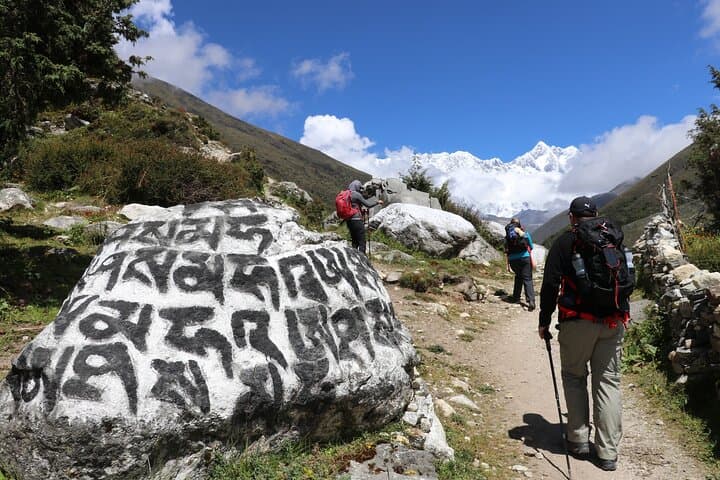
This route follows centuries of Sherpa trade and pilgrimage routes that later supported surveyors and Himalayan expeditions. Geologically the Khumbu is young — uplifted Himalayan thrusts and active glaciers carve steep moraine and polished rock. Culturally, villages like Namche Bazaar and Tengboche are hubs of Sherpa life and Buddhism; mani stones and monasteries punctuate the ascent.
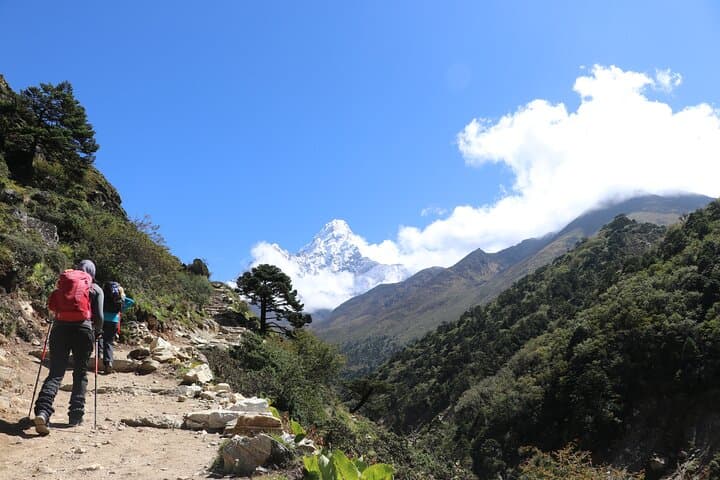
Expect 10–20 km of walking most days on stone steps, packed dirt, and scree with cumulative altitude gain reaching roughly 2,500 m from Lukla to Base Camp (5,364 m). Acclimatization days and steady pacing are essential; mornings and evenings are cold, afternoons can be bright and sun-exposed. Tea-house lodges provide beds and hot meals, but facilities are basic and power is limited.
Practically: fly Lukla in and out (weather-dependent), carry a TIMS permit and National Park pass, and be prepared for 4–7 hours of trekking per day with one or two longer days. Hydrate, layer for rapid temperature swings, and treat altitude with respect—turn back if symptoms worsen. The payoff is direct: EBC’s moraine bowl and the Khumbu Icefall in close view, the kind of mountain encounter that stays with you long after you return to Kathmandu.
challenging.
12–14 days.
Good cardiovascular fitness and prior multi-day hiking experience recommended; be prepared for long days and high altitude.
No — the standard teahouse route to EBC is a high-altitude trek without technical mountaineering; however, it requires good fitness and acclimatization.
Autumn (Sept–Nov) and spring (Mar–May) offer the most stable weather, clearer skies, and best mountain visibility.
Everest Base Camp sits at approximately 5,364 m; trekkers need a Sagarmatha National Park permit and a TIMS card, typically arranged by the operator.
Teahouses provide basic private or dorm-style rooms, shared toilets (often squat), hot meals and tea; electricity and Wi‑Fi are limited and intermittent.
The Khumbu Valley is home to the Sherpa people and became an expedition gateway after early 20th-century surveying and Sir Edmund Hillary’s 1953 ascent bolstered routes and infrastructure.
The trek passes through Sagarmatha National Park, where waste management and responsible fuel use are ongoing concerns; choose operators who follow Leave No Trace and proper waste disposal.
High Camp Adventure operates guided outdoor trips and adventures with an emphasis on safety, stewardship, and memorable experiences.

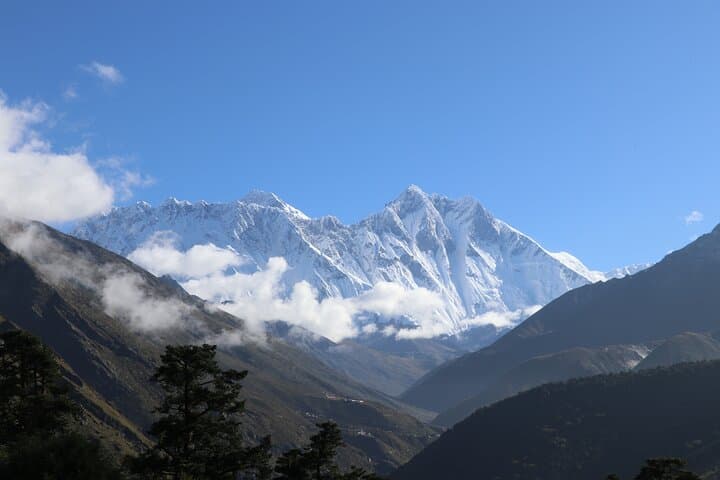
The path narrows and the air thins; prayer flags whip at attention as you step onto the high trail toward Everest Base Camp. Early mornings smell of yak butter tea and wood smoke in the teahouses, while ridgelines and glacier faces loom like deliberate hosts, daring you onward. By late afternoon the Khumbu Valley settles into a blue hush and the summit of Sagarmatha (Everest) sits, aloof but insistently present.
The path narrows and the air thins; prayer flags whip at attention as you step onto the high trail toward Everest Base Camp. Early mornings smell of yak butter tea and wood smoke in the teahouses, while ridgelines and glacier faces loom like deliberate hosts, daring you onward. By late afternoon the Khumbu Valley settles into a blue hush and the summit of Sagarmatha (Everest) sits, aloof but insistently present.
This route follows centuries of Sherpa trade and pilgrimage routes that later supported surveyors and Himalayan expeditions. Geologically the Khumbu is young — uplifted Himalayan thrusts and active glaciers carve steep moraine and polished rock. Culturally, villages like Namche Bazaar and Tengboche are hubs of Sherpa life and Buddhism; mani stones and monasteries punctuate the ascent.
Expect 10–20 km of walking most days on stone steps, packed dirt, and scree with cumulative altitude gain reaching roughly 2,500 m from Lukla to Base Camp (5,364 m). Acclimatization days and steady pacing are essential; mornings and evenings are cold, afternoons can be bright and sun-exposed. Tea-house lodges provide beds and hot meals, but facilities are basic and power is limited.
Practically: fly Lukla in and out (weather-dependent), carry a TIMS permit and National Park pass, and be prepared for 4–7 hours of trekking per day with one or two longer days. Hydrate, layer for rapid temperature swings, and treat altitude with respect—turn back if symptoms worsen. The payoff is direct: EBC’s moraine bowl and the Khumbu Icefall in close view, the kind of mountain encounter that stays with you long after you return to Kathmandu.