THE ADVENTURE COLLECTIVE® · Independent discovery and booking for outdoor travel

A classic 14-day itinerary that delivers Lukla’s dramatic arrival, Sherpa villages, Everest Base Camp and the sunrise from Kala Patthar. Expect long days, cold nights, and high-altitude scenery that rewards careful pacing and good gear.
A classic 14-day itinerary that delivers Lukla’s dramatic arrival, Sherpa villages, Everest Base Camp and the sunrise from Kala Patthar. Expect long days, cold nights, and high-altitude scenery that rewards careful pacing and good gear.
You step off the tiny Lukla runway into thin air and a sky that feels close enough to touch. The trail climbs through rhododendron forests, chatter of teahouse life, and the steady cadence of porters and yaks moving like living freight trains. As you move higher, trees give way to scrub, then to rock and wind — the mountains begin to rearrange the horizon, Everest glaring from a distance.
Verified experiences and guided adventures in the surrounding area.
Operated by Sunrise Adventure Trek P. Ltd · Kathmandu, Bagmati Province
You step off the tiny Lukla runway into thin air and a sky that feels close enough to touch. The trail climbs through rhododendron forests, chatter of teahouse life, and the steady cadence of porters and yaks moving like living freight trains. As you move higher, trees give way to scrub, then to rock and wind — the mountains begin to rearrange the horizon, Everest glaring from a distance.
This route threads Sherpa villages and centuries-old monasteries whose prayer flags ripple like bright punctuation. Geologically, you’re walking across uplifted Himalayan crust — strata tilted and fractured by the collision of the Indian and Eurasian plates — which creates the sharp ridgelines and icefalls that define the Khumbu. Culturally, Namche Bazaar and Tengboche reveal Sherpa hospitality, mountain festivals, and a mountaineering history tied to early Everest expeditions and the growth of expedition logistics in the 20th century.
Practically, the trek is about steady gains, built-in acclimatization days (Namche and Dingboche), and two high-point pushes: Everest Base Camp (≈5,364 m) and Kala Patthar (≈5,550 m) for sunrise panoramas. Expect long walking days of 5–7 hours on rocky, sometimes icy trails; cold nights in simple lodges; and flights into and out of Lukla that are weather-dependent. Bring layered insulation, a warm sleeping bag rated to -10°C or colder, a trekking pole for balance on scree, and contingency days in Kathmandu for flight delays. Hydration, slow pacing, and respect for altitude are the trip’s real navigation tools — the mountains will keep their schedule, not yours.
challenging.
12–14 days (typical).
Good cardiovascular fitness and ability to hike 5–7 hours across uneven terrain for multiple consecutive days; previous multi-day hiking helpful.
Yes — you need a Sagarmatha National Park permit and a TIMS card; these are usually arranged by the operator and checked at entry points.
Pre-monsoon (April–May) and post-monsoon (late September–November) offer the most stable weather, clearer views, and warmer daytime temperatures.
Lukla is a challenging short-flight with a small airstrip; operators use experienced pilots but flights are frequently delayed or cancelled for weather — plan extra time in Kathmandu.
Ascend slowly, drink lots of water, rest on acclimatization days, avoid alcohol, and discuss prophylactic medication like acetazolamide with your doctor.
The Khumbu region evolved into a trekking and mountaineering hub after early Everest expeditions; Sherpa communities have long acted as cultural and logistical stewards of the high trails.
Permits fund park management and local initiatives; pack-out waste policies and using local teahouses support village economies and reduce environmental impact.
Sunrise Adventure Trek P. Ltd operates guided outdoor trips and adventures with an emphasis on safety, stewardship, and memorable experiences.
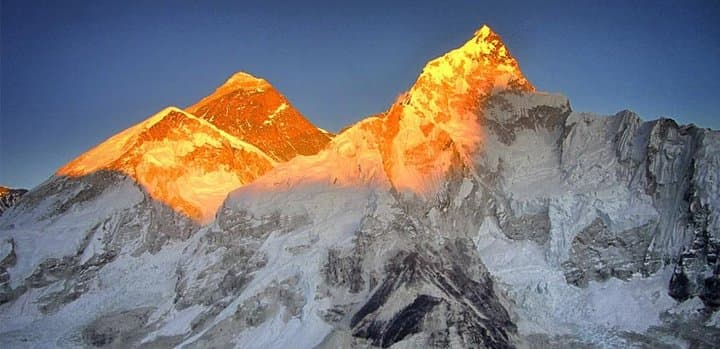
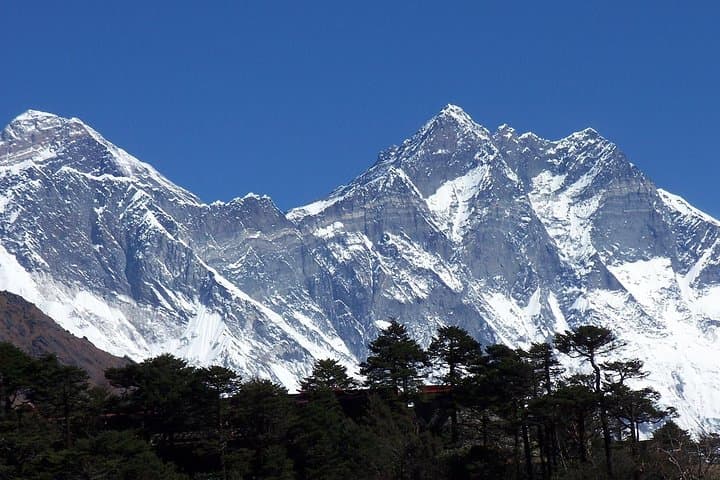
You step off the tiny Lukla runway into thin air and a sky that feels close enough to touch. The trail climbs through rhododendron forests, chatter of teahouse life, and the steady cadence of porters and yaks moving like living freight trains. As you move higher, trees give way to scrub, then to rock and wind — the mountains begin to rearrange the horizon, Everest glaring from a distance.
You step off the tiny Lukla runway into thin air and a sky that feels close enough to touch. The trail climbs through rhododendron forests, chatter of teahouse life, and the steady cadence of porters and yaks moving like living freight trains. As you move higher, trees give way to scrub, then to rock and wind — the mountains begin to rearrange the horizon, Everest glaring from a distance.
This route threads Sherpa villages and centuries-old monasteries whose prayer flags ripple like bright punctuation. Geologically, you’re walking across uplifted Himalayan crust — strata tilted and fractured by the collision of the Indian and Eurasian plates — which creates the sharp ridgelines and icefalls that define the Khumbu. Culturally, Namche Bazaar and Tengboche reveal Sherpa hospitality, mountain festivals, and a mountaineering history tied to early Everest expeditions and the growth of expedition logistics in the 20th century.
Practically, the trek is about steady gains, built-in acclimatization days (Namche and Dingboche), and two high-point pushes: Everest Base Camp (≈5,364 m) and Kala Patthar (≈5,550 m) for sunrise panoramas. Expect long walking days of 5–7 hours on rocky, sometimes icy trails; cold nights in simple lodges; and flights into and out of Lukla that are weather-dependent. Bring layered insulation, a warm sleeping bag rated to -10°C or colder, a trekking pole for balance on scree, and contingency days in Kathmandu for flight delays. Hydration, slow pacing, and respect for altitude are the trip’s real navigation tools — the mountains will keep their schedule, not yours.