THE ADVENTURE COLLECTIVE® · Independent discovery and booking for outdoor travel

Fly into Lukla and walk into the high Himalaya on a 14-day guided trek to Everest Base Camp. Expect glacier moraines, Sherpa monasteries, and highs above 5,300 m with built-in acclimatization days.
Fly into Lukla and walk into the high Himalaya on a 14-day guided trek to Everest Base Camp. Expect glacier moraines, Sherpa monasteries, and highs above 5,300 m with built-in acclimatization days.
You step off the small Twin Otter into thin air and a town of prayer flags—Lukla’s runway feels like a cliff-edge threshold. From there the trail threads along the Dudh Kosi, climbs through rhododendron and pine, and pushes up into high, wind-scoured country where the Khumbu Glacier grinds underfoot.
Verified experiences and guided adventures in the surrounding area.
Operated by Alpine Ramble Treks · Lukla, Solukhumbu, Province No. 1
You step off the small Twin Otter into thin air and a town of prayer flags—Lukla’s runway feels like a cliff-edge threshold. From there the trail threads along the Dudh Kosi, climbs through rhododendron and pine, and pushes up into high, wind-scoured country where the Khumbu Glacier grinds underfoot.
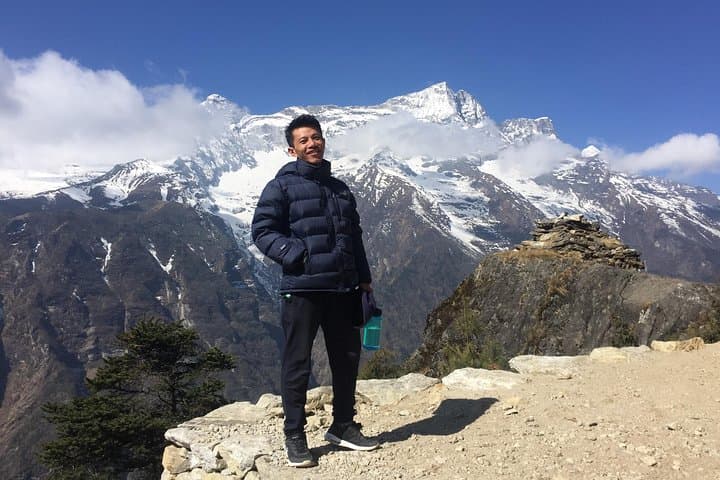
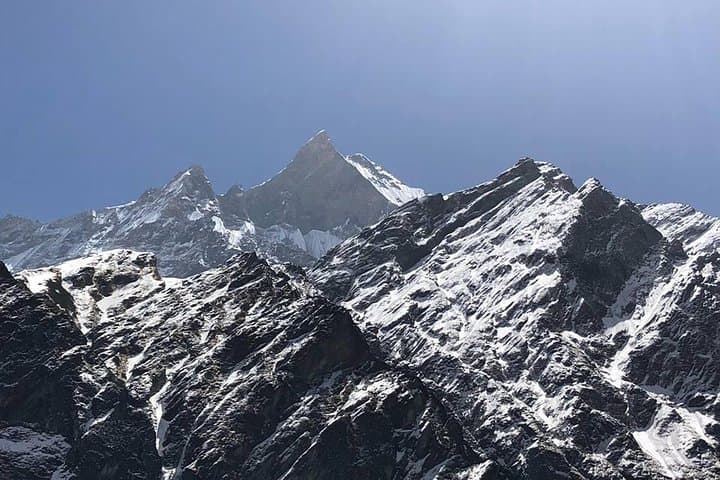
This route follows paths used by Sherpa traders and early mountaineering expeditions that supported Hillary and Tenzing. Geologically the trek traces young, rising Himalaya—the jagged granite and glacial moraines that mark active uplift and seasonal ice melt. Villages like Namche Bazaar and Tengboche are living centers of Sherpa culture: stone houses, mani walls with Tibetan script, and monasteries where prayer wheels turn against a backdrop of Ama Dablam and Everest.
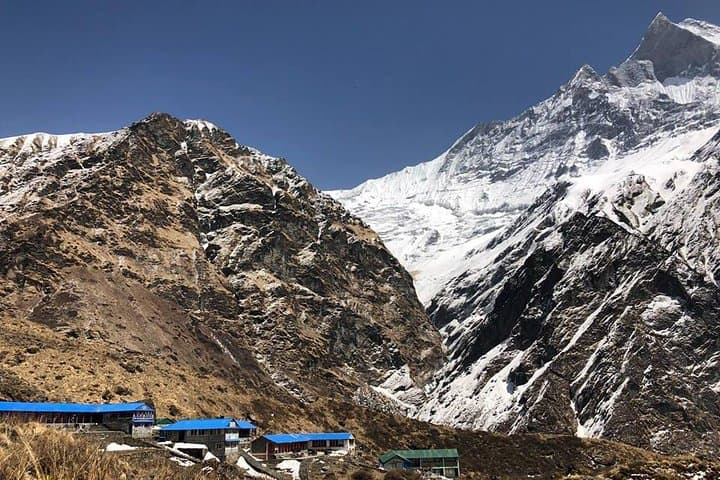
Expect varied terrain: forested singletrack, steep stone stairs, suspension bridges across the Dudh Kosi, rocky moraines and flat glacier-side walking near Base Camp. Distance for the typical Lukla–EBC–Lukla circuit is roughly 120–140 km round trip with daily elevation gains often between 300–900 m and a high point at Kala Patthar (~5,545 m) and Base Camp (~5,364 m).
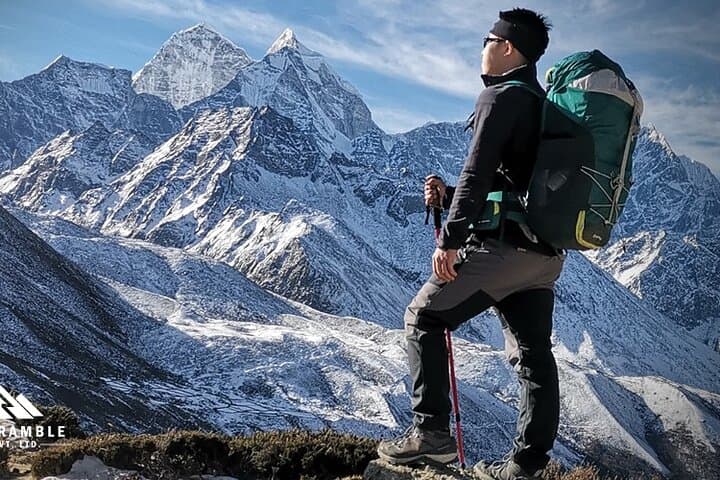
Practical guidance: allow time for acclimatization (rest days at Namche and Dingboche), carry layers for extreme diurnal swings, drink 3–4 liters daily at altitude, and plan for Lukla flight delays. Lodges provide full board but bring cash for tea houses and tipping. If you respect altitude, pack light, and move deliberately, the landscape pushes back with huge rewards: long-range skyline views and close cultural encounters that make the effort tangible and memorable.
challenging.
13–14 days.
Good aerobic base and experience with multi-day hikes; comfortable walking 5–7 hours on uneven terrain.
Yes — TIMS card and Sagarmatha (Everest) National Park permit are required and usually handled by your operator.
The flight is short (about 35 minutes) but scenic; it’s weather-dependent and can be delayed—pack an extra day in Kathmandu.
Everest Base Camp sits near 5,364 m and Kala Patthar reaches about 5,545 m — both require careful acclimatization.
No technical climbing gear is needed for the standard trek — crampons or ice axes are not required unless you do glacier travel beyond Base Camp.
The trail links traditional Sherpa trading routes and routes used to support early Everest expeditions that opened high-altitude mountaineering in the 20th century.
Waste management is a local focus—pack out non-biodegradable waste where possible and use lodge recycling programs; support local conservation fees that fund the national park.
Alpine Ramble Treks operates guided outdoor trips and adventures with an emphasis on safety, stewardship, and memorable experiences.
You step off the small Twin Otter into thin air and a town of prayer flags—Lukla’s runway feels like a cliff-edge threshold. From there the trail threads along the Dudh Kosi, climbs through rhododendron and pine, and pushes up into high, wind-scoured country where the Khumbu Glacier grinds underfoot.
You step off the small Twin Otter into thin air and a town of prayer flags—Lukla’s runway feels like a cliff-edge threshold. From there the trail threads along the Dudh Kosi, climbs through rhododendron and pine, and pushes up into high, wind-scoured country where the Khumbu Glacier grinds underfoot.
This route follows paths used by Sherpa traders and early mountaineering expeditions that supported Hillary and Tenzing. Geologically the trek traces young, rising Himalaya—the jagged granite and glacial moraines that mark active uplift and seasonal ice melt. Villages like Namche Bazaar and Tengboche are living centers of Sherpa culture: stone houses, mani walls with Tibetan script, and monasteries where prayer wheels turn against a backdrop of Ama Dablam and Everest.
Expect varied terrain: forested singletrack, steep stone stairs, suspension bridges across the Dudh Kosi, rocky moraines and flat glacier-side walking near Base Camp. Distance for the typical Lukla–EBC–Lukla circuit is roughly 120–140 km round trip with daily elevation gains often between 300–900 m and a high point at Kala Patthar (~5,545 m) and Base Camp (~5,364 m).
Practical guidance: allow time for acclimatization (rest days at Namche and Dingboche), carry layers for extreme diurnal swings, drink 3–4 liters daily at altitude, and plan for Lukla flight delays. Lodges provide full board but bring cash for tea houses and tipping. If you respect altitude, pack light, and move deliberately, the landscape pushes back with huge rewards: long-range skyline views and close cultural encounters that make the effort tangible and memorable.