THE ADVENTURE COLLECTIVE® · Independent discovery and booking for outdoor travel

Fly to Lukla and walk the classic Khumbu route over 12–14 days to Everest Base Camp and Kala Patthar. This guide covers terrain, culture, permits, and practical tips for high-altitude trekking.
Fly to Lukla and walk the classic Khumbu route over 12–14 days to Everest Base Camp and Kala Patthar. This guide covers terrain, culture, permits, and practical tips for high-altitude trekking.
The valley exhales cold air and the plane drops you into Lukla’s tiny runway—your boots hit rocky trail, prayer flags snap, and the mountains start measuring your pace.
Verified experiences and guided adventures in the surrounding area.
Operated by Nepal Guide Treks and Expedition P. Ltd. · Kathmandu, Bagmati Province
The valley exhales cold air and the plane drops you into Lukla’s tiny runway—your boots hit rocky trail, prayer flags snap, and the mountains start measuring your pace.
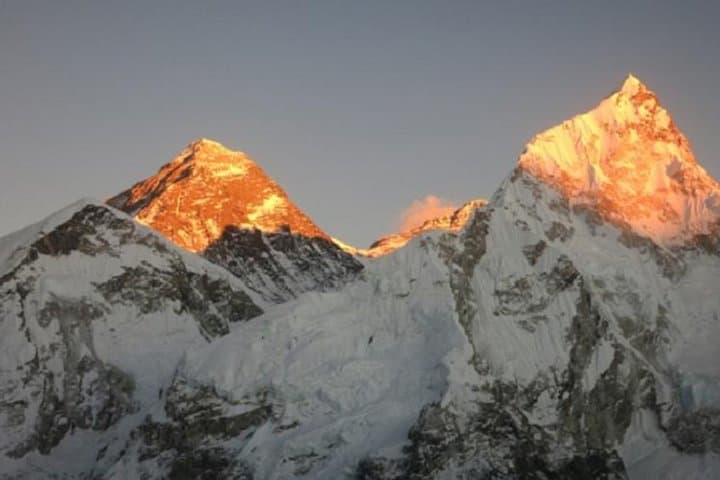
This 12–14 day circuit follows the classic Khumbu route through Sagarmatha National Park, climbing from Lukla (2,800 m) to Everest Base Camp (5,380 m) with a sunrise push to Kala Patthar (5,545 m). The landscape is glacial and raw: terminal moraines, crevassed ice near Khumbu Glacier, and steep, rocky ridgelines that demand steady footing. Villages along the way—Phakding, Namche Bazaar, Tengboche, Dingboche, Lobuche—are Sherpa hubs where Buddhism shapes daily life and mani walls mark the trail.
Geologically the region is young and uplifted; peaks are granite and metamorphic rock thrust skyward by the collision of the Indian and Eurasian plates. Culturally, teahouses serve as social anchors and acclimatization days in Namche are as much about visiting monasteries and local schools as they are about physiology.
Practicalities: expect 4–6 hours of walking most days, with sustained altitude gain between villages; thin air is the primary challenge. Bring layered insulation, a reliable sleeping bag rated for subzero temps, and quality boots for scree and icy approaches. Permits (Sagarmatha National Park entry, TIMS) are required; Lukla flights are weather-dependent—plan buffer days. Hydrate, pace up hills, consider a guide/porter to reduce load, and know acute mountain sickness signs. Best windows are spring and autumn for stable views; winter is cold and monsoon is wet. The trek is demanding but navigable with preparation, respect for altitude, and flexible timing for mountain weather.
challenging.
12–14 days.
Good aerobic fitness; able to hike 4–6 hours daily on uneven, high-altitude terrain
Yes—Sagarmatha National Park entry fee and a TIMS card are required; guides or agencies usually arrange these.
The standard itinerary is 12–14 days with daily walking typically 4–6 hours, longer on key approach days.
Teahouses are basic: twin/dorm rooms, shared or squat toilets, and payable hot showers; amenities decrease above 4,000 m.
Spring (Mar–May) and autumn (Sep–Nov) offer the clearest weather and most stable conditions for views.
The Khumbu has long been inhabited by Sherpa communities and gained global attention after 1953 when Everest was first summited; monasteries reflect centuries of Buddhist practice.
Sagarmatha National Park is a protected area—carry out all non-biodegradable trash, minimize single-use plastics, and support local lodges to sustain the economy.
Nepal Guide Treks and Expedition P. Ltd. operates guided outdoor trips and adventures with an emphasis on safety, stewardship, and memorable experiences.
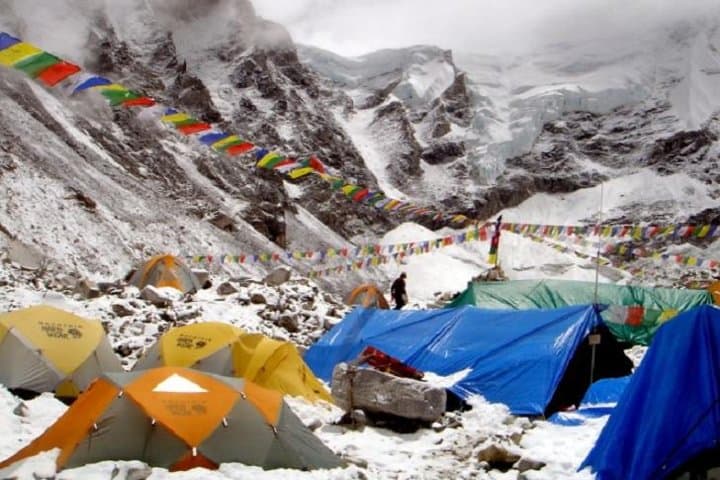
The valley exhales cold air and the plane drops you into Lukla’s tiny runway—your boots hit rocky trail, prayer flags snap, and the mountains start measuring your pace.
The valley exhales cold air and the plane drops you into Lukla’s tiny runway—your boots hit rocky trail, prayer flags snap, and the mountains start measuring your pace.
This 12–14 day circuit follows the classic Khumbu route through Sagarmatha National Park, climbing from Lukla (2,800 m) to Everest Base Camp (5,380 m) with a sunrise push to Kala Patthar (5,545 m). The landscape is glacial and raw: terminal moraines, crevassed ice near Khumbu Glacier, and steep, rocky ridgelines that demand steady footing. Villages along the way—Phakding, Namche Bazaar, Tengboche, Dingboche, Lobuche—are Sherpa hubs where Buddhism shapes daily life and mani walls mark the trail.
Geologically the region is young and uplifted; peaks are granite and metamorphic rock thrust skyward by the collision of the Indian and Eurasian plates. Culturally, teahouses serve as social anchors and acclimatization days in Namche are as much about visiting monasteries and local schools as they are about physiology.
Practicalities: expect 4–6 hours of walking most days, with sustained altitude gain between villages; thin air is the primary challenge. Bring layered insulation, a reliable sleeping bag rated for subzero temps, and quality boots for scree and icy approaches. Permits (Sagarmatha National Park entry, TIMS) are required; Lukla flights are weather-dependent—plan buffer days. Hydrate, pace up hills, consider a guide/porter to reduce load, and know acute mountain sickness signs. Best windows are spring and autumn for stable views; winter is cold and monsoon is wet. The trek is demanding but navigable with preparation, respect for altitude, and flexible timing for mountain weather.