THE ADVENTURE COLLECTIVE® · Independent discovery and booking for outdoor travel

Fly into Lukla and trace the classic route to Everest Base Camp and Kala Patthar across glaciers, Sherpa villages, and high ridgelines. This 12–14 day trek balances acclimatization days with sustained ascents, offering close-up Himalayan panoramas and authentic local culture.
Fly into Lukla and trace the classic route to Everest Base Camp and Kala Patthar across glaciers, Sherpa villages, and high ridgelines. This 12–14 day trek balances acclimatization days with sustained ascents, offering close-up Himalayan panoramas and authentic local culture.
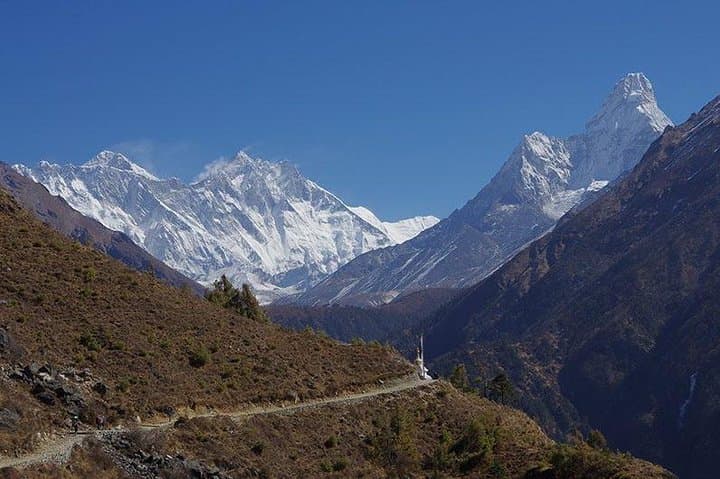
You arrive over the Himalaya on a short, vivid flight into Lukla — the airstrip drops you onto a slope of stone and prayer flags, and the first breeze smells of pine and yak dung. From the runway the trail falls into a braided valley where the Dudh Kosi river seems to dare you across a string of suspension bridges; beyond, the peaks tighten into a white wall that pushes the sky lower.
Verified experiences and guided adventures in the surrounding area.
Operated by Nepal Planet Treks and Expedition P. Ltd · Lukla, Province No. 1
You arrive over the Himalaya on a short, vivid flight into Lukla — the airstrip drops you onto a slope of stone and prayer flags, and the first breeze smells of pine and yak dung. From the runway the trail falls into a braided valley where the Dudh Kosi river seems to dare you across a string of suspension bridges; beyond, the peaks tighten into a white wall that pushes the sky lower.
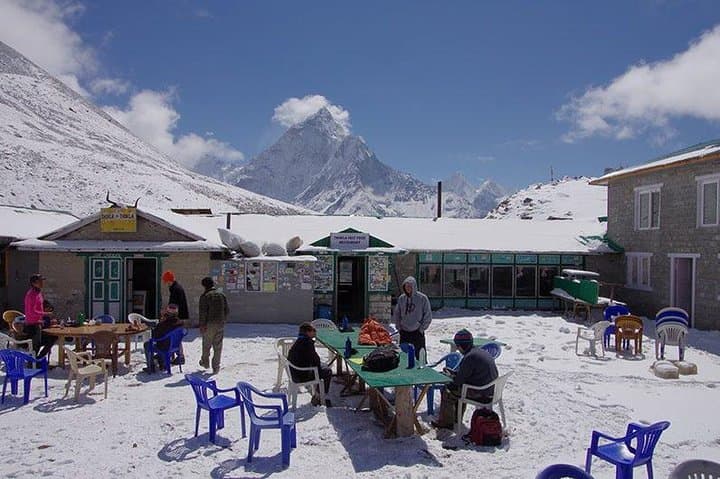
The route follows centuries of trade and Sherpa pilgrimage through Sagarmatha National Park, a UNESCO World Heritage site. Geology is visible in the moraines and the Khumbu Glacier’s crevassed front; monasteries like Tengboche hold artifacts and local stories (one small museum claims a yeti scalp). Villages such as Namche Bazaar grew where traders and mountaineers exchanged goods and advice, and Sherpa culture — prayer wheels, mani stones, and warm hospitality — is central to the journey.
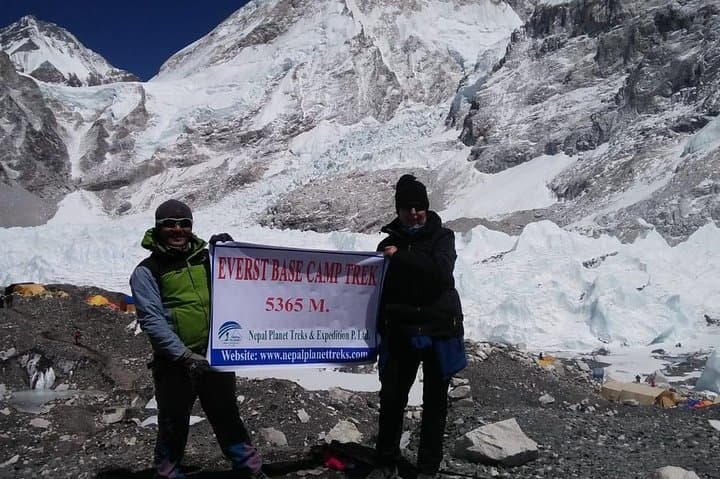
Practically, expect 12–14 days (the listed itinerary is 14), with daily walking typically 4–7 hours and gradual altitude gain punctuated by steeper sections; total ascent from Lukla (~2,860m) to EBC (~5,365m) is roughly 2,500m. Acclimatization days in Namche and Dingboche are essential. Permits required include Sagarmatha NP and TIMS; flights Lukla–Kathmandu are weather-dependent. Bring layered insulation, a sturdy pair of hiking boots, electrolyte sachets and a down jacket for nights. Consider a porter to manage loads above 3,000m and buy travel insurance that covers high-altitude evacuation. The trail is both humbling and elemental: glaciers push, winds sharpen, and each teahouse offers a warm bowl and a better view.
challenging.
12–14 days.
Good cardiovascular fitness and experience with multi-day hiking at altitude; able to walk 4–7 hours per day on mixed terrain.
Yes — you must carry a Sagarmatha National Park permit and a TIMS card; your operator typically arranges these before or on arrival in Lukla/Namche.
The trek is physically demanding because of altitude and long days on uneven trails; it’s suited to hikers with prior multi-day trekking experience and good cardiovascular fitness.
Independent treks are possible, but many opt for guides and porters for navigation, local liaison, and safety at high altitude; lodges are scattered and language barriers exist.
Spring (March–May) and autumn (late Sept–Nov) offer the most stable weather, clear views and busier teahouse seasons; monsoon and winter bring more snowfall and flight cancellations.
The Khumbu trail became a mountaineering corridor after Sir Edmund Hillary’s 1953 expedition; Sherpa trading routes predate modern climbing, shaping village locations and hospitality traditions.
Sagarmatha National Park manages permits and fees that fund conservation; trekkers should minimize waste, avoid single-use plastics and follow local guidelines to protect fragile alpine ecosystems.
Nepal Planet Treks and Expedition P. Ltd operates guided outdoor trips and adventures with an emphasis on safety, stewardship, and memorable experiences.
You arrive over the Himalaya on a short, vivid flight into Lukla — the airstrip drops you onto a slope of stone and prayer flags, and the first breeze smells of pine and yak dung. From the runway the trail falls into a braided valley where the Dudh Kosi river seems to dare you across a string of suspension bridges; beyond, the peaks tighten into a white wall that pushes the sky lower.
You arrive over the Himalaya on a short, vivid flight into Lukla — the airstrip drops you onto a slope of stone and prayer flags, and the first breeze smells of pine and yak dung. From the runway the trail falls into a braided valley where the Dudh Kosi river seems to dare you across a string of suspension bridges; beyond, the peaks tighten into a white wall that pushes the sky lower.
The route follows centuries of trade and Sherpa pilgrimage through Sagarmatha National Park, a UNESCO World Heritage site. Geology is visible in the moraines and the Khumbu Glacier’s crevassed front; monasteries like Tengboche hold artifacts and local stories (one small museum claims a yeti scalp). Villages such as Namche Bazaar grew where traders and mountaineers exchanged goods and advice, and Sherpa culture — prayer wheels, mani stones, and warm hospitality — is central to the journey.
Practically, expect 12–14 days (the listed itinerary is 14), with daily walking typically 4–7 hours and gradual altitude gain punctuated by steeper sections; total ascent from Lukla (~2,860m) to EBC (~5,365m) is roughly 2,500m. Acclimatization days in Namche and Dingboche are essential. Permits required include Sagarmatha NP and TIMS; flights Lukla–Kathmandu are weather-dependent. Bring layered insulation, a sturdy pair of hiking boots, electrolyte sachets and a down jacket for nights. Consider a porter to manage loads above 3,000m and buy travel insurance that covers high-altitude evacuation. The trail is both humbling and elemental: glaciers push, winds sharpen, and each teahouse offers a warm bowl and a better view.