THE ADVENTURE COLLECTIVE® · Independent discovery and booking for outdoor travel

A 14-day guided trek through the Khumbu to Everest Base Camp and Kala Patthar, combining Sherpa culture, high-altitude hiking and glacier-front camps. Ideal in spring or autumn, the route demands good fitness and careful acclimatization.
A 14-day guided trek through the Khumbu to Everest Base Camp and Kala Patthar, combining Sherpa culture, high-altitude hiking and glacier-front camps. Ideal in spring or autumn, the route demands good fitness and careful acclimatization.
You step off the tiny Lukla plane and the mountains rearrange your sense of scale: rock walls, prayer flags snapping at the throat of the valley, and the Dudh Koshi river daring you onward. Over the next two weeks the trail threads Sherpa villages, rhododendron forests, glacial moraine and tundra, bringing you to the gravel plain of Gorak Shep and, finally, the boots-on-ice circle of Everest Base Camp.
Verified experiences and guided adventures in the surrounding area.
Operated by Third Rock Adventures · Lukla, Koshi Province
You step off the tiny Lukla plane and the mountains rearrange your sense of scale: rock walls, prayer flags snapping at the throat of the valley, and the Dudh Koshi river daring you onward. Over the next two weeks the trail threads Sherpa villages, rhododendron forests, glacial moraine and tundra, bringing you to the gravel plain of Gorak Shep and, finally, the boots-on-ice circle of Everest Base Camp.
The Khumbu valley holds living history — Sherpa culture shaped by Tibetan Buddhism and Himalayan trade routes, and a mountaineering legacy that peaks with Hillary and Tenzing’s 1953 ascent. Geologically this is young crust: uplifted sediment and metamorphic rock carved by the Khumbu Glacier, producing sharp ridgelines and unstable moraines you’ll cross with care.
Culturally expect monastery chants at dawn, stone mani walls, and villages oriented around tea houses where stories are traded over steaming dal bhat. Locals balance tourism and tradition; conservation efforts inside Sagarmatha National Park focus on waste management and community fees that support local schools and clinics.
Practical guidance: plan for slow ascents and two scheduled acclimatization days (Namche, Dingboche). Days vary from 3–8 hours on rocky, often icy trails; distances are modest but altitude is the challenge. Flights to/from Lukla are weather-dependent—build buffer days. Pack layered insulation, a reliable down jacket and a warm sleeping bag (supplied by many operators), good leather or synthetic mountaineering boots, and a pulse oximeter if you want extra feedback. Hydrate, eat well, and respect rest days — altitude is non-negotiable. When the sun hits Kala Patthar at sunrise, Everest looms like a white wall; that view is why you came, and why the preparation matters.
challenging.
14 days.
Good aerobic fitness with regular hill/resistance training; comfortable walking 6–8 hours on rocky terrain and able to handle thin air.
Altitude sickness is common above 3,000–4,000m; with proper acclimatization days, steady ascent, hydration and attention to symptoms most trekkers complete the route. Inform guides of any symptoms immediately.
No. Flights are weather-dependent and frequently delayed or rerouted; many itineraries include buffer days and alternates via Ramechhap.
Tea-house accommodation is basic but warm—shared bathrooms, simple hot meals (dal bhat, soups) and charging options; standards improve in Namche and Lukla.
Yes—Sagarmatha National Park entry and Khumbu permits are required and usually handled by the operator as part of the trip.
The Khumbu has been home to Sherpa communities for generations and became globally prominent after the 1953 ascent of Everest by Edmund Hillary and Tenzing Norgay.
Sagarmatha National Park is a UNESCO World Heritage Site; visitors should follow park rules, pack out non-biodegradable waste and support community conservation fees.
Third Rock Adventures operates guided outdoor trips and adventures with an emphasis on safety, stewardship, and memorable experiences.
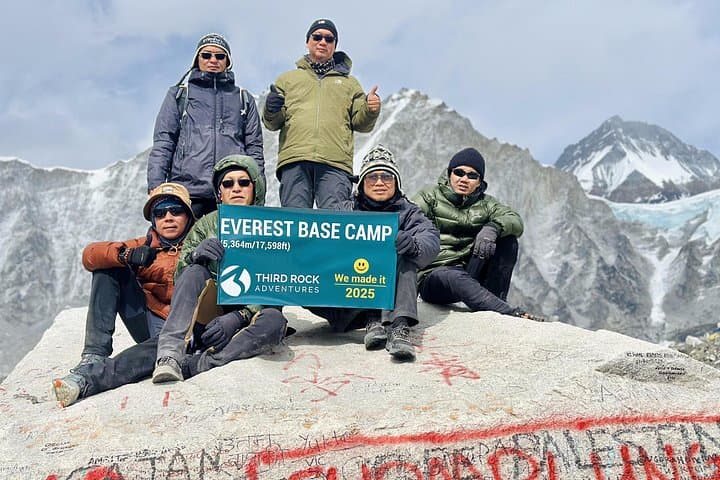
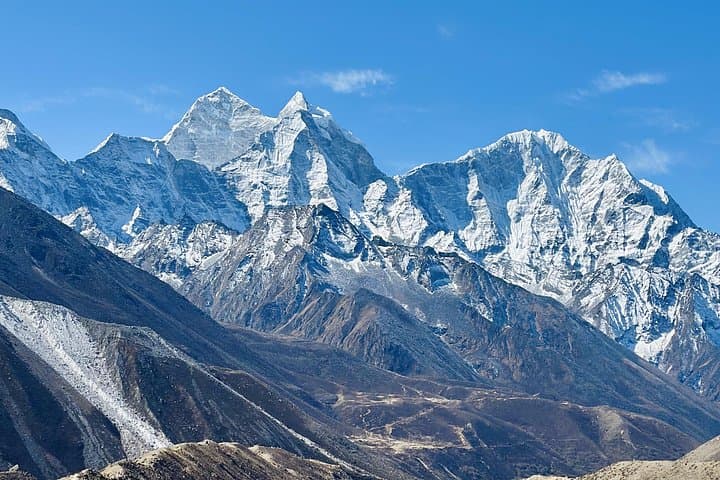
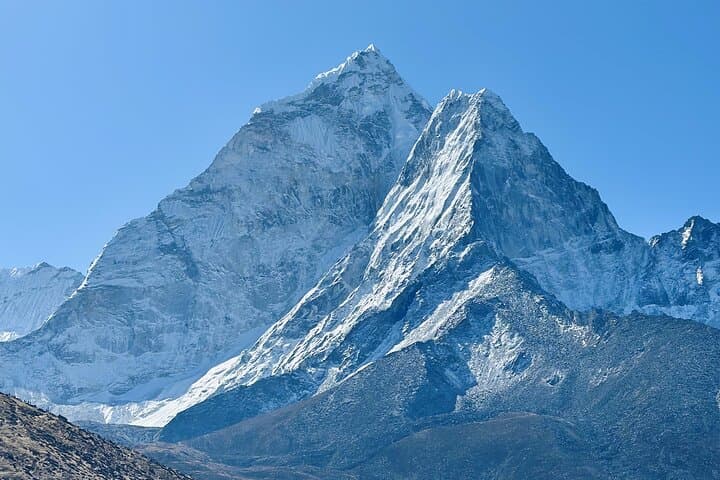
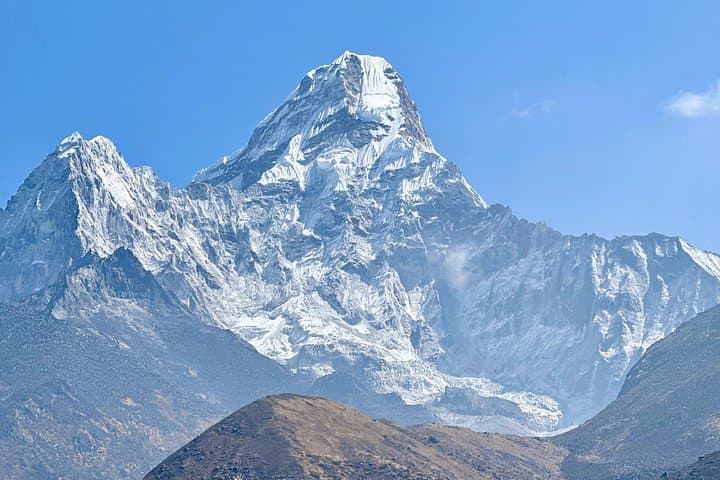
You step off the tiny Lukla plane and the mountains rearrange your sense of scale: rock walls, prayer flags snapping at the throat of the valley, and the Dudh Koshi river daring you onward. Over the next two weeks the trail threads Sherpa villages, rhododendron forests, glacial moraine and tundra, bringing you to the gravel plain of Gorak Shep and, finally, the boots-on-ice circle of Everest Base Camp.
You step off the tiny Lukla plane and the mountains rearrange your sense of scale: rock walls, prayer flags snapping at the throat of the valley, and the Dudh Koshi river daring you onward. Over the next two weeks the trail threads Sherpa villages, rhododendron forests, glacial moraine and tundra, bringing you to the gravel plain of Gorak Shep and, finally, the boots-on-ice circle of Everest Base Camp.
The Khumbu valley holds living history — Sherpa culture shaped by Tibetan Buddhism and Himalayan trade routes, and a mountaineering legacy that peaks with Hillary and Tenzing’s 1953 ascent. Geologically this is young crust: uplifted sediment and metamorphic rock carved by the Khumbu Glacier, producing sharp ridgelines and unstable moraines you’ll cross with care.
Culturally expect monastery chants at dawn, stone mani walls, and villages oriented around tea houses where stories are traded over steaming dal bhat. Locals balance tourism and tradition; conservation efforts inside Sagarmatha National Park focus on waste management and community fees that support local schools and clinics.
Practical guidance: plan for slow ascents and two scheduled acclimatization days (Namche, Dingboche). Days vary from 3–8 hours on rocky, often icy trails; distances are modest but altitude is the challenge. Flights to/from Lukla are weather-dependent—build buffer days. Pack layered insulation, a reliable down jacket and a warm sleeping bag (supplied by many operators), good leather or synthetic mountaineering boots, and a pulse oximeter if you want extra feedback. Hydrate, eat well, and respect rest days — altitude is non-negotiable. When the sun hits Kala Patthar at sunrise, Everest looms like a white wall; that view is why you came, and why the preparation matters.