THE ADVENTURE COLLECTIVE® · Independent discovery and booking for outdoor travel

This 14‑day guided trek from Kathmandu to Everest Base Camp follows classic Sherpa villages, glacial valleys and high viewpoints like Kala Patthar. Expect long days, cold nights and essential acclimatization while passing through Sagarmatha National Park.
This 14‑day guided trek from Kathmandu to Everest Base Camp follows classic Sherpa villages, glacial valleys and high viewpoints like Kala Patthar. Expect long days, cold nights and essential acclimatization while passing through Sagarmatha National Park.
The morning air at Lukla tastes like altitude and anticipation: prayer flags snap overhead, and the trail unwinds toward a skyline of chiseled white ridges. You walk through fir forest, cross swinging suspension bridges, and climb past stone mani walls until the valley opens and Everest first peeks over the ridge—sudden, uncompromising.
Verified experiences and guided adventures in the surrounding area.
Operated by Glorious Himalaya Trekking Pvt. Ltd. · Lukla, Province No. 1
The morning air at Lukla tastes like altitude and anticipation: prayer flags snap overhead, and the trail unwinds toward a skyline of chiseled white ridges. You walk through fir forest, cross swinging suspension bridges, and climb past stone mani walls until the valley opens and Everest first peeks over the ridge—sudden, uncompromising.
This 13–14 day trek threads historic Sherpa villages—Namche Bazaar, Tengboche, Dingboche—through the protected landscapes of Sagarmatha National Park. Geologically the route skirts glacial moraines and braided rivers fed by high Himalayan glaciers; Kala Patthar and Gorakshep offer the clearest viewpoints of Everest, Lhotse and Nuptse. Culturally, monasteries and teahouses reflect centuries of Tibetan-Bhutanese Buddhist life and the modern legacy of Hillary and Tenzing, whose expeditions shaped the region’s trekking routes.
Expect long days on rocky, sometimes icy trails with regular altitude gains; acclimatization days in Namche and Dingboche are built into the itinerary. Weather shifts fast—sunlit mornings can become wind-bitten afternoons—so layer and plan for cold nights at higher camps. Food is simple but plentiful: teahouse dal bhat sustains most days. Guides carry permits and emergency oxygen, and the route includes doctor-volunteer aid posts near Pheriche.
Practical tips: start training with sustained uphill hiking and pack a warm down layer and dependable footwear. Hydrate constantly and respect acclimatization rest days—altitude is the real challenge here. With preparation, the trek is less a climb than a sequence of careful decisions that lead to one of the planet’s most remarkable mountain entrances.
challenging.
13–14 days.
Good aerobic fitness and experience with multi‑day uphill hiking; ability to walk 6–8 hours on uneven terrain.
No technical climbing skills are required; this is a high‑altitude trek on marked trails, though good fitness and prior multi‑day trekking experience are strongly recommended.
Trekkers need a TIMS card and Sagarmatha National Park permit, which your guide/operator will arrange before you enter the park.
Acute Mountain Sickness is a real risk above 3,000–4,000 m; acclimatization days, slow ascent, hydration and monitoring symptoms are essential—guided groups carry pulse oximeters and oxygen for emergencies.
Spring (pre‑monsoon) and fall (post‑monsoon) offer the most stable weather and clearer mountain views; winter is cold and less predictable, summer brings monsoon clouds.
The trail runs through Sagarmatha National Park, a UNESCO site; modern trekking routes expanded after early 20th‑century exploration and the 1953 Everest ascent by Hillary and Tenzing.
Visitors must follow park rules and pack out waste; support local lodges and guides who participate in community‑based conservation and waste management programs.
Glorious Himalaya Trekking Pvt. Ltd. operates guided outdoor trips and adventures with an emphasis on safety, stewardship, and memorable experiences.


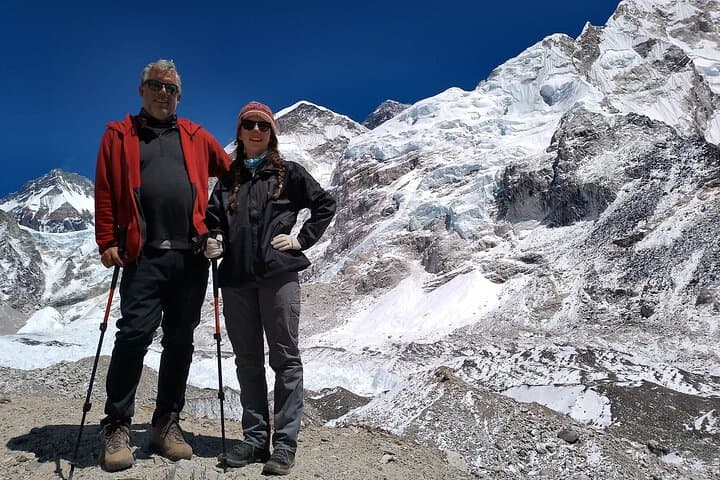
The morning air at Lukla tastes like altitude and anticipation: prayer flags snap overhead, and the trail unwinds toward a skyline of chiseled white ridges. You walk through fir forest, cross swinging suspension bridges, and climb past stone mani walls until the valley opens and Everest first peeks over the ridge—sudden, uncompromising.
The morning air at Lukla tastes like altitude and anticipation: prayer flags snap overhead, and the trail unwinds toward a skyline of chiseled white ridges. You walk through fir forest, cross swinging suspension bridges, and climb past stone mani walls until the valley opens and Everest first peeks over the ridge—sudden, uncompromising.
This 13–14 day trek threads historic Sherpa villages—Namche Bazaar, Tengboche, Dingboche—through the protected landscapes of Sagarmatha National Park. Geologically the route skirts glacial moraines and braided rivers fed by high Himalayan glaciers; Kala Patthar and Gorakshep offer the clearest viewpoints of Everest, Lhotse and Nuptse. Culturally, monasteries and teahouses reflect centuries of Tibetan-Bhutanese Buddhist life and the modern legacy of Hillary and Tenzing, whose expeditions shaped the region’s trekking routes.
Expect long days on rocky, sometimes icy trails with regular altitude gains; acclimatization days in Namche and Dingboche are built into the itinerary. Weather shifts fast—sunlit mornings can become wind-bitten afternoons—so layer and plan for cold nights at higher camps. Food is simple but plentiful: teahouse dal bhat sustains most days. Guides carry permits and emergency oxygen, and the route includes doctor-volunteer aid posts near Pheriche.
Practical tips: start training with sustained uphill hiking and pack a warm down layer and dependable footwear. Hydrate constantly and respect acclimatization rest days—altitude is the real challenge here. With preparation, the trek is less a climb than a sequence of careful decisions that lead to one of the planet’s most remarkable mountain entrances.