THE ADVENTURE COLLECTIVE® · Independent discovery and booking for outdoor travel

Fly from Kathmandu to the roof of the world in a single morning. This private helicopter tour drops you at Kala Patthar or Everest Base Camp for panoramic views of Everest, Khumbu Glacier, and Sherpa highlands—ideal for travelers short on time but hungry for high-altitude spectacle.
Fly from Kathmandu to the roof of the world in a single morning. This private helicopter tour drops you at Kala Patthar or Everest Base Camp for panoramic views of Everest, Khumbu Glacier, and Sherpa highlands—ideal for travelers short on time but hungry for high-altitude spectacle.
A low rotor hum grows under the Kathmandu morning as the helicopter lifts from the domestic apron and the valley slips away. Glassy river flats and terraced slopes shrink, and within an hour the high Himalaya takes over — ridgelines sharpen into ice, and the Khumbu Glacier pushes like a slow, blue river toward the sky. The aircraft settles at Kala Patthar or the Everest Base Camp landing zone and the world opens in a 360-degree arc: Everest rising above neighboring giants, crevassed icefields, and sherpa settlements clinging to windy benches.
Verified experiences and guided adventures in the surrounding area.
Operated by Altitude Himalaya · Kathmandu, Bagmati Province
A low rotor hum grows under the Kathmandu morning as the helicopter lifts from the domestic apron and the valley slips away. Glassy river flats and terraced slopes shrink, and within an hour the high Himalaya takes over — ridgelines sharpen into ice, and the Khumbu Glacier pushes like a slow, blue river toward the sky. The aircraft settles at Kala Patthar or the Everest Base Camp landing zone and the world opens in a 360-degree arc: Everest rising above neighboring giants, crevassed icefields, and sherpa settlements clinging to windy benches.
Geology here is young and violent — the Himalaya rose as the Indian Plate rammed into Asia, folding rock into dramatic peaks and feeding glaciers that sculpt valleys. Culturally, the Khumbu is Sherpa country: prayer flags mark high passes, and mani walls and small gompas recall a mountaineering history tied to Sir Edmund Hillary and Tenzing Norgay’s 1953 ascent.
Practically, the tour compresses days of trekking into a single flight. Expect sharp sunlight, thin air (base camp and Kala Patthar sit above 5,000 m), and short windows on the ground for photos and quick hikes over rocky moraine. Weather dictates schedules; mornings in spring and autumn typically offer the clearest views. Bring layered outerwear, hydrate before flying, and allow time in Kathmandu for pickup and airport transfers. For photographers and first-time visitors, this heli route is the fastest, most dramatic way to stand near the world’s highest summit without committing to weeks of trekking.
easy.
2 hours.
No special fitness required for the flight, but be comfortable standing and walking briefly on uneven, high-altitude rocky terrain.
The scheduled flight is about two hours round-trip from Kathmandu, though total pickup and transfer time from your hotel will be longer.
Most itineraries include a scheduled landing at Kala Patthar or a nearby landing zone, depending on weather and operational constraints; exact landing sites are at the pilot’s discretion.
Yes — landing zones are above 5,000 m; symptoms can occur even after a short stay, so hydrate, avoid heavy exertion, and inform guides of medical issues beforehand.
The operator lists wheelchair accessibility for transfers, but ground mobility at high-elevation landings will be limited; contact the provider with specific accessibility needs before booking.
The Khumbu region combines centuries of Sherpa Buddhist culture with modern mountaineering history after the first successful 1953 Everest ascent by Hillary and Tenzing; lodges and prayer sites reflect this shared legacy.
The high Himalaya is ecologically fragile; visitors should avoid leaving waste at landing zones and respect local regulations—many operators support local waste management and community projects.
Altitude Himalaya operates guided outdoor trips and adventures with an emphasis on safety, stewardship, and memorable experiences.
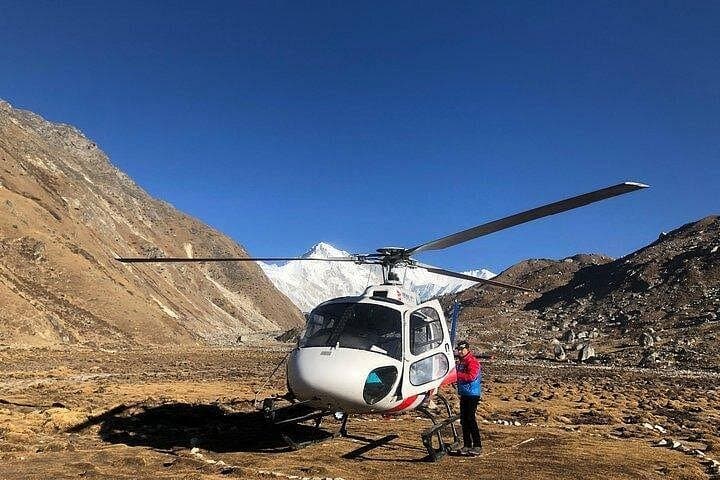
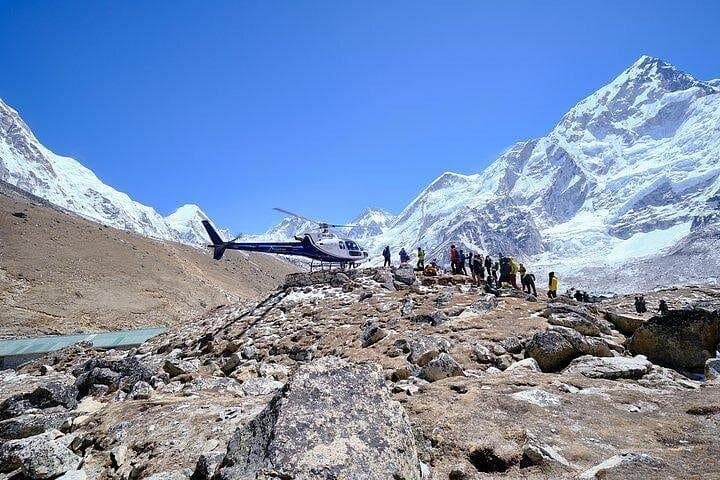
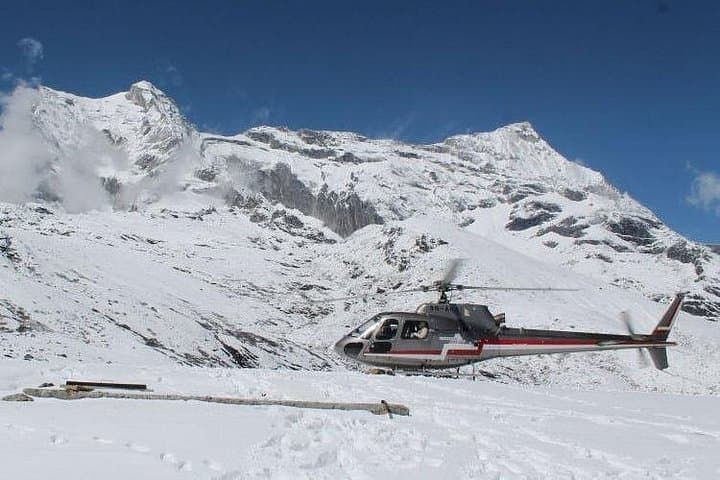
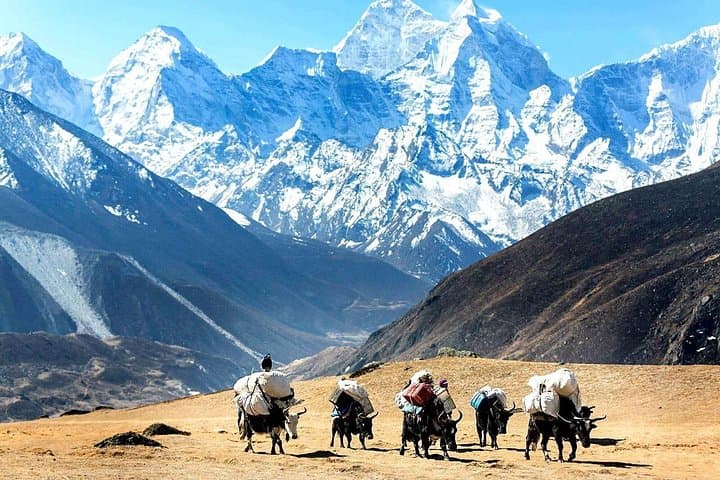
A low rotor hum grows under the Kathmandu morning as the helicopter lifts from the domestic apron and the valley slips away. Glassy river flats and terraced slopes shrink, and within an hour the high Himalaya takes over — ridgelines sharpen into ice, and the Khumbu Glacier pushes like a slow, blue river toward the sky. The aircraft settles at Kala Patthar or the Everest Base Camp landing zone and the world opens in a 360-degree arc: Everest rising above neighboring giants, crevassed icefields, and sherpa settlements clinging to windy benches.
A low rotor hum grows under the Kathmandu morning as the helicopter lifts from the domestic apron and the valley slips away. Glassy river flats and terraced slopes shrink, and within an hour the high Himalaya takes over — ridgelines sharpen into ice, and the Khumbu Glacier pushes like a slow, blue river toward the sky. The aircraft settles at Kala Patthar or the Everest Base Camp landing zone and the world opens in a 360-degree arc: Everest rising above neighboring giants, crevassed icefields, and sherpa settlements clinging to windy benches.
Geology here is young and violent — the Himalaya rose as the Indian Plate rammed into Asia, folding rock into dramatic peaks and feeding glaciers that sculpt valleys. Culturally, the Khumbu is Sherpa country: prayer flags mark high passes, and mani walls and small gompas recall a mountaineering history tied to Sir Edmund Hillary and Tenzing Norgay’s 1953 ascent.
Practically, the tour compresses days of trekking into a single flight. Expect sharp sunlight, thin air (base camp and Kala Patthar sit above 5,000 m), and short windows on the ground for photos and quick hikes over rocky moraine. Weather dictates schedules; mornings in spring and autumn typically offer the clearest views. Bring layered outerwear, hydrate before flying, and allow time in Kathmandu for pickup and airport transfers. For photographers and first-time visitors, this heli route is the fastest, most dramatic way to stand near the world’s highest summit without committing to weeks of trekking.