THE ADVENTURE COLLECTIVE® · Independent discovery and booking for outdoor travel

Fly into Lukla and follow a high-altitude trail through Sherpa villages, moraine and glacier to reach Everest Base Camp and the Kala Patthar viewpoint. This 12-day trek blends cultural stops, steep acclimatization climbs and sunrise panoramas of the world’s highest peaks.
Fly into Lukla and follow a high-altitude trail through Sherpa villages, moraine and glacier to reach Everest Base Camp and the Kala Patthar viewpoint. This 12-day trek blends cultural stops, steep acclimatization climbs and sunrise panoramas of the world’s highest peaks.
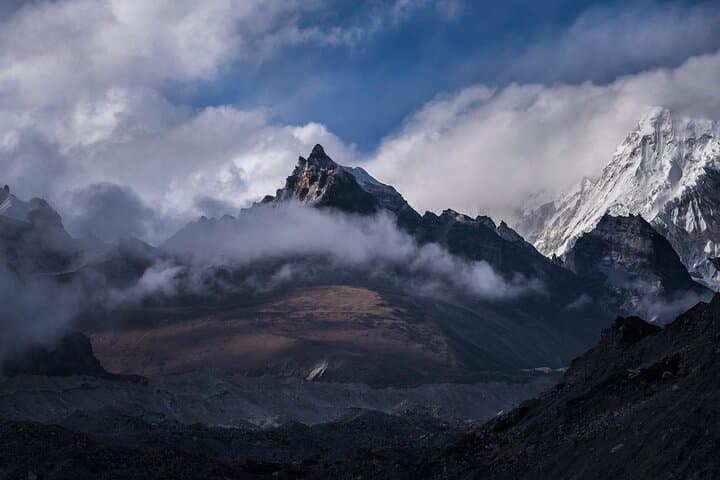
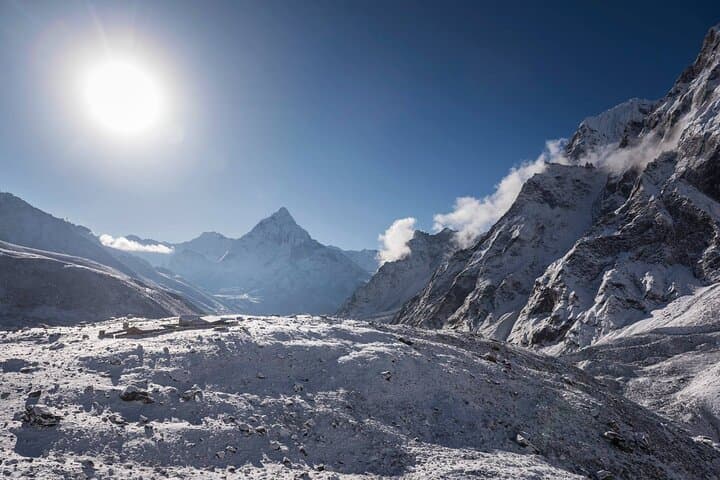
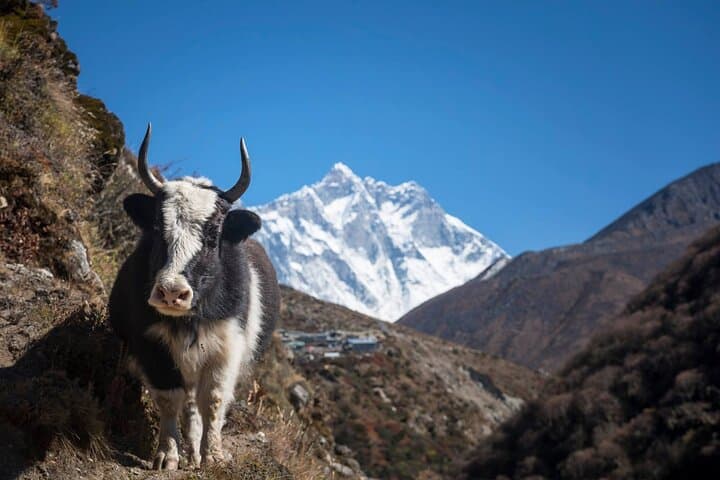
A cold early morning flight to Lukla drops you into thin air and bright Himalayan light — prayer flags flutter as the runway shrinks beneath your boots. You step onto a trail that follows the Dudh Koshi River, crosses swinging bridges and trades forested valleys for stony moraines until the landscape opens to the ragged blue-white of Khumbu Glacier. Peaks like Everest (8,848 m), Lhotse and Ama Dablam dominate the sky; the mountains seem to lean in, watching each step.
Verified experiences and guided adventures in the surrounding area.
Operated by Paradise Himalayan Journey · Kathmandu, Bagmati Province
A cold early morning flight to Lukla drops you into thin air and bright Himalayan light — prayer flags flutter as the runway shrinks beneath your boots. You step onto a trail that follows the Dudh Koshi River, crosses swinging bridges and trades forested valleys for stony moraines until the landscape opens to the ragged blue-white of Khumbu Glacier. Peaks like Everest (8,848 m), Lhotse and Ama Dablam dominate the sky; the mountains seem to lean in, watching each step.
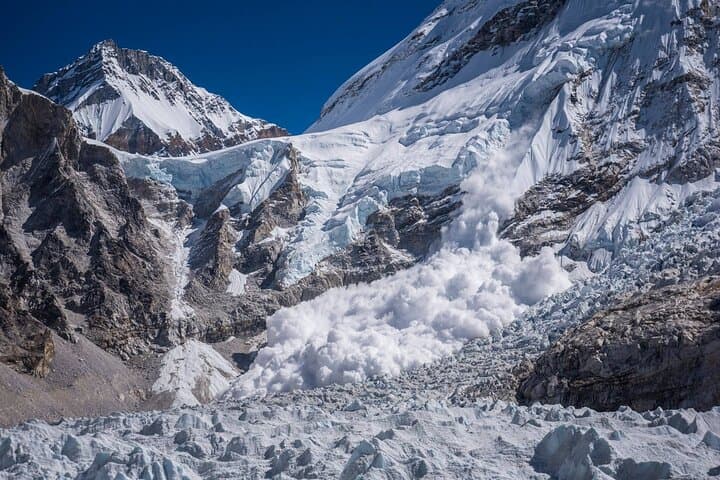
The route threads Sherpa villages — Namche Bazaar’s markets and Tengboche’s monastery — where Tibetan Buddhism shapes daily life and mani walls mark centuries of local passage. Geologically, the trek climbs across glacial moraines and river-cut valleys carved from uplifted Himalayan rock; glaciers still sculpt the Khumbu with visible crevasses and icefalls near Base Camp.
Expect 12 days of trekking with cumulative altitude gain from Lukla (≈2,850 m) to Gorak Shep (≈5,164 m) and Kala Patthar (≈5,545 m) for sunrise views. Terrain varies: packed dirt, rocky switchbacks, and loose moraine near the glacier. Typical daily walks run 4–7 hours; total round-trip walking approaches ~120–140 km depending on side trips.
Practical guidance: acclimatize with the Namche rest day, carry layers for subzero nights, and plan for strong sun and wind at high camps. Permits (Sagarmatha National Park and TIMS), a reliable guide, and altitude-aware pacing are essential. Water should be purified; footwear must handle prolonged rocky descents. This trek rewards preparedness with one of the clearest encounters you can have with high Himalayan life and ice.
challenging.
12 days.
Good aerobic fitness with experience in multi-day hikes and hiking 5–7 hours per day; prior altitude exposure helpful
Yes — you need a Sagarmatha National Park permit and a TIMS card, typically handled by your operator before departure.
Kala Patthar is a steep 1–2 hour ascent from Gorak Shep at very high altitude; fitness and acclimatization make it manageable but it’s strenuous.
Fall (Sept–Nov) offers the most stable weather and clear views; spring (Mar–May) is also excellent with rhododendron blooms.
Acute mountain sickness is a real risk above 3,000–4,000 m; recognized symptoms require descent and medical attention—follow gradual ascent profiles and stay hydrated.
The Khumbu has long been home to Sherpa communities who served as high-altitude guides since early 20th-century expeditions; Tengboche Monastery is a cultural focal point founded in the early 20th century.
Sagarmatha National Park manages permits and trail impact; stick to established paths, minimize plastics and respect local waste rules to protect fragile alpine ecosystems.
Paradise Himalayan Journey operates guided outdoor trips and adventures with an emphasis on safety, stewardship, and memorable experiences.
A cold early morning flight to Lukla drops you into thin air and bright Himalayan light — prayer flags flutter as the runway shrinks beneath your boots. You step onto a trail that follows the Dudh Koshi River, crosses swinging bridges and trades forested valleys for stony moraines until the landscape opens to the ragged blue-white of Khumbu Glacier. Peaks like Everest (8,848 m), Lhotse and Ama Dablam dominate the sky; the mountains seem to lean in, watching each step.
A cold early morning flight to Lukla drops you into thin air and bright Himalayan light — prayer flags flutter as the runway shrinks beneath your boots. You step onto a trail that follows the Dudh Koshi River, crosses swinging bridges and trades forested valleys for stony moraines until the landscape opens to the ragged blue-white of Khumbu Glacier. Peaks like Everest (8,848 m), Lhotse and Ama Dablam dominate the sky; the mountains seem to lean in, watching each step.
The route threads Sherpa villages — Namche Bazaar’s markets and Tengboche’s monastery — where Tibetan Buddhism shapes daily life and mani walls mark centuries of local passage. Geologically, the trek climbs across glacial moraines and river-cut valleys carved from uplifted Himalayan rock; glaciers still sculpt the Khumbu with visible crevasses and icefalls near Base Camp.
Expect 12 days of trekking with cumulative altitude gain from Lukla (≈2,850 m) to Gorak Shep (≈5,164 m) and Kala Patthar (≈5,545 m) for sunrise views. Terrain varies: packed dirt, rocky switchbacks, and loose moraine near the glacier. Typical daily walks run 4–7 hours; total round-trip walking approaches ~120–140 km depending on side trips.
Practical guidance: acclimatize with the Namche rest day, carry layers for subzero nights, and plan for strong sun and wind at high camps. Permits (Sagarmatha National Park and TIMS), a reliable guide, and altitude-aware pacing are essential. Water should be purified; footwear must handle prolonged rocky descents. This trek rewards preparedness with one of the clearest encounters you can have with high Himalayan life and ice.