THE ADVENTURE COLLECTIVE® · Independent discovery and booking for outdoor travel

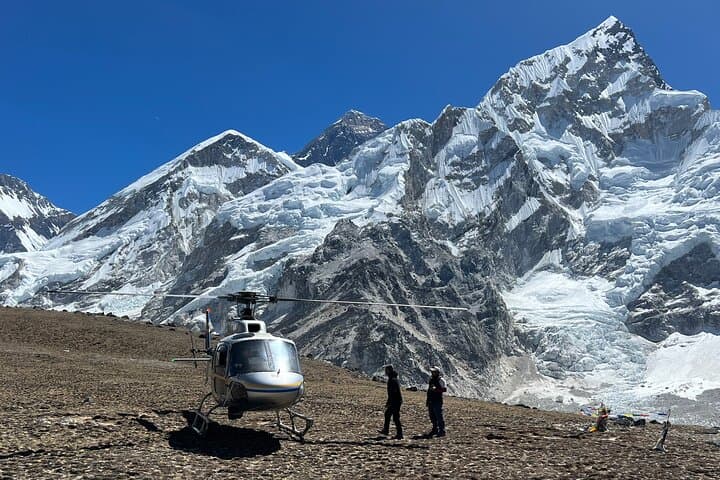
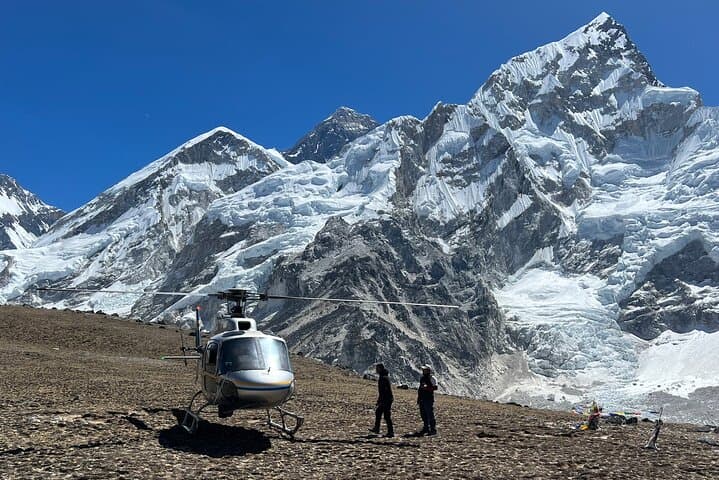
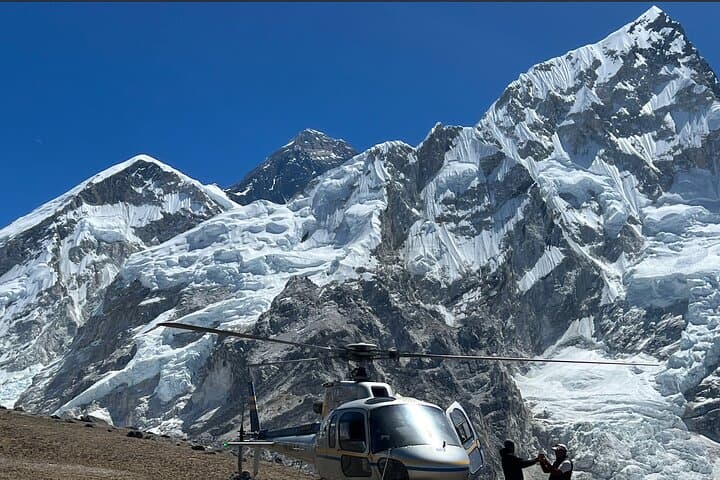
A direct helicopter flight from Kathmandu puts you within touching distance of Everest — landing at Kala Patthar and Lukla for panoramic views and a taste of high-altitude Sherpa culture. Fast, dramatic, and weather-dependent, it compresses days of trekking into a single unforgettable outing.
A direct helicopter flight from Kathmandu puts you within touching distance of Everest — landing at Kala Patthar and Lukla for panoramic views and a taste of high-altitude Sherpa culture. Fast, dramatic, and weather-dependent, it compresses days of trekking into a single unforgettable outing.
The helicopter lifts off from Kathmandu and the city shrinks into a grid of roofs while the Himalaya pushes up like a wall on the horizon. In minutes you’re carved into an aerial corridor of jagged ridgelines: Lhotse, Ama Dablam, Nuptse and finally Everest itself, a white crown that refuses to hide.
Verified experiences and guided adventures in the surrounding area.
Operated by Everest Experience and Assistance · Kathmandu, Bagmati Province
The helicopter lifts off from Kathmandu and the city shrinks into a grid of roofs while the Himalaya pushes up like a wall on the horizon. In minutes you’re carved into an aerial corridor of jagged ridgelines: Lhotse, Ama Dablam, Nuptse and finally Everest itself, a white crown that refuses to hide.
The route crosses dramatic geology — young, tectonically uplifted metamorphic rock, glaciers that sculpt sharp valleys, and moraine fields that mark glaciers’ slow march. Culturally the flight passes Sherpa villages where prayer flags thread the wind and small stone gompas mark centuries of Buddhist practice tied to high-altitude life. The region is inside Sagarmatha National Park, an area shaped by mountaineering history since Hillary and Norgay and by local stewardship of fragile alpine ecosystems.
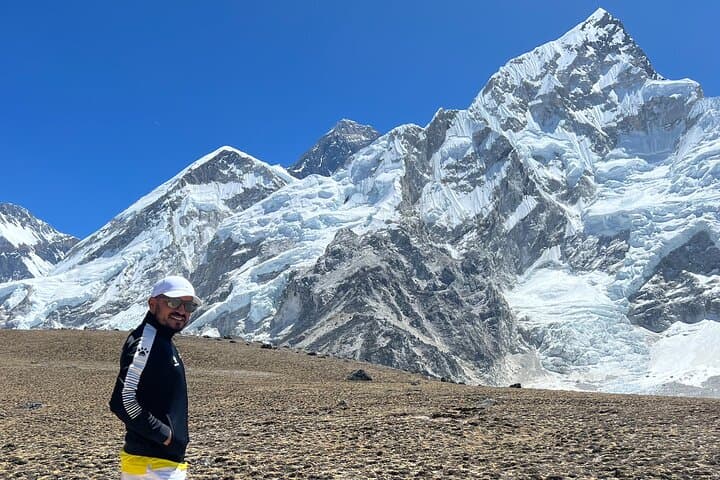
Landings at Kalapatthar and Lukla compress days of trekking into a single morning: brief walks on stony ground, panoramic windows on summits, and a breakfast stop at the Everest View Hotel if scheduled. Expect thin air, cold gusts, and only minutes to take pictures at 5,400–5,600 m; every breath feels deliberate and the mountains seem to watch you back.
Practical guidance: plan for rapid altitude exposure, bring insulated layers and eye protection, and carry ID and your weight details for manifest safety. Morning flights reduce turbulence and maximize visibility; weather can cancel last minute. This is a high-impact, low-footprint way to meet Everest — intense, efficient, and unforgettable.
moderate.
4–5 hours.
Minimal hiking required but expect brief exposure to high altitude; suitable for moderately fit travelers comfortable with short walks on rocky ground.
The flight itself requires no trekking fitness, but landings are at high elevation where short walks over uneven ground are needed; travelers with serious heart or respiratory conditions should avoid it.
Landings are typically brief (5–20 minutes) to manage helicopter weight, weather windows, and altitude exposure—plan for quick photos and a short walk.
Flights are frequently canceled for poor visibility, high winds, or safety concerns; operators usually offer a refund or rebooking if canceled at least 24 hours ahead or on safety grounds.
There are strict weight limits; large checked bags are not taken on the heli—travel light and coordinate baggage storage in Kathmandu with your operator.
The Khumbu region is home to Sherpa communities whose mountaineering partnerships with early Everest expeditions shaped modern high‑altitude climbing and local economies.
The area lies in Sagarmatha National Park, where permits and responsible tourism practices help limit waste and disturbance; avoid single-use plastics and pack out any trash.
Everest Experience and Assistance operates guided outdoor trips and adventures with an emphasis on safety, stewardship, and memorable experiences.
The helicopter lifts off from Kathmandu and the city shrinks into a grid of roofs while the Himalaya pushes up like a wall on the horizon. In minutes you’re carved into an aerial corridor of jagged ridgelines: Lhotse, Ama Dablam, Nuptse and finally Everest itself, a white crown that refuses to hide.
The helicopter lifts off from Kathmandu and the city shrinks into a grid of roofs while the Himalaya pushes up like a wall on the horizon. In minutes you’re carved into an aerial corridor of jagged ridgelines: Lhotse, Ama Dablam, Nuptse and finally Everest itself, a white crown that refuses to hide.
The route crosses dramatic geology — young, tectonically uplifted metamorphic rock, glaciers that sculpt sharp valleys, and moraine fields that mark glaciers’ slow march. Culturally the flight passes Sherpa villages where prayer flags thread the wind and small stone gompas mark centuries of Buddhist practice tied to high-altitude life. The region is inside Sagarmatha National Park, an area shaped by mountaineering history since Hillary and Norgay and by local stewardship of fragile alpine ecosystems.
Landings at Kalapatthar and Lukla compress days of trekking into a single morning: brief walks on stony ground, panoramic windows on summits, and a breakfast stop at the Everest View Hotel if scheduled. Expect thin air, cold gusts, and only minutes to take pictures at 5,400–5,600 m; every breath feels deliberate and the mountains seem to watch you back.
Practical guidance: plan for rapid altitude exposure, bring insulated layers and eye protection, and carry ID and your weight details for manifest safety. Morning flights reduce turbulence and maximize visibility; weather can cancel last minute. This is a high-impact, low-footprint way to meet Everest — intense, efficient, and unforgettable.