THE ADVENTURE COLLECTIVE® · Independent discovery and booking for outdoor travel

Skip the trek and reach Everest’s best vantage in hours: a helicopter flight that lands at Kala Patthar for an up-close view of Everest, plus a mountain-view breakfast. Expect thin air, sweeping glacial panoramas, and a brief but unforgettable high-altitude stop.
Skip the trek and reach Everest’s best vantage in hours: a helicopter flight that lands at Kala Patthar for an up-close view of Everest, plus a mountain-view breakfast. Expect thin air, sweeping glacial panoramas, and a brief but unforgettable high-altitude stop.
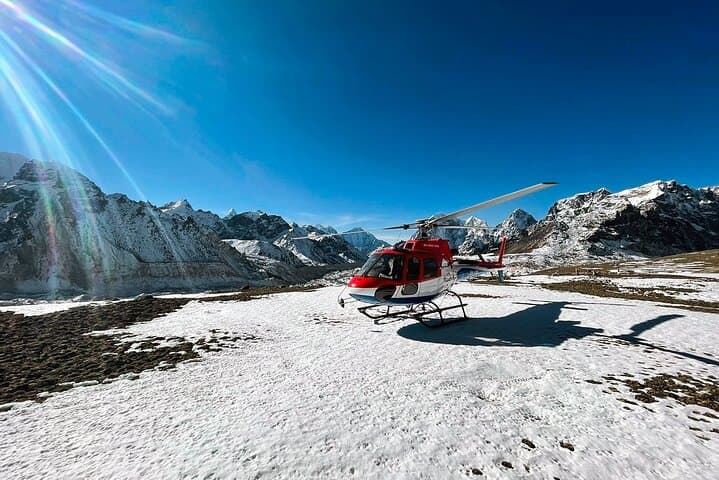
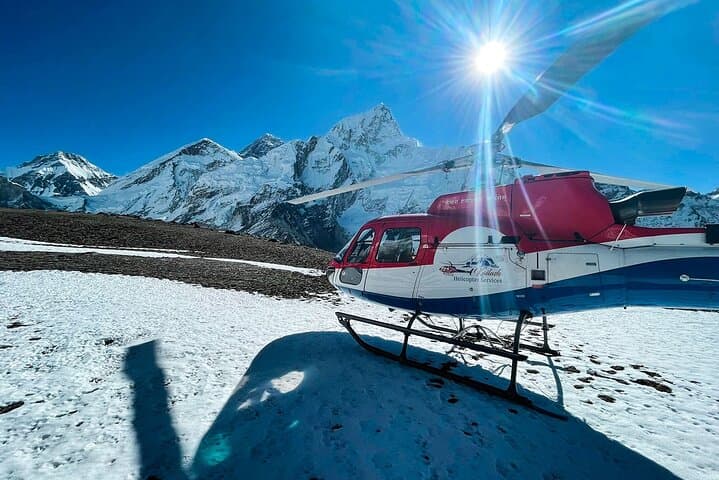
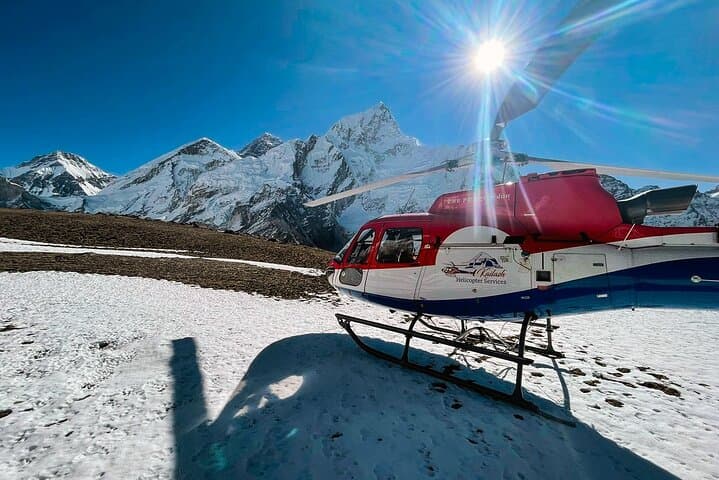
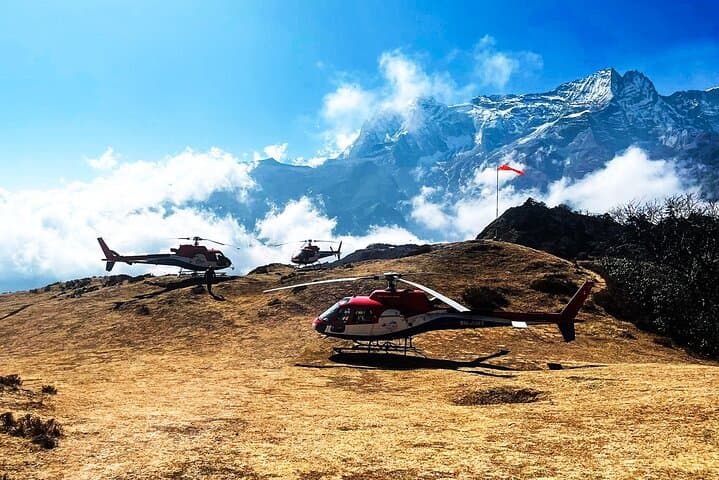
The rotor thumps, Kathmandu shrinks, and the low clouds fall away to reveal a serrated wall of ice and rock—Everest’s ridgeline slicing the dawn. Within an hour you’re over the Khumbu Valley, the glacier below pushing slow and blue, and the pilot is lining up a short landing on Kala Patthar at 5,644.5 m. The air is thin; the view is immediate and immense.
Verified experiences and guided adventures in the surrounding area.
Operated by Magical Nepal · Kathmandu, Bagmati Province
The rotor thumps, Kathmandu shrinks, and the low clouds fall away to reveal a serrated wall of ice and rock—Everest’s ridgeline slicing the dawn. Within an hour you’re over the Khumbu Valley, the glacier below pushing slow and blue, and the pilot is lining up a short landing on Kala Patthar at 5,644.5 m. The air is thin; the view is immediate and immense.
The Everest region is both young and ancient: the Himalaya rose as the Indian plate slammed into Asia, folding marine beds into the highest peaks on Earth. Human history is equally stark—Sherpa communities have guided climbers for generations, and the 1953 ascent of Everest by Hillary and Tenzing reshaped the valley’s relationship with the world.
Culturally, expect prayer flags, stone mani walls, and the quiet presence of yak tracks on moraines. The itinerary includes breakfast with mountain views at the Everest View Hotel—an uncommon combination of comfort and high-altitude spectacle.
Practical guidance: the full tour runs about 4–4.5 hours including hotel transfers; physical fitness needs are minimal, but altitude can affect anyone—spend an extra day in Kathmandu if you feel unwell. Dress in layers, bring sunglasses and a windproof jacket, and keep cameras ready—the angle from Kala Patthar is the closest non-climbing vantage of Everest.
Booking windows favor clear weather—late autumn and spring give the best visibility. Respect park rules, limit exposure time at the landing site, and pack out waste; the experience is stunning, but fragile.
easy.
4–4.5 hours.
Minimal fitness required for this tour, but you should be able to walk short distances at high altitude and stand on uneven ground.
Yes; the standard itinerary includes a short landing at Kala Patthar (about 5,644.5 m) for photos and views, typically 10–40 minutes depending on conditions.
The flight is accessible to most, but altitude effects vary—if you have recent high-altitude illness or serious cardio/pulmonary conditions, consult a doctor and consider acclimatizing in Kathmandu first.
Late autumn (Sept–Nov) and spring (Mar–May) generally offer the best visibility and most reliable flying weather.
The itinerary notes a breakfast stop at the Everest View Hotel and private transportation from Kathmandu—confirm exact inclusions with the operator at booking.
The Khumbu became internationally known after the 1953 Everest ascent; Sherpa communities have long served as guides and high-altitude specialists for climbers.
Flights reduce trekking pressure but increase noise and fuel use; Sagarmatha National Park rules regulate access—pack out waste and follow local guidance to minimize impact.
Magical Nepal operates guided outdoor trips and adventures with an emphasis on safety, stewardship, and memorable experiences.
The rotor thumps, Kathmandu shrinks, and the low clouds fall away to reveal a serrated wall of ice and rock—Everest’s ridgeline slicing the dawn. Within an hour you’re over the Khumbu Valley, the glacier below pushing slow and blue, and the pilot is lining up a short landing on Kala Patthar at 5,644.5 m. The air is thin; the view is immediate and immense.
The rotor thumps, Kathmandu shrinks, and the low clouds fall away to reveal a serrated wall of ice and rock—Everest’s ridgeline slicing the dawn. Within an hour you’re over the Khumbu Valley, the glacier below pushing slow and blue, and the pilot is lining up a short landing on Kala Patthar at 5,644.5 m. The air is thin; the view is immediate and immense.
The Everest region is both young and ancient: the Himalaya rose as the Indian plate slammed into Asia, folding marine beds into the highest peaks on Earth. Human history is equally stark—Sherpa communities have guided climbers for generations, and the 1953 ascent of Everest by Hillary and Tenzing reshaped the valley’s relationship with the world.
Culturally, expect prayer flags, stone mani walls, and the quiet presence of yak tracks on moraines. The itinerary includes breakfast with mountain views at the Everest View Hotel—an uncommon combination of comfort and high-altitude spectacle.
Practical guidance: the full tour runs about 4–4.5 hours including hotel transfers; physical fitness needs are minimal, but altitude can affect anyone—spend an extra day in Kathmandu if you feel unwell. Dress in layers, bring sunglasses and a windproof jacket, and keep cameras ready—the angle from Kala Patthar is the closest non-climbing vantage of Everest.
Booking windows favor clear weather—late autumn and spring give the best visibility. Respect park rules, limit exposure time at the landing site, and pack out waste; the experience is stunning, but fragile.