THE ADVENTURE COLLECTIVE® · Independent discovery and booking for outdoor travel

Fly into Lukla and follow the classic Khumbu trail to Everest Base Camp and Kala Patthar on a fixed-departure group trek. Expect high-elevation days, teahouse lodging, Sherpa culture, and panoramic Himalayan views.
Fly into Lukla and follow the classic Khumbu trail to Everest Base Camp and Kala Patthar on a fixed-departure group trek. Expect high-elevation days, teahouse lodging, Sherpa culture, and panoramic Himalayan views.
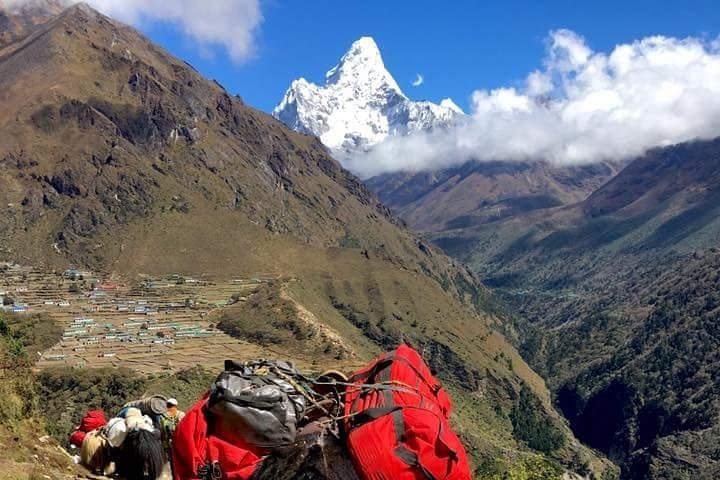
A thin dawn light breaks over Kathmandu as the group gathers for a flight that climbs into clouds and mountains—45 minutes later the plane drops you at Lukla’s runway and the trail begins. The first days wind along rhododendron forests and rivers daring you forward, through tea-house villages and yak pastures, each step trading lowland humidity for thin, dry air.
Verified experiences and guided adventures in the surrounding area.
Operated by Himalayan Smile Treks and Adventure Pvt. Ltd · Lukla, Province No. 1
A thin dawn light breaks over Kathmandu as the group gathers for a flight that climbs into clouds and mountains—45 minutes later the plane drops you at Lukla’s runway and the trail begins. The first days wind along rhododendron forests and rivers daring you forward, through tea-house villages and yak pastures, each step trading lowland humidity for thin, dry air.
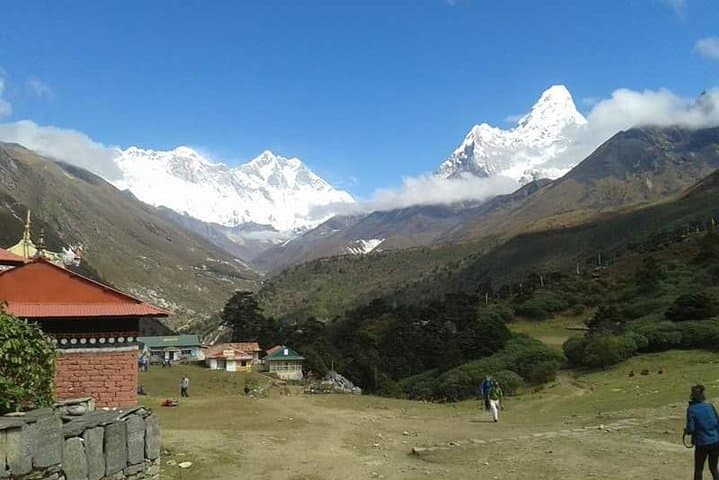
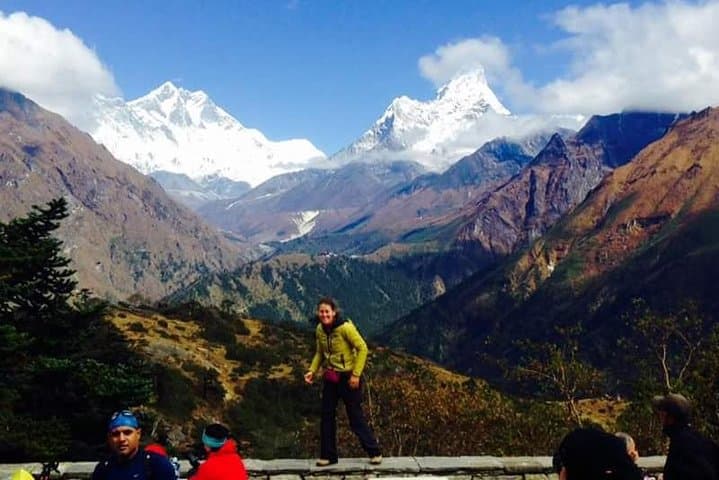
The route follows the Khumbu corridor through Sagarmatha National Park (est. 1976), carved by glaciers that built the valleys and left moraines where lodges now sit. Treks thread Sherpa villages—Namche Bazaar’s market life, Tengboche monastery’s prayer flags—offering a window into Sherpa culture and Himalayan Buddhist traditions. Geologically, the trail exposes uplifted metamorphic rock and glacial till; culturally, it passes settlements shaped by trade, mountaineering and yak husbandry.
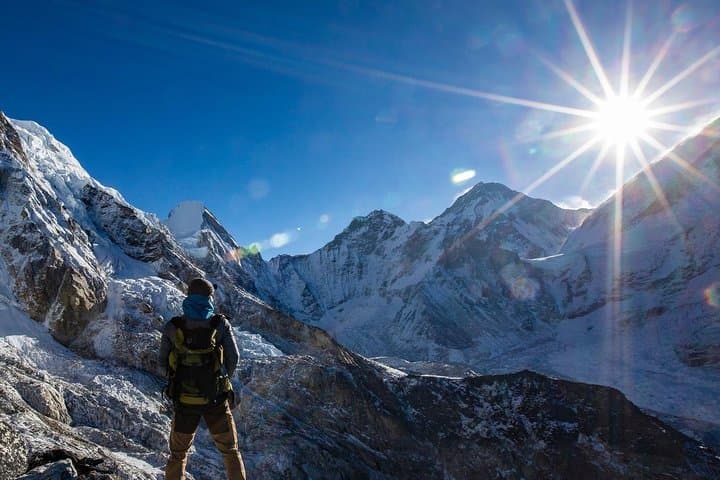
Expect daily walking of 4–8 hours, trails of packed earth, stone steps and scree, and key elevations: Lukla (2,860 m), Namche (3,440 m), Gorak Shep (5,164 m), Everest Base Camp (5,364 m) and Kala Patthar viewpoint (~5,545 m). Altitude, cold nights and fast-changing weather are the controlling factors.
Practical guidance: prioritize acclimatization days (Namche, Dingboche), layer for wind and sun, carry a small personal first-aid kit and water treatment, and use trekking poles to protect knees on descent. Flights to/from Lukla are weather-dependent—build buffer days into your schedule. Respect local rules in Sagarmatha National Park, minimize single-use plastics, and be prepared for basic mountain lodge accommodations—hot food, shared rooms, spectacular views.
challenging.
13–15 days.
Good cardiovascular fitness with experience walking multiple days at moderate pace; ability to carry a 8–12 kg daypack and tolerate basic lodge conditions.
Pre-monsoon spring (March–May) and post-monsoon autumn (late Sept–Nov) offer the most stable weather, clearer views and active teahouse services.
Flights are frequently delayed or canceled due to weather; operators often build buffer days—expect flexibility and occasional overnight holds in Kathmandu.
No technical gear or climbing skills are required; this is a high-altitude trek to base camp with lodge accommodation, not a summit climb.
Ascend slowly, take scheduled acclimatization days, hydrate, avoid alcohol, and know symptoms of AMS—inform your guide immediately if you experience severe headache, nausea or breathlessness.
The Khumbu valley has long been a trade and pastoral corridor for Sherpa communities; Sagarmatha National Park was established in 1976 and later inscribed as a UNESCO World Heritage Site.
The region faces pressure from waste and seasonal tourism—use local lodges, avoid single-use plastics, and follow park guidelines to reduce impact.
Himalayan Smile Treks and Adventure Pvt. Ltd operates guided outdoor trips and adventures with an emphasis on safety, stewardship, and memorable experiences.
A thin dawn light breaks over Kathmandu as the group gathers for a flight that climbs into clouds and mountains—45 minutes later the plane drops you at Lukla’s runway and the trail begins. The first days wind along rhododendron forests and rivers daring you forward, through tea-house villages and yak pastures, each step trading lowland humidity for thin, dry air.
A thin dawn light breaks over Kathmandu as the group gathers for a flight that climbs into clouds and mountains—45 minutes later the plane drops you at Lukla’s runway and the trail begins. The first days wind along rhododendron forests and rivers daring you forward, through tea-house villages and yak pastures, each step trading lowland humidity for thin, dry air.
The route follows the Khumbu corridor through Sagarmatha National Park (est. 1976), carved by glaciers that built the valleys and left moraines where lodges now sit. Treks thread Sherpa villages—Namche Bazaar’s market life, Tengboche monastery’s prayer flags—offering a window into Sherpa culture and Himalayan Buddhist traditions. Geologically, the trail exposes uplifted metamorphic rock and glacial till; culturally, it passes settlements shaped by trade, mountaineering and yak husbandry.
Expect daily walking of 4–8 hours, trails of packed earth, stone steps and scree, and key elevations: Lukla (2,860 m), Namche (3,440 m), Gorak Shep (5,164 m), Everest Base Camp (5,364 m) and Kala Patthar viewpoint (~5,545 m). Altitude, cold nights and fast-changing weather are the controlling factors.
Practical guidance: prioritize acclimatization days (Namche, Dingboche), layer for wind and sun, carry a small personal first-aid kit and water treatment, and use trekking poles to protect knees on descent. Flights to/from Lukla are weather-dependent—build buffer days into your schedule. Respect local rules in Sagarmatha National Park, minimize single-use plastics, and be prepared for basic mountain lodge accommodations—hot food, shared rooms, spectacular views.