THE ADVENTURE COLLECTIVE® · Independent discovery and booking for outdoor travel

A compressed 10–12 day push to Everest Base Camp, this express trek delivers high Himalayan views and Sherpa culture on a tighter schedule. Expect long hiking days, teahouse nights, and critical acclimatization stops.
A compressed 10–12 day push to Everest Base Camp, this express trek delivers high Himalayan views and Sherpa culture on a tighter schedule. Expect long hiking days, teahouse nights, and critical acclimatization stops.
You step out of the thin-air sunlight onto a rocky airstrip, the plane’s engines still humming — the Himalaya greets you with sharp angles and an immediate sense of scale. On the Everest Base Camp Express, the mountains don’t wait for your acclimatization; they challenge it, offering glacier-polished ridgelines and prayer flags fluttering like punctuation marks along the trail.
Verified experiences and guided adventures in the surrounding area.
Operated by Himalayas On Foot - Day Tours · Lukla, Province No. 1
You step out of the thin-air sunlight onto a rocky airstrip, the plane’s engines still humming — the Himalaya greets you with sharp angles and an immediate sense of scale. On the Everest Base Camp Express, the mountains don’t wait for your acclimatization; they challenge it, offering glacier-polished ridgelines and prayer flags fluttering like punctuation marks along the trail.
This route threads through the Khumbu, inside Sagarmatha National Park, an area shaped by uplifted sediments and the immense sculpting of ice. Sherpa villages — stone teahouses, mani walls and prayer wheels — trace centuries of Tibetan-influenced culture tied to mountaineering and Buddhism. Names like Namche Bazaar, Tengboche and Lobuche carry the history of early expeditions and local trade routes between Nepal and Tibet.
Practically, this is a high-altitude trek: expect daily walks of 4–7 hours, gravel and packed-dirt trails, and elevation gain that culminates near 5,364 m at Gorak Shep and the glacier tongue at EBC. Acclimatization days at Namche and Dingboche are built into the itinerary for safety.
Plan for morning flights to/from Lukla, basic teahouse accommodation, and limited mobile connectivity. Mandatory TIMS and Sagarmatha National Park permits are required; guides typically handle paperwork. Hydration, a slow ascent profile, and awareness of acute mountain sickness are essential — the mountains will nudge you, and your breathing will tell you how the day goes.
Bring layered, cold-weather gear, sturdy boots, and a compact first-aid kit including altitude medication if prescribed. Aim to travel in spring or autumn for the clearest views, and treat the environment with leave-no-trace care: the Khumbu’s paths are fragile and the wind carries both prayer flags and plastic away.
challenging.
10–12 days.
Good aerobic fitness with experience on multi-day hikes; ability to handle daily uphill sections and high-altitude conditions.
While independent trekkers do the route, guides simplify logistics, handle permits (TIMS and Sagarmatha National Park) and improve safety at altitude.
You should have recent multi-day hiking experience and solid cardiovascular fitness; the schedule is tight and days can be long with substantial elevation gain.
You need a TIMS card and Sagarmatha National Park entry permit; many operators include these in the package and carry copies for checks at checkpoints.
Accommodation is in teahouses — basic private rooms or shared bunks, with communal dining; bring a warm sleeping bag and expect simple facilities.
The Khumbu region was historically a trade corridor between Nepal and Tibet; Sherpa culture evolved alongside mountaineering in the 20th century as foreign expeditions increased.
Sagarmatha National Park manages trekking impact with permit systems and waste rules; visitors should pack out non-biodegradable waste and minimize wood burning to protect fragile alpine zones.
Himalayas On Foot - Day Tours operates guided outdoor trips and adventures with an emphasis on safety, stewardship, and memorable experiences.
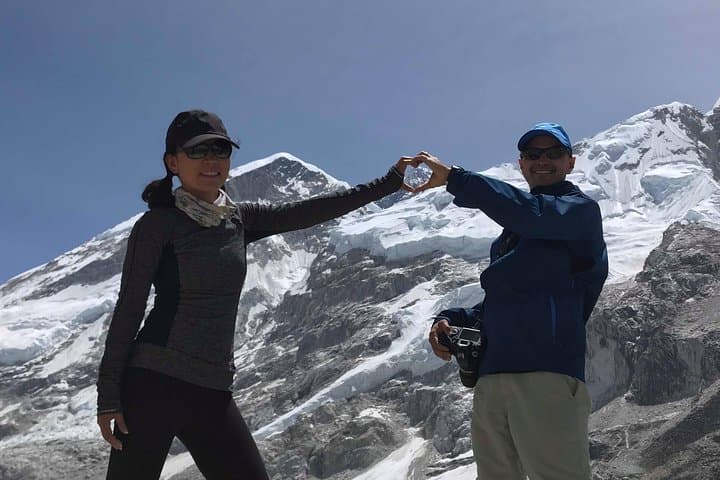
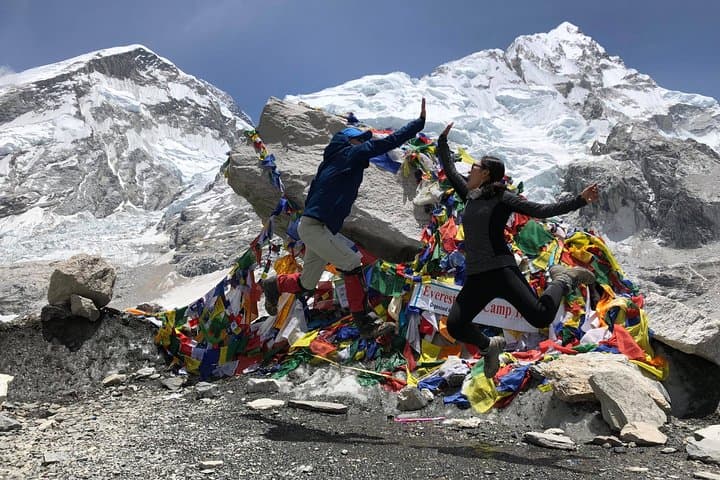


You step out of the thin-air sunlight onto a rocky airstrip, the plane’s engines still humming — the Himalaya greets you with sharp angles and an immediate sense of scale. On the Everest Base Camp Express, the mountains don’t wait for your acclimatization; they challenge it, offering glacier-polished ridgelines and prayer flags fluttering like punctuation marks along the trail.
You step out of the thin-air sunlight onto a rocky airstrip, the plane’s engines still humming — the Himalaya greets you with sharp angles and an immediate sense of scale. On the Everest Base Camp Express, the mountains don’t wait for your acclimatization; they challenge it, offering glacier-polished ridgelines and prayer flags fluttering like punctuation marks along the trail.
This route threads through the Khumbu, inside Sagarmatha National Park, an area shaped by uplifted sediments and the immense sculpting of ice. Sherpa villages — stone teahouses, mani walls and prayer wheels — trace centuries of Tibetan-influenced culture tied to mountaineering and Buddhism. Names like Namche Bazaar, Tengboche and Lobuche carry the history of early expeditions and local trade routes between Nepal and Tibet.
Practically, this is a high-altitude trek: expect daily walks of 4–7 hours, gravel and packed-dirt trails, and elevation gain that culminates near 5,364 m at Gorak Shep and the glacier tongue at EBC. Acclimatization days at Namche and Dingboche are built into the itinerary for safety.
Plan for morning flights to/from Lukla, basic teahouse accommodation, and limited mobile connectivity. Mandatory TIMS and Sagarmatha National Park permits are required; guides typically handle paperwork. Hydration, a slow ascent profile, and awareness of acute mountain sickness are essential — the mountains will nudge you, and your breathing will tell you how the day goes.
Bring layered, cold-weather gear, sturdy boots, and a compact first-aid kit including altitude medication if prescribed. Aim to travel in spring or autumn for the clearest views, and treat the environment with leave-no-trace care: the Khumbu’s paths are fragile and the wind carries both prayer flags and plastic away.