THE ADVENTURE COLLECTIVE® · Independent discovery and booking for outdoor travel

A 30-day expedition linking three classic 6,000m peaks in the Everest region — Mera, Island and Lobuche East. Expect long approaches, glacier travel, fixed ropes and deep Sherpa culture, with a structured acclimatization plan and contingency days for weather.
A 30-day expedition linking three classic 6,000m peaks in the Everest region — Mera, Island and Lobuche East. Expect long approaches, glacier travel, fixed ropes and deep Sherpa culture, with a structured acclimatization plan and contingency days for weather.
Night in Kathmandu, then a six-hour jeep ride dissolving lowland chaos into terraced hills — this is how the expedition opens, with the Himalaya already pulling at the horizon. Over 30 days you move from teahouse trails into a glacial world: Mera Peak (6,476 m), Island Peak/Imja Tse (6,189 m) and Lobuche East (6,119 m) stand as the program’s three summits, linked by high camps, moraine scrambles and a technical pass at Amphu Lapcha (≈5,842 m).
Verified experiences and guided adventures in the surrounding area.
Operated by Himalayan Ecstasy Nepal · Kathmandu, Bagmati Province
Night in Kathmandu, then a six-hour jeep ride dissolving lowland chaos into terraced hills — this is how the expedition opens, with the Himalaya already pulling at the horizon. Over 30 days you move from teahouse trails into a glacial world: Mera Peak (6,476 m), Island Peak/Imja Tse (6,189 m) and Lobuche East (6,119 m) stand as the program’s three summits, linked by high camps, moraine scrambles and a technical pass at Amphu Lapcha (≈5,842 m).
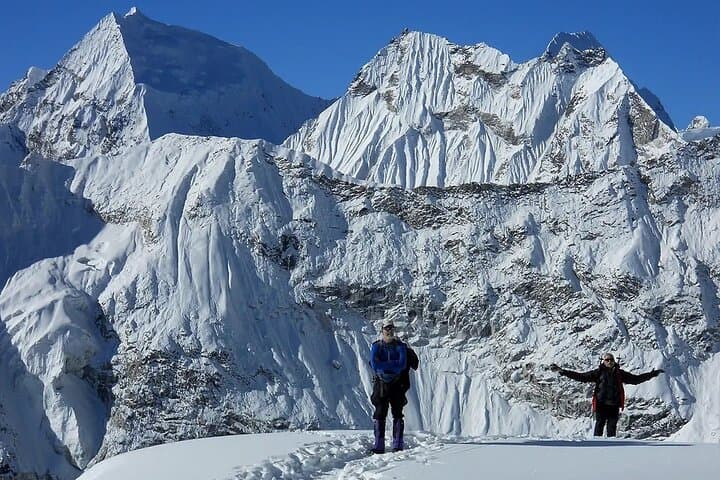
The route threads Sherpa villages, Tengboche monastery and the Sagarmatha National Park boundary — an area shaped by the collision of the Indian and Eurasian plates, where uplifted granites and ice-carved cirques record ongoing geology. Sherpa culture and Buddhist monasteries provide constant human landmarks; prayer flags and mani stones mark passages that were once trade and pilgrimage routes.
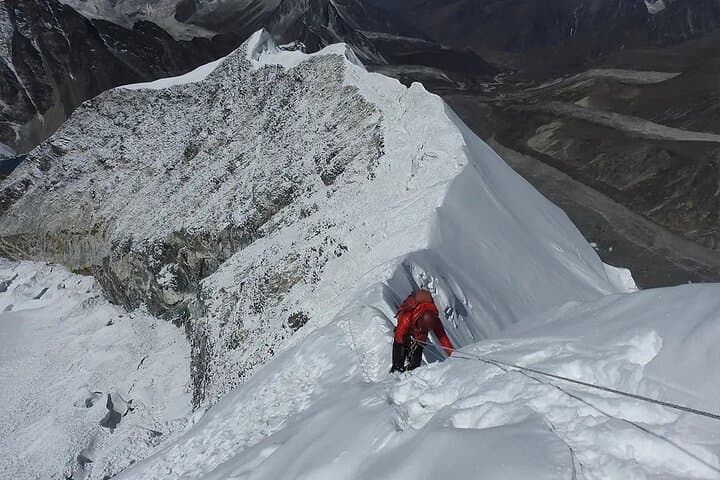
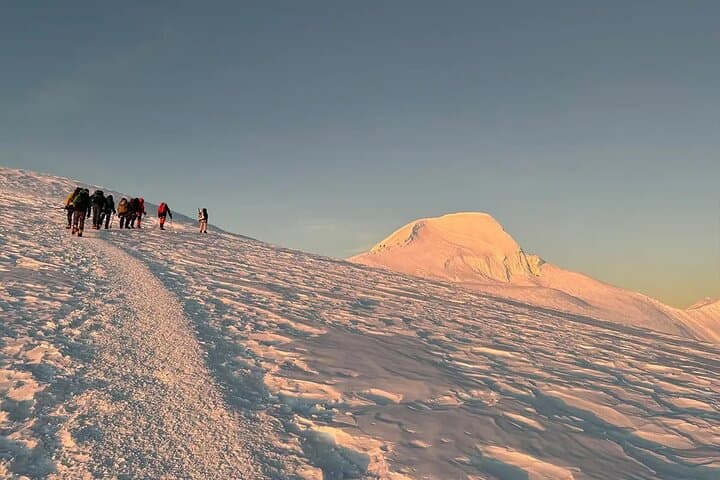
Expect varied terrain: steep rhododendron forests, moraine walks, glacial ice requiring crampons, fixed ropes and roped travel on summit pushes. Typical summit days start before dawn, use fixed lines on headwalls, and demand steady pacing and careful footwork on scree and snow ridges. The itinerary builds acclimatization deliberately (rest days, Thangnag Ri, Chhukung Ri options) — a must for safety.
Practical guidance: train with long uphill days and weighted packs, practice crampon and ice-axe use, and plan to drink 3–4 liters daily at altitude. Bring rigid mountaineering boots, layered clothing for extremes, and allow contingency days for weather. Peak windows: March–April and October–November. With preparation, this is a technical yet accessible introduction to high-altitude climbing in the Everest region.
difficult.
30 days.
High cardiovascular fitness and prior high-altitude trekking experience; able to carry a daypack and endure consecutive long days at altitude.
Yes — previous high-altitude trekking and comfort with long, steep days is required; technical instruction is provided but basic rope and crampon experience is strongly recommended.
The best windows are pre-monsoon (March–April) and post-monsoon (October–November) for the clearest, most stable weather.
All three peaks include glacier travel, fixed ropes and steep snow/ice sections; Lobuche East and Island Peak require more technical rope work on the summit ridge and headwall.
Guides carry comprehensive first-aid kits including oximeters and a Gammow bag for groups above four; evacuation depends on helicopter availability and conditions.
The Khumbu region is the traditional homeland of the Sherpa people and became globally linked to mountaineering during the early Everest expeditions; Sagarmatha (Everest) National Park protects both natural and cultural heritage.
All climbers require permits for Sagarmatha and peak-specific permits; teams are encouraged to follow strict waste protocols and pack out non-biodegradable items to reduce impact.
Himalayan Ecstasy Nepal operates guided outdoor trips and adventures with an emphasis on safety, stewardship, and memorable experiences.
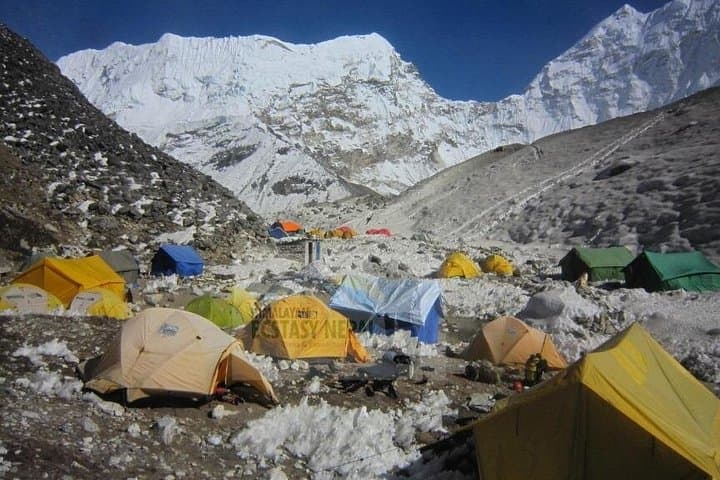
Night in Kathmandu, then a six-hour jeep ride dissolving lowland chaos into terraced hills — this is how the expedition opens, with the Himalaya already pulling at the horizon. Over 30 days you move from teahouse trails into a glacial world: Mera Peak (6,476 m), Island Peak/Imja Tse (6,189 m) and Lobuche East (6,119 m) stand as the program’s three summits, linked by high camps, moraine scrambles and a technical pass at Amphu Lapcha (≈5,842 m).
Night in Kathmandu, then a six-hour jeep ride dissolving lowland chaos into terraced hills — this is how the expedition opens, with the Himalaya already pulling at the horizon. Over 30 days you move from teahouse trails into a glacial world: Mera Peak (6,476 m), Island Peak/Imja Tse (6,189 m) and Lobuche East (6,119 m) stand as the program’s three summits, linked by high camps, moraine scrambles and a technical pass at Amphu Lapcha (≈5,842 m).
The route threads Sherpa villages, Tengboche monastery and the Sagarmatha National Park boundary — an area shaped by the collision of the Indian and Eurasian plates, where uplifted granites and ice-carved cirques record ongoing geology. Sherpa culture and Buddhist monasteries provide constant human landmarks; prayer flags and mani stones mark passages that were once trade and pilgrimage routes.
Expect varied terrain: steep rhododendron forests, moraine walks, glacial ice requiring crampons, fixed ropes and roped travel on summit pushes. Typical summit days start before dawn, use fixed lines on headwalls, and demand steady pacing and careful footwork on scree and snow ridges. The itinerary builds acclimatization deliberately (rest days, Thangnag Ri, Chhukung Ri options) — a must for safety.
Practical guidance: train with long uphill days and weighted packs, practice crampon and ice-axe use, and plan to drink 3–4 liters daily at altitude. Bring rigid mountaineering boots, layered clothing for extremes, and allow contingency days for weather. Peak windows: March–April and October–November. With preparation, this is a technical yet accessible introduction to high-altitude climbing in the Everest region.