THE ADVENTURE COLLECTIVE® · Independent discovery and booking for outdoor travel

Spend an evening in downtown Cairo among journalists, writers and filmmakers—private introductions, guided translation and real-time conversations in historic coffeehouses. A cultural immersion that puts you in the room where contemporary Egyptian ideas are forged.
Spend an evening in downtown Cairo among journalists, writers and filmmakers—private introductions, guided translation and real-time conversations in historic coffeehouses. A cultural immersion that puts you in the room where contemporary Egyptian ideas are forged.
The lamplight of downtown Cairo lands on chipped tabletops and old newspapers; the air carries the spice of strong coffee and argument. Here, in the evenings, local journalists, directors, writers and artists gather in small, smoke-darkened coffeehouses to read new work, trade critiques and test ideas aloud. A visiting guest is ushered into conversation rather than a performance—a seat at the table more than a spectator in a gallery.
Verified experiences and guided adventures in the surrounding area.
Operated by Live Egypt · Cairo, Cairo Governorate
The lamplight of downtown Cairo lands on chipped tabletops and old newspapers; the air carries the spice of strong coffee and argument. Here, in the evenings, local journalists, directors, writers and artists gather in small, smoke-darkened coffeehouses to read new work, trade critiques and test ideas aloud. A visiting guest is ushered into conversation rather than a performance—a seat at the table more than a spectator in a gallery.
Cairo’s modern downtown grew during the late 19th and early 20th centuries, when urban planners carved boulevards and cafés into the Nile’s eastern bank. The city’s intellectual life has long coalesced around these public rooms; coffeehouses became informal salons where political thought and cultural practice mix with the everyday rumble of the metropolis. Geologically, the area rests on the fertile alluvial plain of the Nile—flat, built-up ground that shaped the city’s dense street patterns and walkable blocks.
On this private evening tour, a local guide introduces you to conversational circuits, translates when needed and navigates the social protocol of introductions. Expect long table discussions, quick-witted barbs and guests who prefer ideas over scripts. Practicalities: the visit runs four to six hours, includes hotel pickup and a local lunch, and moves at a relaxed, evening pace.
Bring an open mind, a few questions, modest clothing and a readiness to listen. Photographs are sometimes discouraged—ask before you shoot. Pay attention to the guide’s cues: these are working cultural spaces, not static exhibits. With the right etiquette, this is one of the clearest ways to see contemporary Egypt through the eyes of those who shape its stories.
easy.
4–6 hours.
Suitable for all fitness levels; mostly seated and walking short distances
Yes—hotel pickup and return are included as part of the private tour service.
You should always ask before photographing; some participants prefer private conversation and no images.
The evening format and conversational content are best for teens and adults; check with the operator if bringing younger children.
The operator lists wheelchair access, but historic café entrances can be uneven—confirm specific venue access when booking.
Downtown Cairo took shape during late 19th and early 20th century urban development; its cafés quickly became hubs for political and cultural debate.
Respect historic interiors and minimize waste—support local cafés and avoid single‑use plastics where possible.
Live Egypt operates guided outdoor trips and adventures with an emphasis on safety, stewardship, and memorable experiences.
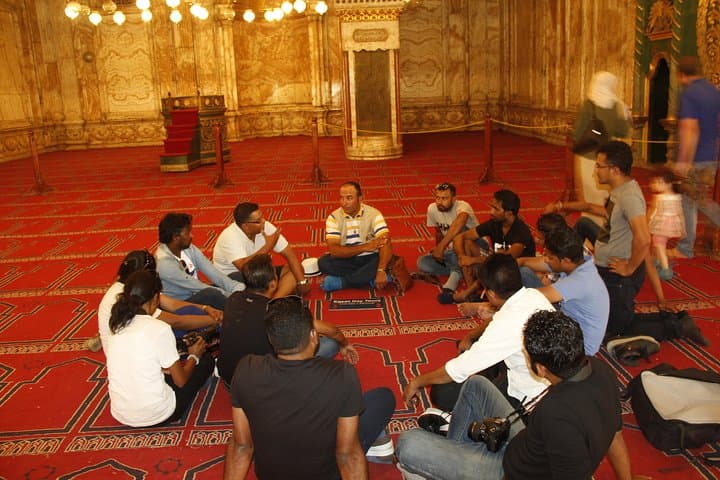


The lamplight of downtown Cairo lands on chipped tabletops and old newspapers; the air carries the spice of strong coffee and argument. Here, in the evenings, local journalists, directors, writers and artists gather in small, smoke-darkened coffeehouses to read new work, trade critiques and test ideas aloud. A visiting guest is ushered into conversation rather than a performance—a seat at the table more than a spectator in a gallery.
The lamplight of downtown Cairo lands on chipped tabletops and old newspapers; the air carries the spice of strong coffee and argument. Here, in the evenings, local journalists, directors, writers and artists gather in small, smoke-darkened coffeehouses to read new work, trade critiques and test ideas aloud. A visiting guest is ushered into conversation rather than a performance—a seat at the table more than a spectator in a gallery.
Cairo’s modern downtown grew during the late 19th and early 20th centuries, when urban planners carved boulevards and cafés into the Nile’s eastern bank. The city’s intellectual life has long coalesced around these public rooms; coffeehouses became informal salons where political thought and cultural practice mix with the everyday rumble of the metropolis. Geologically, the area rests on the fertile alluvial plain of the Nile—flat, built-up ground that shaped the city’s dense street patterns and walkable blocks.
On this private evening tour, a local guide introduces you to conversational circuits, translates when needed and navigates the social protocol of introductions. Expect long table discussions, quick-witted barbs and guests who prefer ideas over scripts. Practicalities: the visit runs four to six hours, includes hotel pickup and a local lunch, and moves at a relaxed, evening pace.
Bring an open mind, a few questions, modest clothing and a readiness to listen. Photographs are sometimes discouraged—ask before you shoot. Pay attention to the guide’s cues: these are working cultural spaces, not static exhibits. With the right etiquette, this is one of the clearest ways to see contemporary Egypt through the eyes of those who shape its stories.