THE ADVENTURE COLLECTIVE® · Independent discovery and booking for outdoor travel

Wind down in Kathmandu with a 60-minute evening sound bath that blends Himalayan singing-bowl tradition and modern relaxation. Ideal after a day of sightseeing, the private session focuses on breathing, low-frequency tones and restorative quiet.
Wind down in Kathmandu with a 60-minute evening sound bath that blends Himalayan singing-bowl tradition and modern relaxation. Ideal after a day of sightseeing, the private session focuses on breathing, low-frequency tones and restorative quiet.
Late afternoon in Kathmandu slips from warm light to a cooling hush, and in a small studio the first note of a singing bowl cuts the city noise like a soft bell.
Verified experiences and guided adventures in the surrounding area.
Operated by Golden Temple Singing Bowls Sound Healing Center · Kathmandu, Bagmati Province
Late afternoon in Kathmandu slips from warm light to a cooling hush, and in a small studio the first note of a singing bowl cuts the city noise like a soft bell.
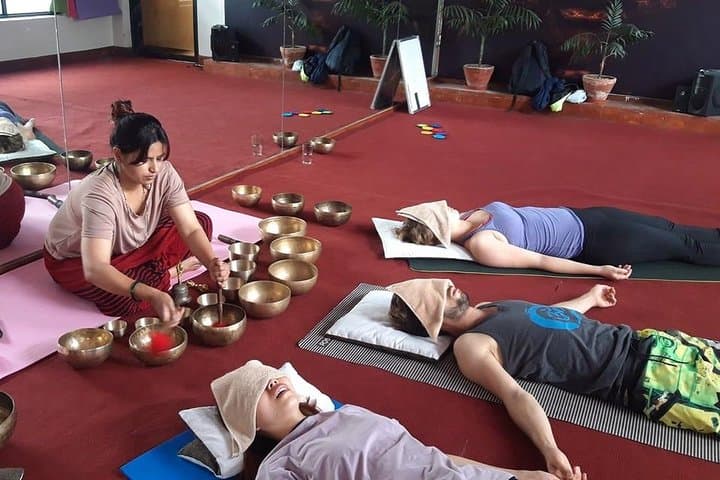
You sit on a cushion as metal tones bloom and fade; the session is deliberately slow, frequencies designed to nudge breath and attention rather than force them. The practice draws from Himalayan metalworking and Tibetan-Buddhist sound traditions—singing bowls, gongs and subtle vocal tones have been part of the region’s ritual life for centuries, adapted into contemporary wellness settings across the valley.
Geology and culture meet here: the Kathmandu Valley’s compact basin keeps evening air still, letting sound carry; Newar neighborhoods and monastic chant traditions nearby mean silence and listening are culturally familiar.
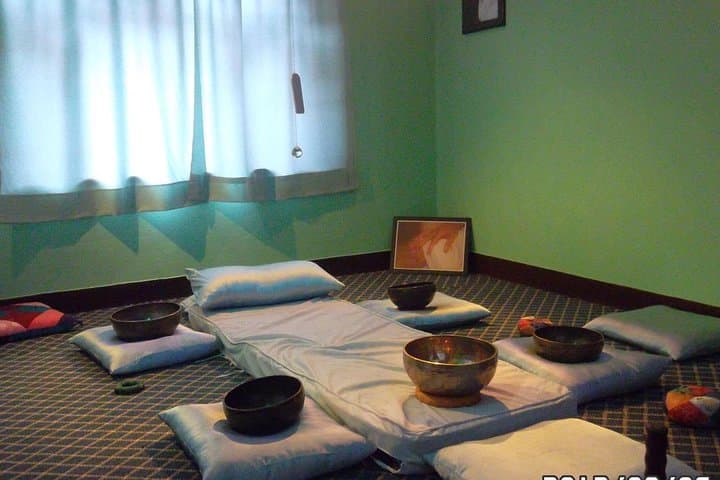
Expect an intimate, private session—one hour long, held daily (typically 4:00–5:00pm). The space emphasizes comfort and quiet rather than spectacle: dim lighting, floor cushions, and guided breathing. Sessions claim relaxation and reduced tension through vibrational frequencies produced by handcrafted metal bowls.
Practical guidance: arrive 10–15 minutes early to settle and fill out any forms; silence phones and avoid strong scents. Wear comfortable, layered clothing—you’ll be seated still. If you’re sensitive to sound, let the facilitator know; light earplugs or an eye mask are fine.
This is a low-impact way to end a travel day in Kathmandu—accessible to most fitness levels, culturally rooted, and a calm counterpoint to the city’s streets. Use it as recovery between sightseeing, and leave space afterward for a quiet walk back to your guesthouse.
easy.
1 hour.
Suitable for all fitness levels; minimal mobility required and sessions are mostly seated or supine.
No. Sessions are designed for beginners and experienced listeners alike; facilitators guide breathing and posture.
Many facilitators welcome pregnant participants but recommend notifying them in advance and avoiding intense pressure sounds—check with your provider and care team.
Yes—most spaces can accommodate alternate seating or a chair; disclose needs when booking so the host can prepare.
Full refund if canceled at least 24 hours before the scheduled start time; same-day cancellations are typically nonrefundable.
Singing bowls and metalwork in the Himalaya have long ties to Tibetan-Buddhist ritual and local smithing traditions; modern sound therapy adapts those tones for relaxation and breathwork.
These small studios rely on low-impact practices—maintain silence, avoid single-use plastics, and support local practitioners by booking directly when possible.
Golden Temple Singing Bowls Sound Healing Center operates guided outdoor trips and adventures with an emphasis on safety, stewardship, and memorable experiences.
Late afternoon in Kathmandu slips from warm light to a cooling hush, and in a small studio the first note of a singing bowl cuts the city noise like a soft bell.
Late afternoon in Kathmandu slips from warm light to a cooling hush, and in a small studio the first note of a singing bowl cuts the city noise like a soft bell.
You sit on a cushion as metal tones bloom and fade; the session is deliberately slow, frequencies designed to nudge breath and attention rather than force them. The practice draws from Himalayan metalworking and Tibetan-Buddhist sound traditions—singing bowls, gongs and subtle vocal tones have been part of the region’s ritual life for centuries, adapted into contemporary wellness settings across the valley.
Geology and culture meet here: the Kathmandu Valley’s compact basin keeps evening air still, letting sound carry; Newar neighborhoods and monastic chant traditions nearby mean silence and listening are culturally familiar.
Expect an intimate, private session—one hour long, held daily (typically 4:00–5:00pm). The space emphasizes comfort and quiet rather than spectacle: dim lighting, floor cushions, and guided breathing. Sessions claim relaxation and reduced tension through vibrational frequencies produced by handcrafted metal bowls.
Practical guidance: arrive 10–15 minutes early to settle and fill out any forms; silence phones and avoid strong scents. Wear comfortable, layered clothing—you’ll be seated still. If you’re sensitive to sound, let the facilitator know; light earplugs or an eye mask are fine.
This is a low-impact way to end a travel day in Kathmandu—accessible to most fitness levels, culturally rooted, and a calm counterpoint to the city’s streets. Use it as recovery between sightseeing, and leave space afterward for a quiet walk back to your guesthouse.