THE ADVENTURE COLLECTIVE® · Independent discovery and booking for outdoor travel

Spend five hours wandering Zhujiajiao after dark—walking historic bridges, sampling street foods, and optionally drifting the canals by hand-poled boat. This flexible evening tour blends Ming- and Qing-era streetscapes with practical tips to make the most of your night in the water town.
Spend five hours wandering Zhujiajiao after dark—walking historic bridges, sampling street foods, and optionally drifting the canals by hand-poled boat. This flexible evening tour blends Ming- and Qing-era streetscapes with practical tips to make the most of your night in the water town.
Lantern light glints on slow-moving canals as footsteps echo on centuries-old stone. An evening in Zhujiajiao moves at river time: vendors light stalls, wooden shutters close on courtyards, and the 16th-century Fangsheng Bridge arcs over reflections that tremble with passing boats.
Verified experiences and guided adventures in the surrounding area.
Lantern light glints on slow-moving canals as footsteps echo on centuries-old stone. An evening in Zhujiajiao moves at river time: vendors light stalls, wooden shutters close on courtyards, and the 16th-century Fangsheng Bridge arcs over reflections that tremble with passing boats.
The town’s layout grew from waterways that shaped commerce during the Ming and Qing dynasties; narrow lanes were once trade routes for salt and grain. Architecture here is pragmatic—whitewashed walls, black-tile roofs, and carved beams—showing how local carpentry and masonry adapted to a humid delta. Cultural touches are immediate: vendors selling zongzi, small opera posters, and shops offering traditional dress for staged portraits.
Expect easy walking on uneven cobbles and short stone steps—total walking distance for a typical flexible evening is roughly 2–4 km with negligible elevation gain. The canal invites optional hand-poled gondola rides that change the perspective from street-level to waterline, while nighttime light makes photography rewarding but tricky.
Practical guidance: plan around sunset to catch the glow without the midafternoon heat; bring a light jacket and closed shoes for slippery stones. Cash and a charged phone are useful—some stalls are cash-only and cell reception is intermittent in narrow alleys. If you choose a waterside dinner or boat ride, confirm prices and meeting points with your guide in advance.
This five-hour flexible experience is both a cultural stroll and a sensory study in how water shapes towns: slow, compact, and full of small discoveries if you move deliberately.
easy.
5 hours.
Light fitness for walking 2–4 km over uneven, often damp surfaces; able-bodied travelers of most levels can participate.
Zhujiajiao is in Qingpu District and reachable by private transfer, taxi (about 45–60 minutes from central Shanghai depending on traffic), or public transit combined with a short taxi ride—confirm pickup with your tour operator.
Gondola rides are typically optional and may incur an extra fee; confirm availability and pricing when booking since rides depend on vendor hours and water levels.
Standard flexible tours often do not include meals; you can add a waterside dinner or sample street foods at your own expense—ask your guide about recommended stalls and approximate costs.
Many lanes and bridges have uneven cobbles and steps; some areas are accessible but overall the town is not fully wheelchair-friendly—contact the operator to arrange more accessible routes if needed.
Zhujiajiao grew as a river-trade hub during the Ming and Qing dynasties; its bridges and merchant houses reflect centuries of canal-based commerce.
The town relies on tourism economy and clean waterways—avoid littering, don’t feed fish, and support local artisans to help maintain historic fabric.
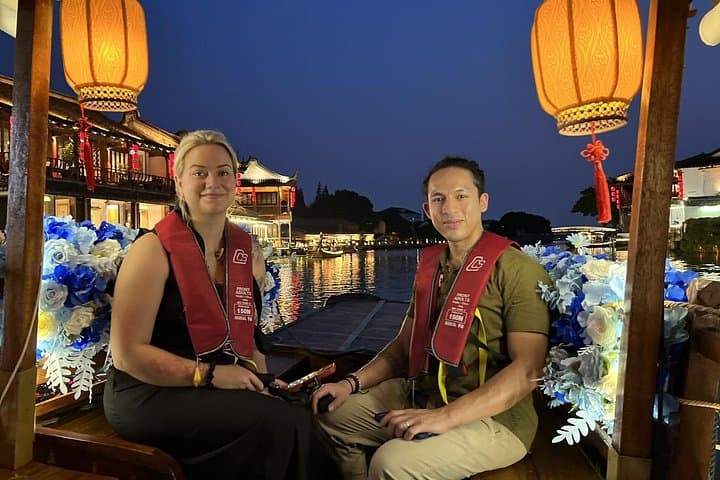
Lantern light glints on slow-moving canals as footsteps echo on centuries-old stone. An evening in Zhujiajiao moves at river time: vendors light stalls, wooden shutters close on courtyards, and the 16th-century Fangsheng Bridge arcs over reflections that tremble with passing boats.
Lantern light glints on slow-moving canals as footsteps echo on centuries-old stone. An evening in Zhujiajiao moves at river time: vendors light stalls, wooden shutters close on courtyards, and the 16th-century Fangsheng Bridge arcs over reflections that tremble with passing boats.
The town’s layout grew from waterways that shaped commerce during the Ming and Qing dynasties; narrow lanes were once trade routes for salt and grain. Architecture here is pragmatic—whitewashed walls, black-tile roofs, and carved beams—showing how local carpentry and masonry adapted to a humid delta. Cultural touches are immediate: vendors selling zongzi, small opera posters, and shops offering traditional dress for staged portraits.
Expect easy walking on uneven cobbles and short stone steps—total walking distance for a typical flexible evening is roughly 2–4 km with negligible elevation gain. The canal invites optional hand-poled gondola rides that change the perspective from street-level to waterline, while nighttime light makes photography rewarding but tricky.
Practical guidance: plan around sunset to catch the glow without the midafternoon heat; bring a light jacket and closed shoes for slippery stones. Cash and a charged phone are useful—some stalls are cash-only and cell reception is intermittent in narrow alleys. If you choose a waterside dinner or boat ride, confirm prices and meeting points with your guide in advance.
This five-hour flexible experience is both a cultural stroll and a sensory study in how water shapes towns: slow, compact, and full of small discoveries if you move deliberately.