THE ADVENTURE COLLECTIVE® · Independent discovery and booking for outdoor travel

Experience Times Square after dark on a guided, three-hour walking tour that pairs Broadway history with street-level culture—and a classic hot dog. Expect bright lights, crowds, and a concise urban history delivered between marquee stops.
Experience Times Square after dark on a guided, three-hour walking tour that pairs Broadway history with street-level culture—and a classic hot dog. Expect bright lights, crowds, and a concise urban history delivered between marquee stops.
The lights click on and the slab of asphalt and glass that is Times Square begins to breathe—neon reflected on wet pavement, people funneling between marquees, a city putting on its show.
Verified experiences and guided adventures in the surrounding area.
The lights click on and the slab of asphalt and glass that is Times Square begins to breathe—neon reflected on wet pavement, people funneling between marquees, a city putting on its show.
This three-hour evening walk threads you through Broadway’s electric core, where early-20th-century theaterhouses sit atop Manhattan’s older, glacially-scoured bedrock. Longacre Square was renamed for the New York Times in 1904; the district swelled with performance venues, pressrooms, and the street vendors that fed late-night crowds. You’ll hear what made Broadway the nation’s stage and how waves of immigrants, artists, and entrepreneurs reshaped the neighborhood.
The tour balances showpiece stops—the towering billboards and famous theaters—with close-up street-level life: food carts offering a classic hot dog, costumed performers hustling for tips, and alleys that reveal quieter architectural details. Expect a sensory contrast: the roar of traffic, the push of the crowd, and brief pockets of surprisingly intimate urban history.
Practical note: the route is mostly flat, roughly 1.5–2.5 miles of walking at an easy city pace, so sensible shoes beat style. Bring a light layer for breezy intersections and a small water bottle; noise-cancelling headphones help if you tire of constant traffic. Transit access is excellent—subway stops radiate from the square—but plan meeting points carefully and allow extra time for heavy pedestrian flow. The included hot dog is a classic roadside experience—consider it part culinary, part cultural primer.
Whether you’re here for theater lore or the bright-night spectacle, the walk delivers an immediate, navigable portrait of one of the world’s most recognizable urban stages.
easy.
2–3 hours.
Light urban fitness—able to stand and walk intermittently for up to three hours, with short pauses.
The tour runs about three hours and typically covers 1.5–2.5 miles at an easy walking pace, with frequent stops.
Yes—the experience includes a classic hot dog as part of the street-food element of the tour.
Generally yes—routes are flat and accessible, but participants should be comfortable navigating crowds and standing for portions of the tour.
Meeting details are provided at booking; allow extra time for subway exits. If you’re late, contact the operator—rejoining may be possible at a later stop but not guaranteed.
Times Square was Longacre Square until 1904, when the New York Times moved to the area—Broadway theater proliferation soon made the neighborhood a cultural hub.
High foot traffic stresses local streets and waste systems—use public bins and avoid single-use plastics when possible to reduce impact.
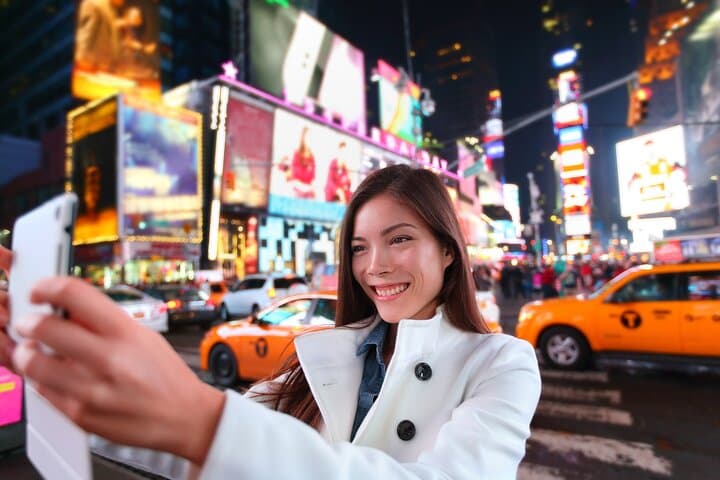
The lights click on and the slab of asphalt and glass that is Times Square begins to breathe—neon reflected on wet pavement, people funneling between marquees, a city putting on its show.
The lights click on and the slab of asphalt and glass that is Times Square begins to breathe—neon reflected on wet pavement, people funneling between marquees, a city putting on its show.
This three-hour evening walk threads you through Broadway’s electric core, where early-20th-century theaterhouses sit atop Manhattan’s older, glacially-scoured bedrock. Longacre Square was renamed for the New York Times in 1904; the district swelled with performance venues, pressrooms, and the street vendors that fed late-night crowds. You’ll hear what made Broadway the nation’s stage and how waves of immigrants, artists, and entrepreneurs reshaped the neighborhood.
The tour balances showpiece stops—the towering billboards and famous theaters—with close-up street-level life: food carts offering a classic hot dog, costumed performers hustling for tips, and alleys that reveal quieter architectural details. Expect a sensory contrast: the roar of traffic, the push of the crowd, and brief pockets of surprisingly intimate urban history.
Practical note: the route is mostly flat, roughly 1.5–2.5 miles of walking at an easy city pace, so sensible shoes beat style. Bring a light layer for breezy intersections and a small water bottle; noise-cancelling headphones help if you tire of constant traffic. Transit access is excellent—subway stops radiate from the square—but plan meeting points carefully and allow extra time for heavy pedestrian flow. The included hot dog is a classic roadside experience—consider it part culinary, part cultural primer.
Whether you’re here for theater lore or the bright-night spectacle, the walk delivers an immediate, navigable portrait of one of the world’s most recognizable urban stages.