THE ADVENTURE COLLECTIVE® · Independent discovery and booking for outdoor travel

An easy, four-hour evening walk through Deer Park, Hauz Khas Village and the medieval fort complex, blending natural calm with vibrant market life. Ideal for photographers, history fans, and anyone who prefers their city exploration on foot.
An easy, four-hour evening walk through Deer Park, Hauz Khas Village and the medieval fort complex, blending natural calm with vibrant market life. Ideal for photographers, history fans, and anyone who prefers their city exploration on foot.
By the time Delhi’s traffic softens into evening, the trees at Deer Park throw long, cool shadows and the deer step out of the undergrowth as if the city were a distant hum. The walking tour opens here, with guides pointing out traditional medicinal herbs and the quiet rhythms of an urban green space that seems to breathe on its own.
Verified experiences and guided adventures in the surrounding area.
Operated by Journeydeal · New Delhi, Delhi
By the time Delhi’s traffic softens into evening, the trees at Deer Park throw long, cool shadows and the deer step out of the undergrowth as if the city were a distant hum. The walking tour opens here, with guides pointing out traditional medicinal herbs and the quiet rhythms of an urban green space that seems to breathe on its own.
From the park the route slips into Hauz Khas Village, where colonial-era lanes and modern cafés share narrow shoulders. The name comes from the medieval hauz — a water reservoir and madrasa complex built during the Delhi Sultanate — and the fort and mosque stones still hold the slow geometry of that time. Geologically, the area sits on the southern edge of the Delhi ridge; you’ll notice exposed sandstone steps and weathered slabs that make the fort’s photogenic ramparts more than decorative ruins.
Culturally the village is a study in contrasts: artisan boutiques, street food stalls, and contemporary galleries rub shoulders with Sufi-era architecture. Local insights include where the best evening chai is brewed and which rooftop gives an unobstructed sunset over the lake.
Practical guidance: wear closed, comfortable shoes for uneven stonework and market alleys; bring a reusable water bottle and carry small change for market purchases. Plan this in the late afternoon to avoid the daytime heat and to catch hawks and parrots leaving their perches. Respect the wildlife—don’t feed the deer—and keep photography quick around worship sites. Expect a gentle four-hour walk with pauses for history, tasting, and photography.
easy.
4 hours.
Moderate walking fitness: able to stand and walk on uneven surfaces for several hours with short breaks.
Yes—it's rated easy and family-friendly, but keep young children close on uneven steps and near the water reservoir.
Hauz Khas is accessible via the Hauz Khas Metro Station on Delhi’s Yellow Line; short auto-rickshaw or taxi trips connect the station to Deer Park and the village.
Admission to the listed sites is included and light drinks such as tea and bottled water are provided as noted in the tour inclusions.
Photography is allowed for sightseeing and personal use; be respectful around places of worship and avoid obstructing local businesses or pedestrians.
Hauz Khas grew around a medieval water reservoir and madrasa dating to the Delhi Sultanate; the complex later became part of an urban village that evolved into today’s cultural quarter.
Urban green spaces like Deer Park are managed to balance visitor access and wildlife protection—avoid littering, stay on paths, and don’t feed animals to help conservation efforts.
Journeydeal operates guided outdoor trips and adventures with an emphasis on safety, stewardship, and memorable experiences.



By the time Delhi’s traffic softens into evening, the trees at Deer Park throw long, cool shadows and the deer step out of the undergrowth as if the city were a distant hum. The walking tour opens here, with guides pointing out traditional medicinal herbs and the quiet rhythms of an urban green space that seems to breathe on its own.
By the time Delhi’s traffic softens into evening, the trees at Deer Park throw long, cool shadows and the deer step out of the undergrowth as if the city were a distant hum. The walking tour opens here, with guides pointing out traditional medicinal herbs and the quiet rhythms of an urban green space that seems to breathe on its own.
From the park the route slips into Hauz Khas Village, where colonial-era lanes and modern cafés share narrow shoulders. The name comes from the medieval hauz — a water reservoir and madrasa complex built during the Delhi Sultanate — and the fort and mosque stones still hold the slow geometry of that time. Geologically, the area sits on the southern edge of the Delhi ridge; you’ll notice exposed sandstone steps and weathered slabs that make the fort’s photogenic ramparts more than decorative ruins.
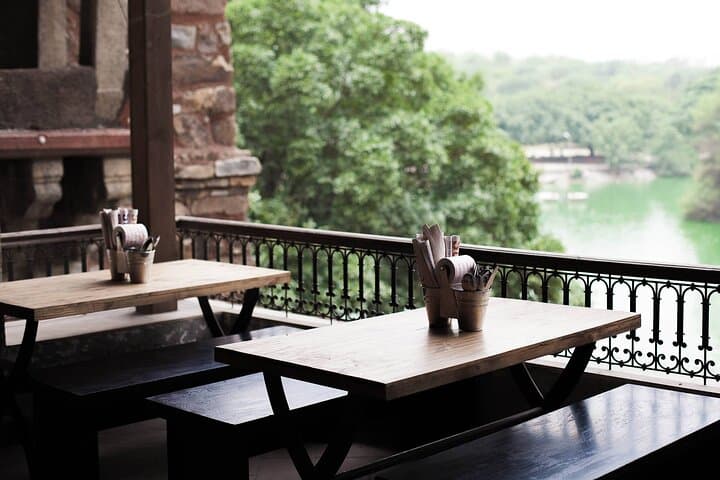
Culturally the village is a study in contrasts: artisan boutiques, street food stalls, and contemporary galleries rub shoulders with Sufi-era architecture. Local insights include where the best evening chai is brewed and which rooftop gives an unobstructed sunset over the lake.
Practical guidance: wear closed, comfortable shoes for uneven stonework and market alleys; bring a reusable water bottle and carry small change for market purchases. Plan this in the late afternoon to avoid the daytime heat and to catch hawks and parrots leaving their perches. Respect the wildlife—don’t feed the deer—and keep photography quick around worship sites. Expect a gentle four-hour walk with pauses for history, tasting, and photography.