THE ADVENTURE COLLECTIVE® · Independent discovery and booking for outdoor travel

Walk Strasbourg after dark and discover the cathedral’s hidden stories, Revolutionary scandals and ghost tales on a compact 1.5–2 hour guided route. Small groups, evening start (20:00), and evening-only runs April–October make this a focused urban night walk.
Walk Strasbourg after dark and discover the cathedral’s hidden stories, Revolutionary scandals and ghost tales on a compact 1.5–2 hour guided route. Small groups, evening start (20:00), and evening-only runs April–October make this a focused urban night walk.
Night falls over the Grande Île and the cathedral’s silhouette sharpens against an indigo sky—this is where the walk begins. Footsteps on wet cobblestone, the river Ill daring you to follow its curve, and streetlamps throwing long, theatrical shadows set the scene for 90–120 minutes of close-up urban history. The guide moves like a storyteller through narrow lanes, pausing at carved saints and stone faces that have watched centuries of markets, protests and fires.
Verified experiences and guided adventures in the surrounding area.
Operated by Mysterious Strasbourg · Strasbourg, Grand Est
Night falls over the Grande Île and the cathedral’s silhouette sharpens against an indigo sky—this is where the walk begins. Footsteps on wet cobblestone, the river Ill daring you to follow its curve, and streetlamps throwing long, theatrical shadows set the scene for 90–120 minutes of close-up urban history. The guide moves like a storyteller through narrow lanes, pausing at carved saints and stone faces that have watched centuries of markets, protests and fires.
Strasbourg sits on the Franco‑German border; its streets are a living ledger of medieval masonry, Renaissance civic pride and Revolutionary drama. Expect stops at the cathedral façade (closed to interior visits at night) to decode its sculptures, a retelling of General Kléber’s role in local history, and the scandal of the Cardinal of Rohan—the necklace affair that rattled royal Paris. Geology shows in the sandstone facades; culture arrives in bilingual place names and Alsatian culinary references.
Practically: tours run nightly from April through October at 20:00, last about 1.5–2 hours, cap at 10 people, and require sensible shoes. The route stays in the historic center and is wheelchair accessible on paved streets, but narrow alleys can be uneven. Bring a light jacket for cool nights, a small flashlight if you prefer extra light, and arrive 10 minutes early. Guides weave history, local anecdotes and a few ghost stories—Strasbourg’s secrets are revealed, one lantern-lit block at a time.
easy.
1.5–2 hours.
Suitable for most fitness levels; involves walking on paved and cobbled surfaces for up to two hours
The tour begins at 20:00 and runs approximately 1.5–2 hours; it operates nightly from April through October.
The tour is listed as wheelchair accessible and stays on paved streets, though some narrow sections may be tighter—contact the operator for specific accessibility needs.
Children aged 14 and over are welcome; the content includes historical and ghost stories that suit older teens.
Full refunds are available if you cancel at least 24 hours before the scheduled departure; check your booking confirmation for details.
Strasbourg’s Grande Île was a medieval center of trade and ecclesiastical power; stories on this walk highlight figures like General Kléber and the Cardinal of Rohan necklace scandal that fed revolutionary unrest.
The historic center is a UNESCO site—stay on paths, avoid touching carved stonework, and support local businesses to keep tourism sustainable.
Mysterious Strasbourg operates guided outdoor trips and adventures with an emphasis on safety, stewardship, and memorable experiences.
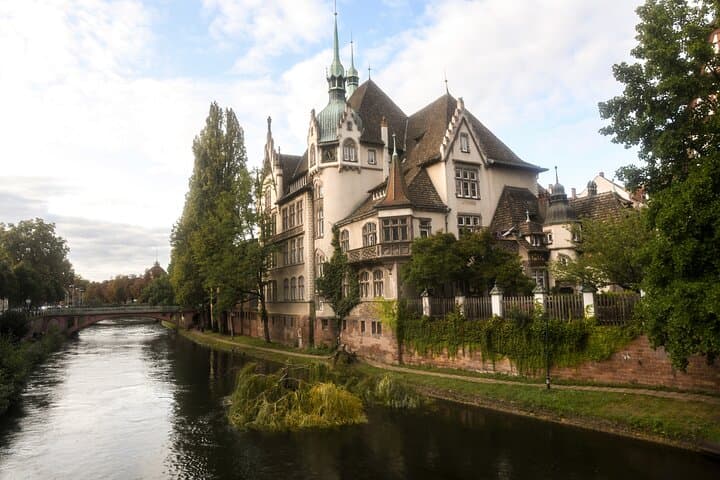
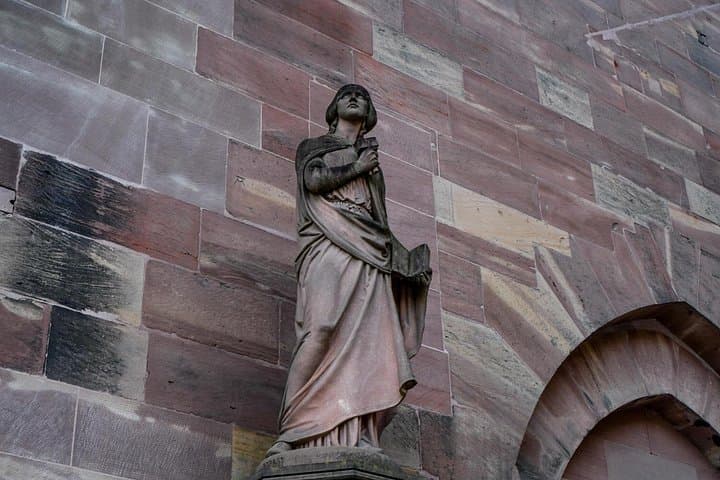
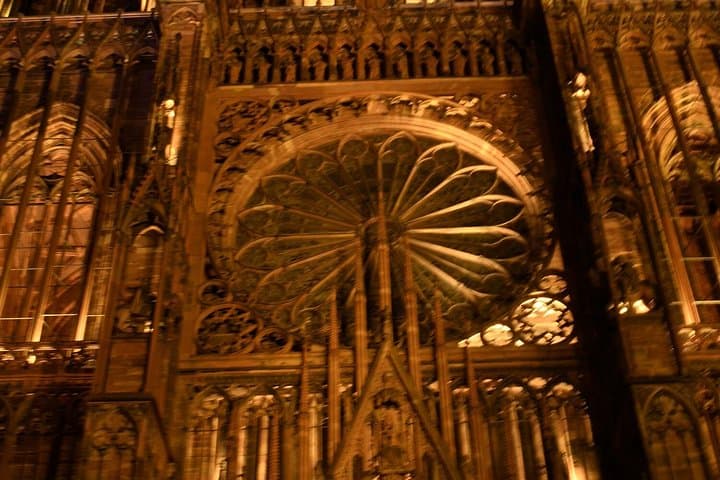
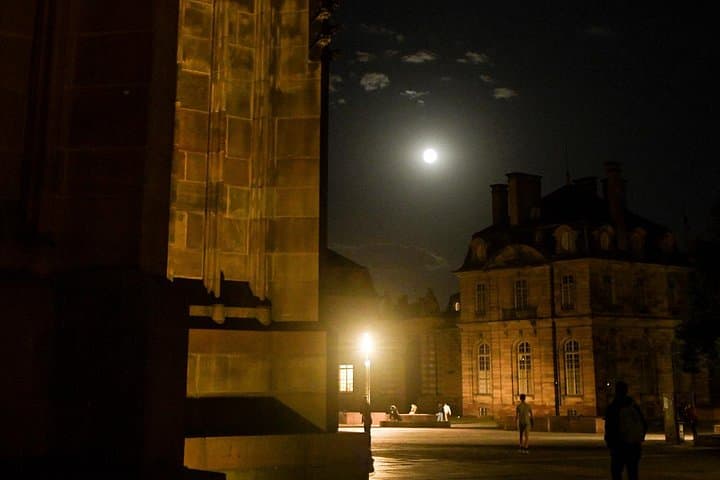
Night falls over the Grande Île and the cathedral’s silhouette sharpens against an indigo sky—this is where the walk begins. Footsteps on wet cobblestone, the river Ill daring you to follow its curve, and streetlamps throwing long, theatrical shadows set the scene for 90–120 minutes of close-up urban history. The guide moves like a storyteller through narrow lanes, pausing at carved saints and stone faces that have watched centuries of markets, protests and fires.
Night falls over the Grande Île and the cathedral’s silhouette sharpens against an indigo sky—this is where the walk begins. Footsteps on wet cobblestone, the river Ill daring you to follow its curve, and streetlamps throwing long, theatrical shadows set the scene for 90–120 minutes of close-up urban history. The guide moves like a storyteller through narrow lanes, pausing at carved saints and stone faces that have watched centuries of markets, protests and fires.
Strasbourg sits on the Franco‑German border; its streets are a living ledger of medieval masonry, Renaissance civic pride and Revolutionary drama. Expect stops at the cathedral façade (closed to interior visits at night) to decode its sculptures, a retelling of General Kléber’s role in local history, and the scandal of the Cardinal of Rohan—the necklace affair that rattled royal Paris. Geology shows in the sandstone facades; culture arrives in bilingual place names and Alsatian culinary references.
Practically: tours run nightly from April through October at 20:00, last about 1.5–2 hours, cap at 10 people, and require sensible shoes. The route stays in the historic center and is wheelchair accessible on paved streets, but narrow alleys can be uneven. Bring a light jacket for cool nights, a small flashlight if you prefer extra light, and arrive 10 minutes early. Guides weave history, local anecdotes and a few ghost stories—Strasbourg’s secrets are revealed, one lantern-lit block at a time.