THE ADVENTURE COLLECTIVE® · Independent discovery and booking for outdoor travel

Walk on an outlet of Vatnajökull at a time when the crowds have left. This evening, small-group glacier hike from Skaftafell offers guided crampon time on Falljökull, with focused instruction and long, quiet views of blue ice.
Walk on an outlet of Vatnajökull at a time when the crowds have left. This evening, small-group glacier hike from Skaftafell offers guided crampon time on Falljökull, with focused instruction and long, quiet views of blue ice.
The light thins to a hard, pale gold and the glacier goes quiet. You step from the 4x4 onto the moraine and feel the change underfoot: sand and stones give way to compacted, blue-tinged ice. Crampons chatter, the guide checks harnesses and demonstrates the ice axe—simple tools that translate into confidence on an ever-moving landscape.
Verified experiences and guided adventures in the surrounding area.
Operated by Melrakki Adventures · Skaftafell, Southern Region
The light thins to a hard, pale gold and the glacier goes quiet. You step from the 4x4 onto the moraine and feel the change underfoot: sand and stones give way to compacted, blue-tinged ice. Crampons chatter, the guide checks harnesses and demonstrates the ice axe—simple tools that translate into confidence on an ever-moving landscape.
This is Falljökull, a fast-flowing outlet of Vatnajökull, Iceland’s great ice cap. The evening tour from the Skaftafell area delivers a rare kind of solitude; between June and August the low-angle sun stretches shadows across crevasses and moulins, and most day-trippers have already left the ice. The guides are AIMG-certified, and groups cap at eight, so the hour and a half on ice feels focused and deliberate rather than frantic.
Geologically, Falljökull is a living glacier: it carves the valley, leaves linear moraines, and calves small blocks of ice that darken with volcanic dust. Skaftafell itself was a national park before being incorporated into Vatnajökull National Park in 2008; the human history here is one of resilient farms and meltwater channels that once shaped travel and settlement across the lowlands.
Culturally, this stretch of the south coast is quiet country—sparse summer huts, long single-lane bridges, and a road that threads between lava fields and glacier tongues. Your guide will point out the flow lines in the ice, explain how seasonal melt alters route choice, and teach practical skills—how to walk in crampons, self-arrest with an axe, and travel safely around crevasses.
Practically: the entire outing runs about three hours from meeting point to drop-off, with roughly 90 minutes on the glacier. The operator provides crampons, harnesses, and ice axes; guests should bring sturdy waterproof boots, warm layers, and a windproof shell. Footing on the ice is uneven, and conditions change; guides set the pace to match ability, but expect to be upright and moving for the duration.
Packing and pacing matter. Hydrate before you meet, use a small daypack for snacks and camera, and keep electronics warm—batteries drain faster in cold air. If you want dramatic photos, aim for the low evening sun and position yourself to capture the contrast between dirt-streaked blue ice and black volcanic sand.
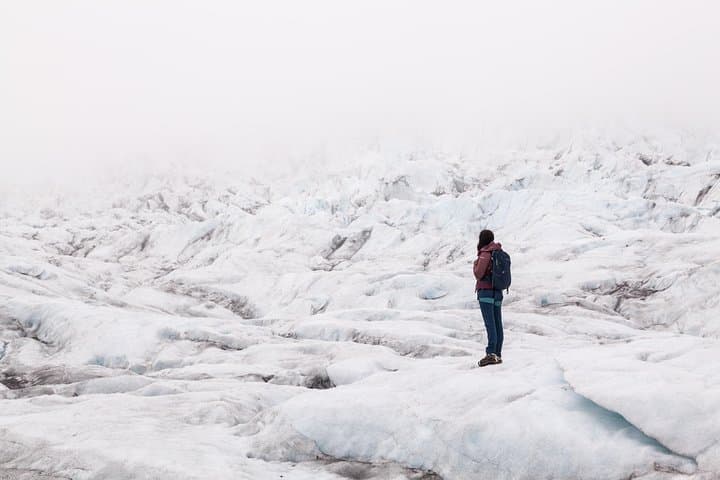
If you go, listen to the glacier. It has a vocabulary of cracks and sighs, a measured language that tells you where it’s safe to step and where the ice is still shifting. Follow that rhythm and the landscape rewards you with scale, texture, and a silence that’s surprisingly loud.
moderate.
3 hours.
Suitable for most fitness levels; you should be comfortable walking on uneven, icy terrain for up to 90 minutes.
No—guides provide instruction on crampons and ice-axe use; trips are designed for beginners with stable footing.
Crampons, harness, and ice axe are provided; certified guides, round-trip transport to the glacier drop-off, and instruction are included.
Even in summer expect temperatures near freezing on the ice with wind chill—dress in layers and bring a windproof shell.
Age requirements vary—confirm during booking; the operator asks for age bands and reserves the right to refuse participants on safety grounds.
Tours can be canceled for safety reasons; the cancellation policy allows a full refund if canceled at least 24 hours prior or in case of bad weather.
About 90 minutes on the glacier itself, within a three-hour total tour window including transfers.
Skaftafell was protected as a national park in 1967 and later merged into Vatnajökull National Park; the area reflects a long history of settlement and dynamic glacial change.
Stick to guide routes to avoid fragile melt channels and vegetation; local operators follow Leave No Trace principles to minimize impacts on the glacial environment.
Melrakki Adventures operates guided outdoor trips and adventures with an emphasis on safety, stewardship, and memorable experiences.
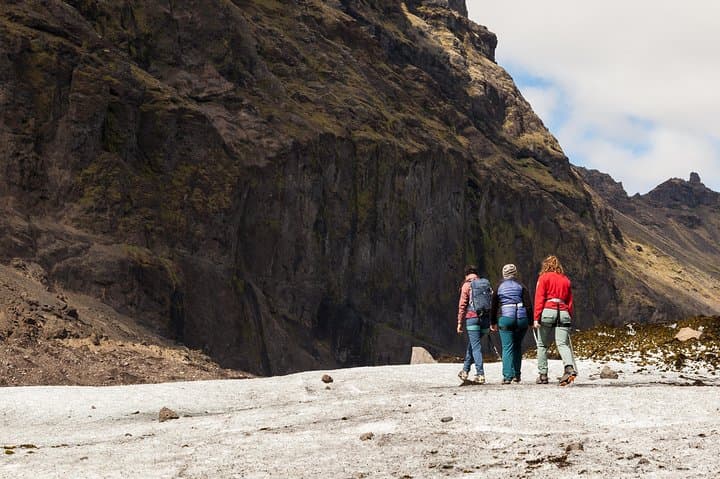
The light thins to a hard, pale gold and the glacier goes quiet. You step from the 4x4 onto the moraine and feel the change underfoot: sand and stones give way to compacted, blue-tinged ice. Crampons chatter, the guide checks harnesses and demonstrates the ice axe—simple tools that translate into confidence on an ever-moving landscape.
The light thins to a hard, pale gold and the glacier goes quiet. You step from the 4x4 onto the moraine and feel the change underfoot: sand and stones give way to compacted, blue-tinged ice. Crampons chatter, the guide checks harnesses and demonstrates the ice axe—simple tools that translate into confidence on an ever-moving landscape.
This is Falljökull, a fast-flowing outlet of Vatnajökull, Iceland’s great ice cap. The evening tour from the Skaftafell area delivers a rare kind of solitude; between June and August the low-angle sun stretches shadows across crevasses and moulins, and most day-trippers have already left the ice. The guides are AIMG-certified, and groups cap at eight, so the hour and a half on ice feels focused and deliberate rather than frantic.
Geologically, Falljökull is a living glacier: it carves the valley, leaves linear moraines, and calves small blocks of ice that darken with volcanic dust. Skaftafell itself was a national park before being incorporated into Vatnajökull National Park in 2008; the human history here is one of resilient farms and meltwater channels that once shaped travel and settlement across the lowlands.
Culturally, this stretch of the south coast is quiet country—sparse summer huts, long single-lane bridges, and a road that threads between lava fields and glacier tongues. Your guide will point out the flow lines in the ice, explain how seasonal melt alters route choice, and teach practical skills—how to walk in crampons, self-arrest with an axe, and travel safely around crevasses.
Practically: the entire outing runs about three hours from meeting point to drop-off, with roughly 90 minutes on the glacier. The operator provides crampons, harnesses, and ice axes; guests should bring sturdy waterproof boots, warm layers, and a windproof shell. Footing on the ice is uneven, and conditions change; guides set the pace to match ability, but expect to be upright and moving for the duration.
Packing and pacing matter. Hydrate before you meet, use a small daypack for snacks and camera, and keep electronics warm—batteries drain faster in cold air. If you want dramatic photos, aim for the low evening sun and position yourself to capture the contrast between dirt-streaked blue ice and black volcanic sand.
If you go, listen to the glacier. It has a vocabulary of cracks and sighs, a measured language that tells you where it’s safe to step and where the ice is still shifting. Follow that rhythm and the landscape rewards you with scale, texture, and a silence that’s surprisingly loud.