THE ADVENTURE COLLECTIVE® · Independent discovery and booking for outdoor travel

Walk the bustling Souk El Had, sample argan oil at a cooperative, then ride the cable car to Kasbah Oufella for a sunset that frames Agadir and the Atlantic. This guided evening tour blends local culture, history, and sweeping coastal views.
Walk the bustling Souk El Had, sample argan oil at a cooperative, then ride the cable car to Kasbah Oufella for a sunset that frames Agadir and the Atlantic. This guided evening tour blends local culture, history, and sweeping coastal views.
You step out of the shuttle into the pulsing alleys of Souk El Had as late afternoon light slants between stalls stacked with spices, woven rugs and ceramic bowls. Voices trade prices and the scent of cumin and orange peel rides the warm wind from the Atlantic, while your guide points out local specialties and the small cooperative where argan oil is pressed.
Verified experiences and guided adventures in the surrounding area.
Operated by The best guide '' king mohamed 7" · Agadir, Souss-Massa
You step out of the shuttle into the pulsing alleys of Souk El Had as late afternoon light slants between stalls stacked with spices, woven rugs and ceramic bowls. Voices trade prices and the scent of cumin and orange peel rides the warm wind from the Atlantic, while your guide points out local specialties and the small cooperative where argan oil is pressed.
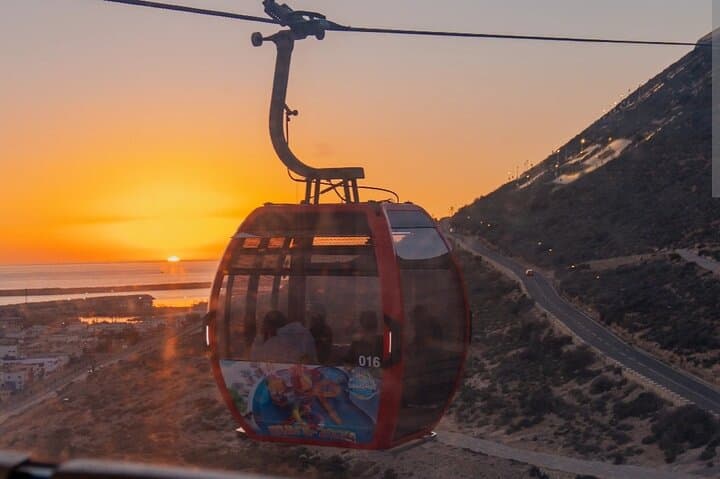
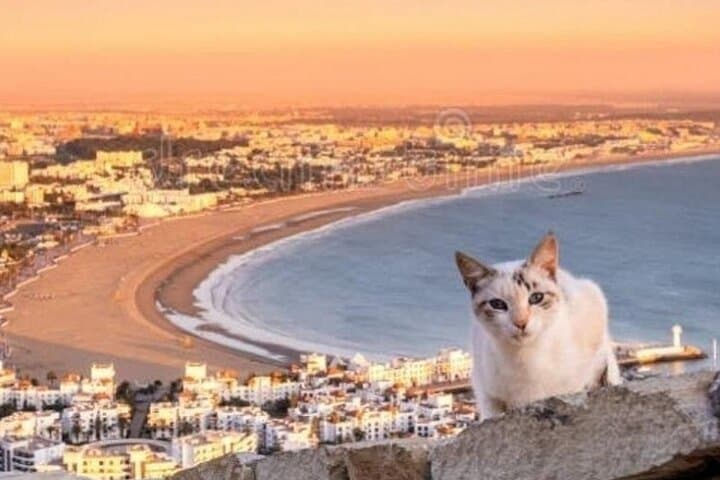
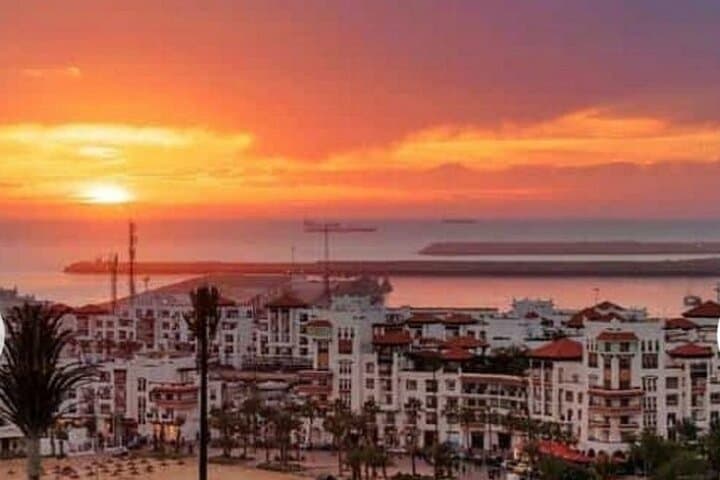
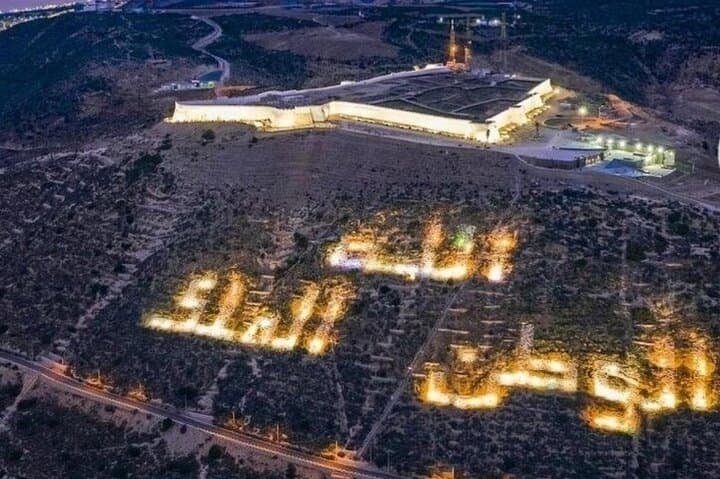
The tour moves purposefully from market to city: broad boulevards and tidy gardens give way to the uphill cable car that lifts you above Agadir’s tiled roofs. The carriage climbs; the ocean dares you with a widening arc of blue and the ruin of Kasbah Oufella crouches on the ridge. At the top, the sunset erupts across the bay—cool light returns the city’s low-rise silhouette into sharp relief as gulls wheel below.
Agadir’s modern urban core was rebuilt after the 1960 earthquake, but the Kasbah’s stones tell an older story of coastal defense and trade. Geologically, the bay sits on a Mediterranean-to-Atlantic margin shaped by tectonic uplift and marine terraces; the city’s flat grid and nearby scrub-covered hills reflect those forces.
Practical notes: the guided souk visit includes tasting argan oil and local honey; the cable car provides accessible access to the Kasbah and sunset viewpoints. Expect easy walking on paved or compacted surfaces, opportunistic photo stops, and light bargaining at stalls. Bring sun protection, modest clothing for the market, and a camera with a wide-angle setting for the panoramic views.
easy.
2–2.5 hours.
Suitable for most fitness levels; involves short periods of walking and standing with minimal elevation change thanks to the cable car.
Yes — the cable car and many tour transport options are wheelchair accessible; the Kasbah viewpoint area has accessible surfaces but some ruined sections remain uneven.
Yes — the guided visit includes time to walk stalls, sample local products like argan oil and honey, and buy goods; bargaining is common and expected.
Guides on this tour are multilingual—typically English, French, and Arabic—to explain cultural context and translate local interactions.
Yes — the tour is family-friendly; infants may need to sit on laps during transport and strollers can be used in many market areas.
Agadir was largely rebuilt after a devastating 1960 earthquake; the Kasbah ruins on Oufella ridge predate the modern grid and mark the city’s historic defensive position facing Atlantic trade routes.
Support local cooperatives that produce argan oil and honey—these community enterprises help sustain traditional harvesting practices and slow landscape degradation around Agadir.
The best guide '' king mohamed 7" operates guided outdoor trips and adventures with an emphasis on safety, stewardship, and memorable experiences.
You step out of the shuttle into the pulsing alleys of Souk El Had as late afternoon light slants between stalls stacked with spices, woven rugs and ceramic bowls. Voices trade prices and the scent of cumin and orange peel rides the warm wind from the Atlantic, while your guide points out local specialties and the small cooperative where argan oil is pressed.
You step out of the shuttle into the pulsing alleys of Souk El Had as late afternoon light slants between stalls stacked with spices, woven rugs and ceramic bowls. Voices trade prices and the scent of cumin and orange peel rides the warm wind from the Atlantic, while your guide points out local specialties and the small cooperative where argan oil is pressed.
The tour moves purposefully from market to city: broad boulevards and tidy gardens give way to the uphill cable car that lifts you above Agadir’s tiled roofs. The carriage climbs; the ocean dares you with a widening arc of blue and the ruin of Kasbah Oufella crouches on the ridge. At the top, the sunset erupts across the bay—cool light returns the city’s low-rise silhouette into sharp relief as gulls wheel below.
Agadir’s modern urban core was rebuilt after the 1960 earthquake, but the Kasbah’s stones tell an older story of coastal defense and trade. Geologically, the bay sits on a Mediterranean-to-Atlantic margin shaped by tectonic uplift and marine terraces; the city’s flat grid and nearby scrub-covered hills reflect those forces.
Practical notes: the guided souk visit includes tasting argan oil and local honey; the cable car provides accessible access to the Kasbah and sunset viewpoints. Expect easy walking on paved or compacted surfaces, opportunistic photo stops, and light bargaining at stalls. Bring sun protection, modest clothing for the market, and a camera with a wide-angle setting for the panoramic views.