THE ADVENTURE COLLECTIVE® · Independent discovery and booking for outdoor travel

Glide beneath lit bridges and along the UNESCO‑listed canal ring on a quiet electric boat, sampling Dutch bites and wines as the city’s facades reflect in the water. This 1.5‑hour evening cruise pairs history and sensory detail with simple, practical guidance for first‑time visitors.
Glide beneath lit bridges and along the UNESCO‑listed canal ring on a quiet electric boat, sampling Dutch bites and wines as the city’s facades reflect in the water. This 1.5‑hour evening cruise pairs history and sensory detail with simple, practical guidance for first‑time visitors.
The city softens as daylight falls and the canals begin to hum: streetlamps pool in the water, bridges lace the horizon with light, and an electric boat slips silently from the Rijksmuseum dock.
Verified experiences and guided adventures in the surrounding area.
Operated by Captain Jack Amsterdam · Amsterdam, North Holland
The city softens as daylight falls and the canals begin to hum: streetlamps pool in the water, bridges lace the horizon with light, and an electric boat slips silently from the Rijksmuseum dock.
This 1.5‑hour evening cruise threads the 17th‑century Grachtengordel, where reclaimed marshland and deliberate engineering created Amsterdam’s concentric canals. Buildings lean with history — merchants’ warehouses turned homes — and bridges open like pages of urban memory. The Amstel still pushes the city along; the canals dare you to slow down and watch the facades pass.
You’ll glide past the Museumplein, Magere Brug, houseboat communities and the Spiegelgracht’s galleries while a guide outlines the Golden Age, the city’s maritime trade, and the later cultural shifts that made Amsterdam a nightlife and art hub. Geology here is subtle: peat and clay islands supported by driven piles, the reason so many canal houses perch at odd angles.
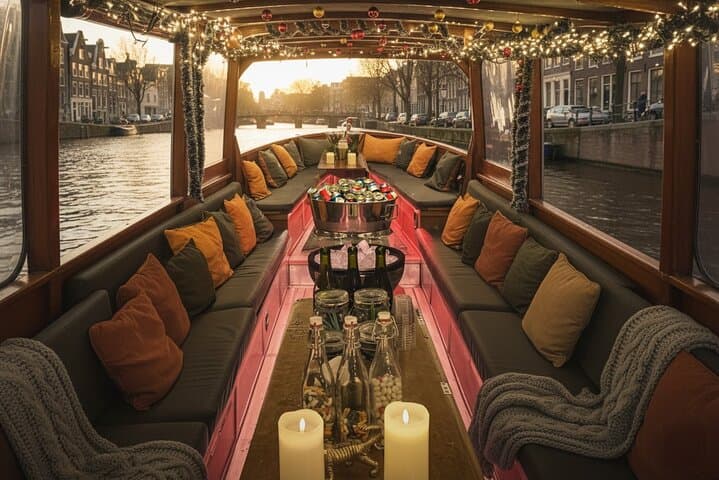
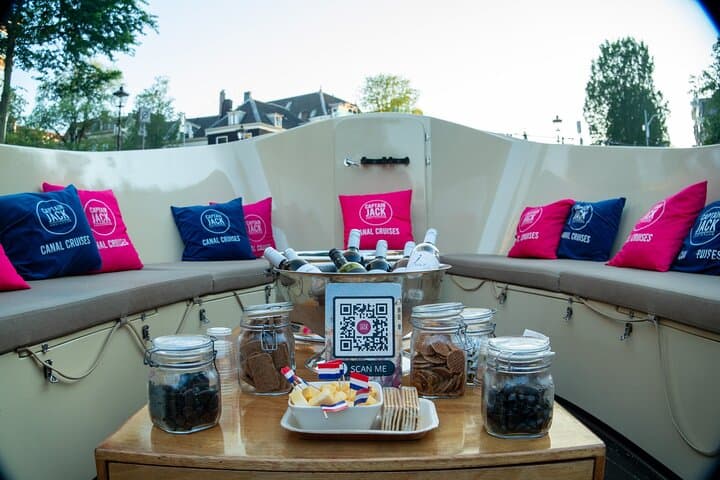
Practically speaking: tours run year‑round, with a heated covered classic boat used in winter (no toilet onboard) and open electric boats for clearer views when weather allows. Drinks and typical Dutch snacks — cheese, cured sausage and cookies — are included. Boarding involves a relatively large step; staff assist, and the operator asks guests to arrive 10 minutes early because the dock is busy.
For photographers, low light and reflective water reward early evening; for quieter sightseeing, midweek departures cut down on canal traffic. Bring a coat, anticipate cooler air on the water, and expect an unhurried, sensory cruise through Amsterdam’s living history.
easy.
1.5 hours.
Suitable for all fitness levels; mostly seated with short standing/walking during boarding
Yes — a selection of beers, wines and non‑alcoholic drinks are included as part of the experience.
From November to March a closed, heated classic boat is typically used; note that some covered boats still have no onboard toilet.
Infants are allowed but must sit on an adult’s lap; strollers can be brought to the dock but boarding requires taking a step into the boat.
Tours may be rescheduled or moved to a covered boat in case of rain or strong winds; cancellations within 24 hours follow the operator’s policy.
The canal ring was dug in the 17th century during Amsterdam’s Golden Age when land was reclaimed and plotted as concentric belts for trade and housing.
Electric motors reduce noise and emissions on canal tours; stick to marked boarding areas and avoid feeding wildlife to minimize disturbance.
Captain Jack Amsterdam operates guided outdoor trips and adventures with an emphasis on safety, stewardship, and memorable experiences.
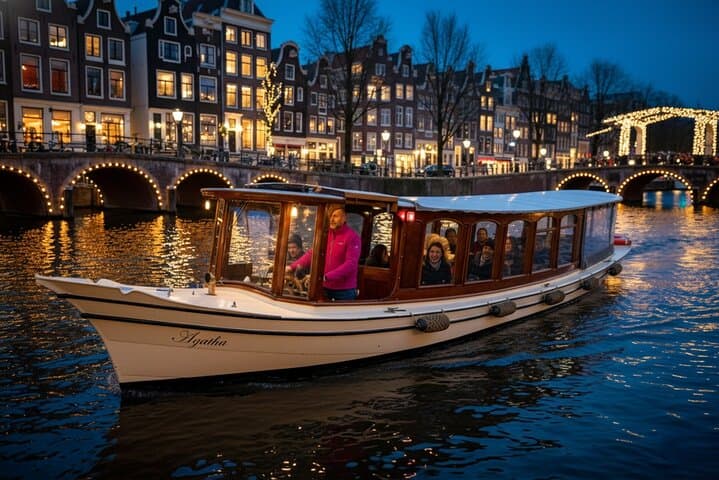
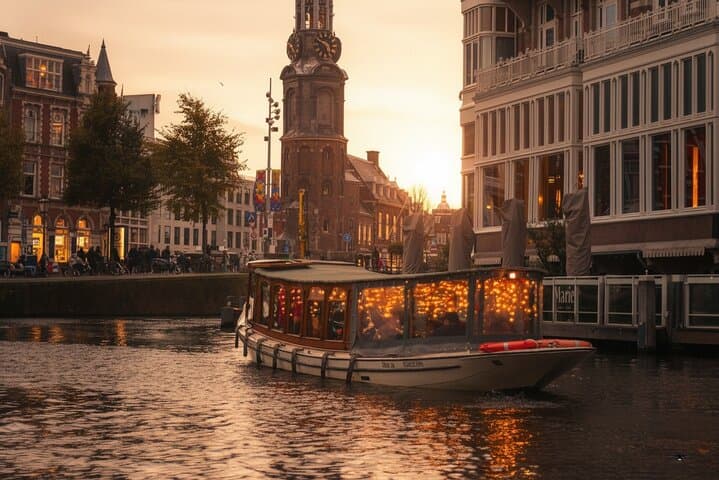
The city softens as daylight falls and the canals begin to hum: streetlamps pool in the water, bridges lace the horizon with light, and an electric boat slips silently from the Rijksmuseum dock.
The city softens as daylight falls and the canals begin to hum: streetlamps pool in the water, bridges lace the horizon with light, and an electric boat slips silently from the Rijksmuseum dock.
This 1.5‑hour evening cruise threads the 17th‑century Grachtengordel, where reclaimed marshland and deliberate engineering created Amsterdam’s concentric canals. Buildings lean with history — merchants’ warehouses turned homes — and bridges open like pages of urban memory. The Amstel still pushes the city along; the canals dare you to slow down and watch the facades pass.
You’ll glide past the Museumplein, Magere Brug, houseboat communities and the Spiegelgracht’s galleries while a guide outlines the Golden Age, the city’s maritime trade, and the later cultural shifts that made Amsterdam a nightlife and art hub. Geology here is subtle: peat and clay islands supported by driven piles, the reason so many canal houses perch at odd angles.
Practically speaking: tours run year‑round, with a heated covered classic boat used in winter (no toilet onboard) and open electric boats for clearer views when weather allows. Drinks and typical Dutch snacks — cheese, cured sausage and cookies — are included. Boarding involves a relatively large step; staff assist, and the operator asks guests to arrive 10 minutes early because the dock is busy.
For photographers, low light and reflective water reward early evening; for quieter sightseeing, midweek departures cut down on canal traffic. Bring a coat, anticipate cooler air on the water, and expect an unhurried, sensory cruise through Amsterdam’s living history.