THE ADVENTURE COLLECTIVE® · Independent discovery and booking for outdoor travel

Ride the cable car up Etna’s southern slope, then trek across wind-swept snowfields to the 2001 eruption cone. This small-group winter excursion pairs alpine and volcanological guidance with dramatic crater overlooks.
Ride the cable car up Etna’s southern slope, then trek across wind-swept snowfields to the 2001 eruption cone. This small-group winter excursion pairs alpine and volcanological guidance with dramatic crater overlooks.
You step out at Piazzale Rifugio Sapienza with a cold wind that tastes faintly of sulfur, the cable car doors sighing shut behind your small group. Snow stretches like a pale plain above the treeline; the summit craters sit beyond, rimmed in ice and steam, and your volcanological guide points toward the jagged profile of the 2001 cone.
Verified experiences and guided adventures in the surrounding area.
Operated by Ashàra Etna & Stromboli Guides · Nicolosi, Sicily
You step out at Piazzale Rifugio Sapienza with a cold wind that tastes faintly of sulfur, the cable car doors sighing shut behind your small group. Snow stretches like a pale plain above the treeline; the summit craters sit beyond, rimmed in ice and steam, and your volcanological guide points toward the jagged profile of the 2001 cone.
Etna is Europe’s most active stratovolcano — its layers of lava, ash and scoria record eruptions over hundreds of thousands of years. The southern approach opens onto the Valle del Bove, a rugged collapse amphitheater carved by flows and glacial action, and recent features like the Barbagallo craters and the 2001 cone show how quickly the landscape rewrites itself here. Local culture around Nicolosi and the mountain lodges blends mountaineering tradition with agricultural life; vineyards and rural towns sit low on the slopes while guides keep safety and respect for the volcano at the center of every outing.
Practical guidance: the excursion uses the cable car to ~2,500 m, then ascends to around 3,000 m — expect ~500 m of elevation change and roughly 6 km round-trip over snow, ice and volcanic scree. Conditions can be hard-packed ice or deep powder; guided groups are small and led by alpine/volcanological guides who provide helmets and poles. Bring crampons and layered, waterproof clothing, start early to catch stable snow and clear vistas, and allow time to acclimatize if you’ve come from sea level. This route demands expert-level winter hiking skills and attention to changing weather and eruption advisories.
expert.
5 hours.
Participants should be in strong cardiovascular condition, experienced with winter mountain travel and able to manage sustained elevation gain at altitude.
Yes; this winter trek is recommended for expert hikers comfortable with snow and ice travel and basic crampon technique.
The cable car reaches approximately 2,500 metres; the guided trek continues upward toward 3,000 metres on foot.
The tour supplies free helmet rental and trekking poles; you should bring personal crampons and appropriate boots.
Guides will cancel or alter the route for safety—refund or rescheduling follows the operator’s weather and eruption policy.
Etna’s eruptions have shaped local settlements for millennia; the 2001 eruption re-sculpted the summit and created the cone visited on this trek.
Trails and fragile volcanic soils recover slowly; stay on guide-directed routes, pack out waste and avoid trampling pioneer vegetation to minimize impact.
Ashàra Etna & Stromboli Guides operates guided outdoor trips and adventures with an emphasis on safety, stewardship, and memorable experiences.
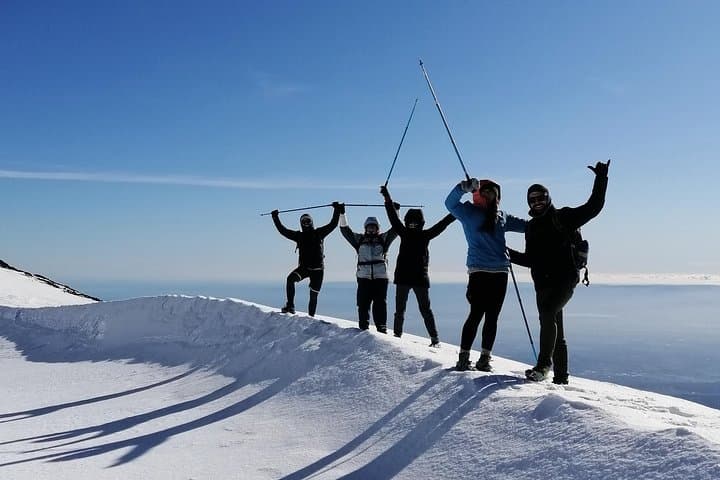
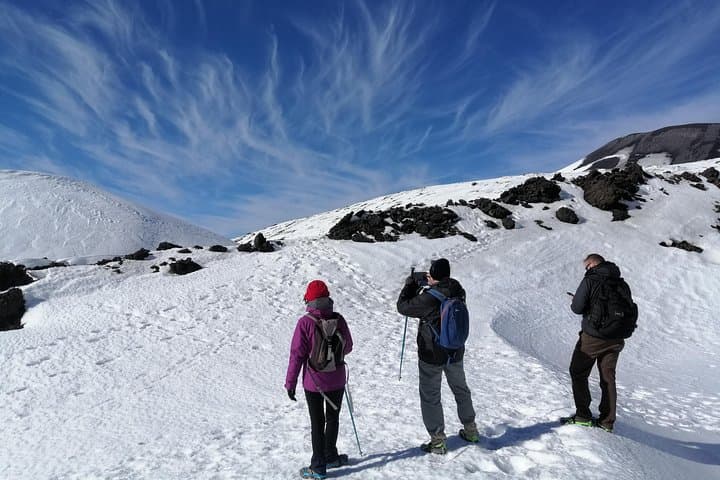
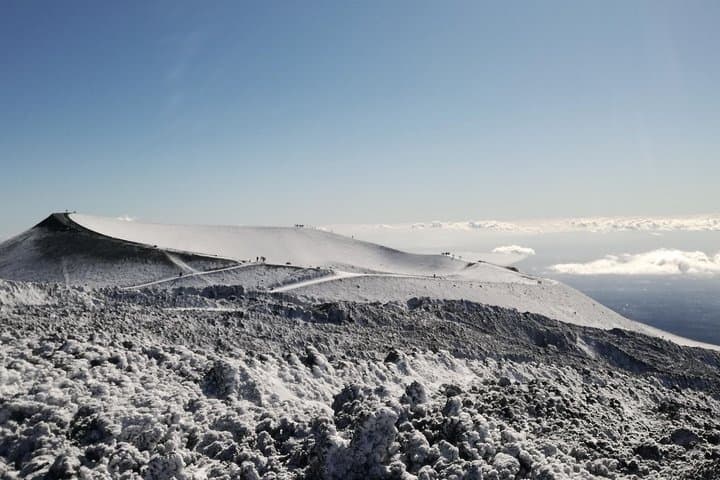
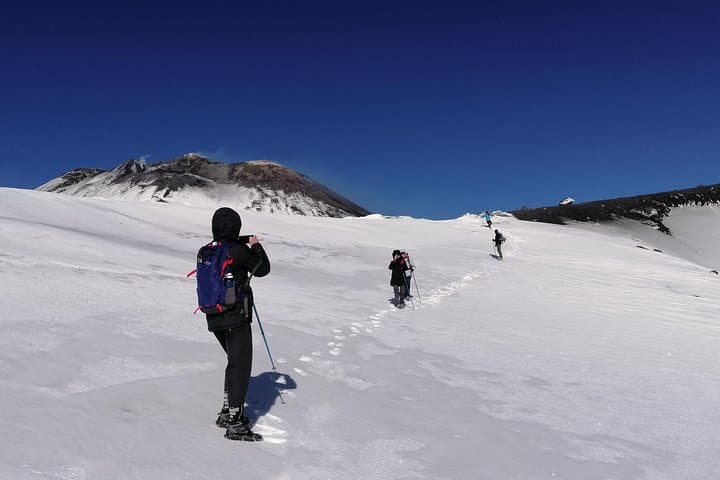
You step out at Piazzale Rifugio Sapienza with a cold wind that tastes faintly of sulfur, the cable car doors sighing shut behind your small group. Snow stretches like a pale plain above the treeline; the summit craters sit beyond, rimmed in ice and steam, and your volcanological guide points toward the jagged profile of the 2001 cone.
You step out at Piazzale Rifugio Sapienza with a cold wind that tastes faintly of sulfur, the cable car doors sighing shut behind your small group. Snow stretches like a pale plain above the treeline; the summit craters sit beyond, rimmed in ice and steam, and your volcanological guide points toward the jagged profile of the 2001 cone.
Etna is Europe’s most active stratovolcano — its layers of lava, ash and scoria record eruptions over hundreds of thousands of years. The southern approach opens onto the Valle del Bove, a rugged collapse amphitheater carved by flows and glacial action, and recent features like the Barbagallo craters and the 2001 cone show how quickly the landscape rewrites itself here. Local culture around Nicolosi and the mountain lodges blends mountaineering tradition with agricultural life; vineyards and rural towns sit low on the slopes while guides keep safety and respect for the volcano at the center of every outing.
Practical guidance: the excursion uses the cable car to ~2,500 m, then ascends to around 3,000 m — expect ~500 m of elevation change and roughly 6 km round-trip over snow, ice and volcanic scree. Conditions can be hard-packed ice or deep powder; guided groups are small and led by alpine/volcanological guides who provide helmets and poles. Bring crampons and layered, waterproof clothing, start early to catch stable snow and clear vistas, and allow time to acclimatize if you’ve come from sea level. This route demands expert-level winter hiking skills and attention to changing weather and eruption advisories.