THE ADVENTURE COLLECTIVE® · Independent discovery and booking for outdoor travel

Hike the slopes of Mount Etna with a local guide: walk lava fields, explore a volcanic tunnel, and finish with a vineyard tasting. Half-day routes cover varied terrain and offer optional cable car access to higher craters.
Hike the slopes of Mount Etna with a local guide: walk lava fields, explore a volcanic tunnel, and finish with a vineyard tasting. Half-day routes cover varied terrain and offer optional cable car access to higher craters.
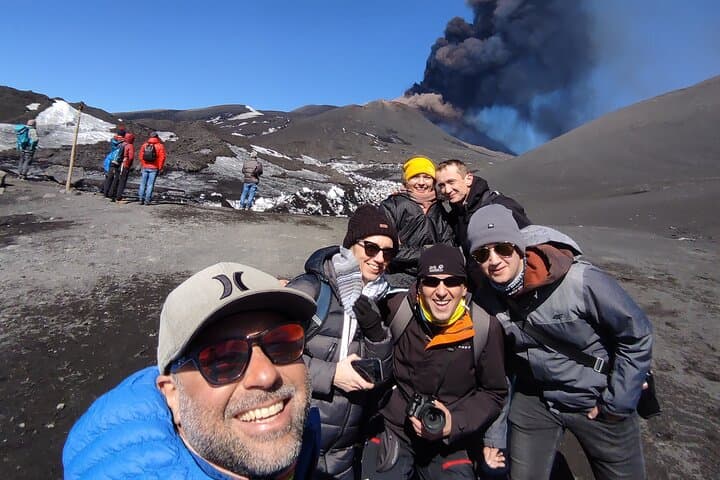
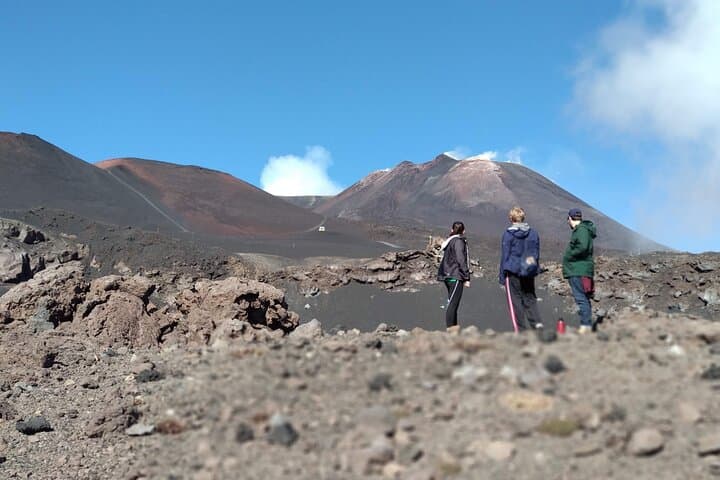
You step onto blackened rock at 2,000 meters and the mountain immediately sets the pace — wide skies above, wind shaping the pumice underfoot. The guide points out extinct side craters and the ragged edges of recent lava flows; each step is both geology lesson and-motion, a conversation with a volcano that keeps changing its mind.
Verified experiences and guided adventures in the surrounding area.
Operated by Saro Trovato - Tourist and Naturalistic Guide mt. Etna · Catania, Sicily
You step onto blackened rock at 2,000 meters and the mountain immediately sets the pace — wide skies above, wind shaping the pumice underfoot. The guide points out extinct side craters and the ragged edges of recent lava flows; each step is both geology lesson and-motion, a conversation with a volcano that keeps changing its mind.
Mount Etna is Europe’s most active stratovolcano. Its layers of basalt and ash record frequent eruptions that farmers turned into fertile vineyards on the lower slopes. Greek and Roman writers named this massif as the forge of the gods; today, local winemakers and shepherds work plots defined by old flows and lava tongues.
On this guided trekking route you’ll traverse ancient lava fields, enter a volcanic tunnel where the air cools, and view side craters before finishing with a tasting among Etna’s vineyards. The standard outing is a half-day (about 5–6 hours), typically covering 6–8 km with roughly 200–600 m of elevation gain depending on the chosen route. Terrain alternates between packed volcanic scree, solidified flows and short rocky pitches — good footwear and steady footing matter.
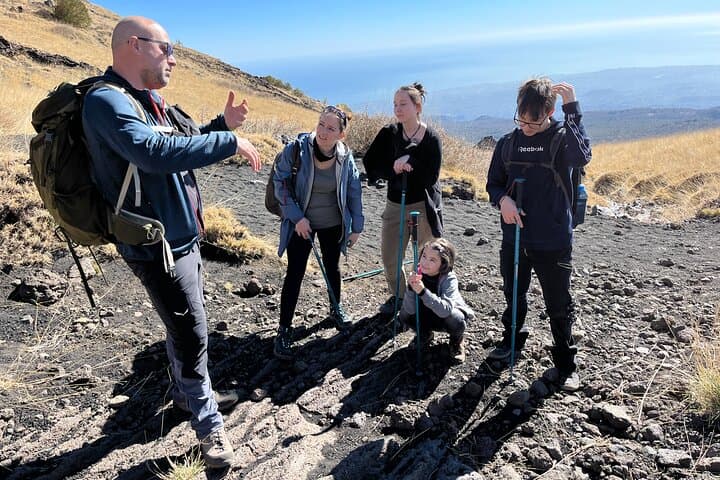
Practical notes: weather can change quickly at altitude; plan for wind and sun. Cable car access lets you extend the day to 2,500–2,900 m for an extra fee, but high-elevation sections may require stronger fitness and layers. Guides often provide helmets and poles; bring water, layered clothing and a camera — the panoramas reward the climb.
moderate.
5–6 hours.
Suitable for hikers in moderate fitness — comfortable on sustained uphill sections and uneven terrain; not recommended for those with serious cardiovascular issues.
Yes — the tour notes that cable car tickets to reach 2,500–2,900 m are an additional cost and should be arranged in advance when available.
Most travelers base themselves in Catania; public transport and local pickups are common, but confirm your exact meeting point with the operator the day before.
The main 2,000 m route is graded for general fitness levels, but high-altitude extensions require better conditioning and proper layering.
Guides typically include helmets and trekking poles as noted in the tour inclusions, but you may bring your own equipment if preferred.
Etna’s eruptions have shaped local agriculture and settlement for millennia; fertile soils from lava flows support vineyards that produce distinct Etna wines.
Stick to established paths and avoid removing rocks or disturbing fragile lichen and soil; the high-elevation ecosystems recover slowly from trampling.
Saro Trovato - Tourist and Naturalistic Guide mt. Etna operates guided outdoor trips and adventures with an emphasis on safety, stewardship, and memorable experiences.

You step onto blackened rock at 2,000 meters and the mountain immediately sets the pace — wide skies above, wind shaping the pumice underfoot. The guide points out extinct side craters and the ragged edges of recent lava flows; each step is both geology lesson and-motion, a conversation with a volcano that keeps changing its mind.
You step onto blackened rock at 2,000 meters and the mountain immediately sets the pace — wide skies above, wind shaping the pumice underfoot. The guide points out extinct side craters and the ragged edges of recent lava flows; each step is both geology lesson and-motion, a conversation with a volcano that keeps changing its mind.
Mount Etna is Europe’s most active stratovolcano. Its layers of basalt and ash record frequent eruptions that farmers turned into fertile vineyards on the lower slopes. Greek and Roman writers named this massif as the forge of the gods; today, local winemakers and shepherds work plots defined by old flows and lava tongues.
On this guided trekking route you’ll traverse ancient lava fields, enter a volcanic tunnel where the air cools, and view side craters before finishing with a tasting among Etna’s vineyards. The standard outing is a half-day (about 5–6 hours), typically covering 6–8 km with roughly 200–600 m of elevation gain depending on the chosen route. Terrain alternates between packed volcanic scree, solidified flows and short rocky pitches — good footwear and steady footing matter.
Practical notes: weather can change quickly at altitude; plan for wind and sun. Cable car access lets you extend the day to 2,500–2,900 m for an extra fee, but high-elevation sections may require stronger fitness and layers. Guides often provide helmets and poles; bring water, layered clothing and a camera — the panoramas reward the climb.