THE ADVENTURE COLLECTIVE® · Independent discovery and booking for outdoor travel

Catch Mount Etna as it cools: a late-afternoon transfer from Catania brings you to lava caves, rocky treks and a 1,700m sunset over black fields. Practical, guided and suited to those comfortable on uneven volcanic terrain.
Catch Mount Etna as it cools: a late-afternoon transfer from Catania brings you to lava caves, rocky treks and a 1,700m sunset over black fields. Practical, guided and suited to those comfortable on uneven volcanic terrain.
A low sun slides across black basalt as the minivan curves up the eastern flank of Mount Etna. Travelers step out into thin air at about 1,700 metres, where wind chisels the landscape and lava fields hold the day's heat like a kept secret. Helmets are clipped on, flashlights checked — the group moves off toward a lava tube and short trekking sections that open to wide, volcanic panoramas.
Verified experiences and guided adventures in the surrounding area.
Operated by Red Etna · Catania, Sicily
A low sun slides across black basalt as the minivan curves up the eastern flank of Mount Etna. Travelers step out into thin air at about 1,700 metres, where wind chisels the landscape and lava fields hold the day's heat like a kept secret. Helmets are clipped on, flashlights checked — the group moves off toward a lava tube and short trekking sections that open to wide, volcanic panoramas.
Etna is one of Europe's most active volcanoes; its layers of basalt and ash tell a story of repeated eruptions shaping Sicily's northeast coast. Local culture around Catania grew with — and from — the volcano: centuries of fertile soils, stone-built farmsteads and wine grown on cooled lava flows. Geology is visible here: ʻaʻa and pahoehoe textures, collapsed tubes, and ash deposits reveal eruption cycles that span millennia.
Practical guidance: the tour is about 5–6 hours with transfers from Catania in small air-conditioned vehicles, a lunch at altitude (lodge or packed), a guided visit to a lava cave, and a sunset viewing over the lava plains. This itinerary does not include summit crater access. Expect uneven volcanic scree underfoot, short rocky climbs, and colder temperatures than the coast — sunset accelerates the chill.
Bring sturdy footwear, warm layers, and a headlamp or flashlight; the operator provides helmets and cave lights. Hydrate before departure and carry snacks for energy on the hike. Because the route runs rain or shine and may change for safety, leave room in your schedule for fluctuation and allow extra time to return to Catania after dark.
moderate.
5–6 hours.
Suitable for people who can walk 2–4 km on uneven terrain and manage short elevation changes at altitude.
The total experience is about 5–6 hours; departures are mid-day to reach the mountain before sunset and include transfer time from Catania.
No — this tour reaches approximately 1,700 metres for panoramic views and lava cave visits; summit crater access requires a different guided itinerary and permits.
Yes, helmets and flashlights are provided for the lava tube portion of the tour, though carrying a personal headlamp is recommended.
The tour runs rain or shine but the guide may change the itinerary or cancel for safety reasons; check the operator’s cancellation policy for refunds.
Etna’s eruptions have shaped local settlement and agriculture for millennia; lava-rich soils supported vineyards and citrus orchards around Catania.
Stay on marked paths to protect fragile lichen and newly colonizing plants on lava flows; local operators limit group sizes to reduce erosion and disturbance.
Red Etna operates guided outdoor trips and adventures with an emphasis on safety, stewardship, and memorable experiences.
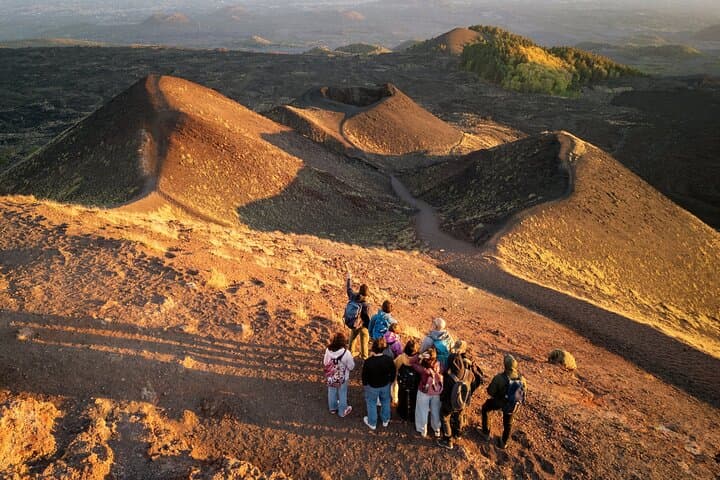
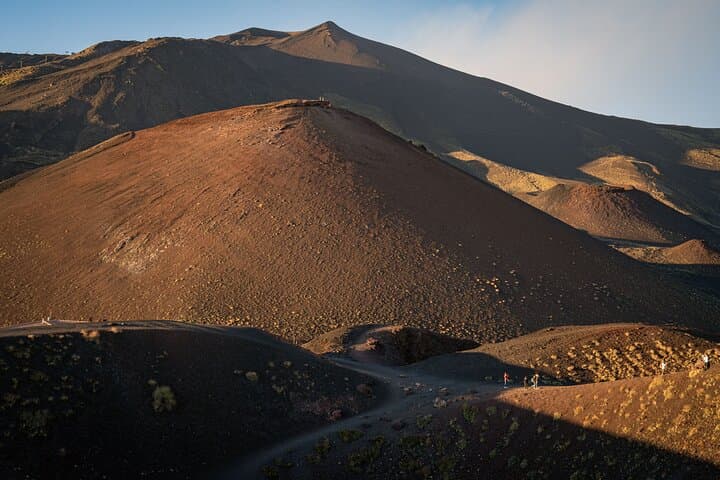
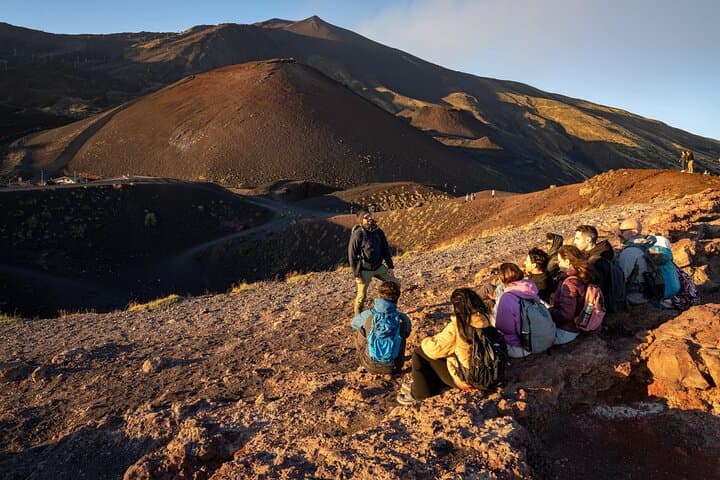
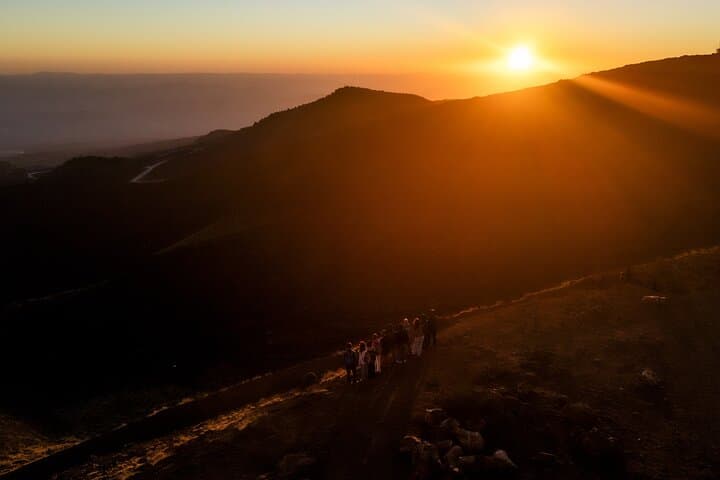
A low sun slides across black basalt as the minivan curves up the eastern flank of Mount Etna. Travelers step out into thin air at about 1,700 metres, where wind chisels the landscape and lava fields hold the day's heat like a kept secret. Helmets are clipped on, flashlights checked — the group moves off toward a lava tube and short trekking sections that open to wide, volcanic panoramas.
A low sun slides across black basalt as the minivan curves up the eastern flank of Mount Etna. Travelers step out into thin air at about 1,700 metres, where wind chisels the landscape and lava fields hold the day's heat like a kept secret. Helmets are clipped on, flashlights checked — the group moves off toward a lava tube and short trekking sections that open to wide, volcanic panoramas.
Etna is one of Europe's most active volcanoes; its layers of basalt and ash tell a story of repeated eruptions shaping Sicily's northeast coast. Local culture around Catania grew with — and from — the volcano: centuries of fertile soils, stone-built farmsteads and wine grown on cooled lava flows. Geology is visible here: ʻaʻa and pahoehoe textures, collapsed tubes, and ash deposits reveal eruption cycles that span millennia.
Practical guidance: the tour is about 5–6 hours with transfers from Catania in small air-conditioned vehicles, a lunch at altitude (lodge or packed), a guided visit to a lava cave, and a sunset viewing over the lava plains. This itinerary does not include summit crater access. Expect uneven volcanic scree underfoot, short rocky climbs, and colder temperatures than the coast — sunset accelerates the chill.
Bring sturdy footwear, warm layers, and a headlamp or flashlight; the operator provides helmets and cave lights. Hydrate before departure and carry snacks for energy on the hike. Because the route runs rain or shine and may change for safety, leave room in your schedule for fluctuation and allow extra time to return to Catania after dark.