THE ADVENTURE COLLECTIVE® · Independent discovery and booking for outdoor travel

A private, half-day trek from Piano Provenzana takes you into Etna’s summit-area craters on the north slope, pairing short 4x4 transfers with high-altitude hiking across lava fields. Expect loose volcanic scree, dramatic crater rims and strict on-site ticketing for summit access.
A private, half-day trek from Piano Provenzana takes you into Etna’s summit-area craters on the north slope, pairing short 4x4 transfers with high-altitude hiking across lava fields. Expect loose volcanic scree, dramatic crater rims and strict on-site ticketing for summit access.
You stand at Piano Provenzana, wind biting through the last pines at 1,800 m while the volcano above breathes slow and then not. The trail begins across black sand and jagged pahoehoe, a field of recent flows that throws your senses forward — heat underfoot in warm months, the metallic tang of sulfur on cooler mornings.
Verified experiences and guided adventures in the surrounding area.
Operated by Empeeria · Linguaglossa, Sicily
You stand at Piano Provenzana, wind biting through the last pines at 1,800 m while the volcano above breathes slow and then not. The trail begins across black sand and jagged pahoehoe, a field of recent flows that throws your senses forward — heat underfoot in warm months, the metallic tang of sulfur on cooler mornings.
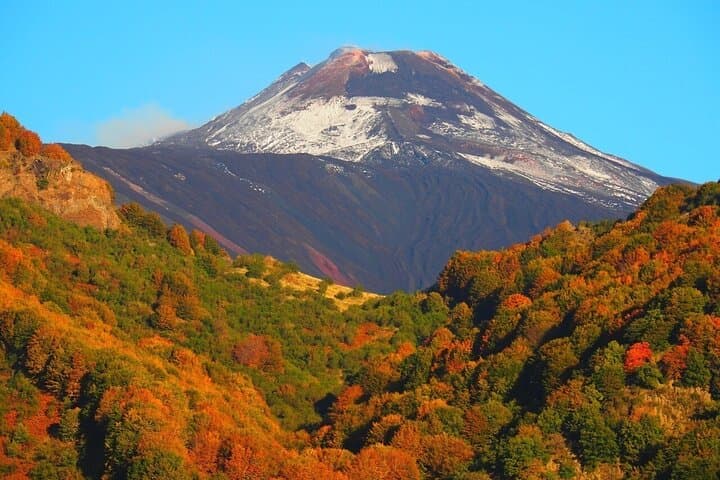
Mount Etna is Europe’s most active volcano, its frequent eruptions sculpting terraces, craters and the Valle del Leone on the northern flank. Geology here is readable: layered lava flows, ash benches and cone scars that map eruptions over millennia. Local culture around Etna blends pastoral mountain towns, citrus orchards below, and a long history of farmers and vulcanologists negotiating the mountain’s moods.
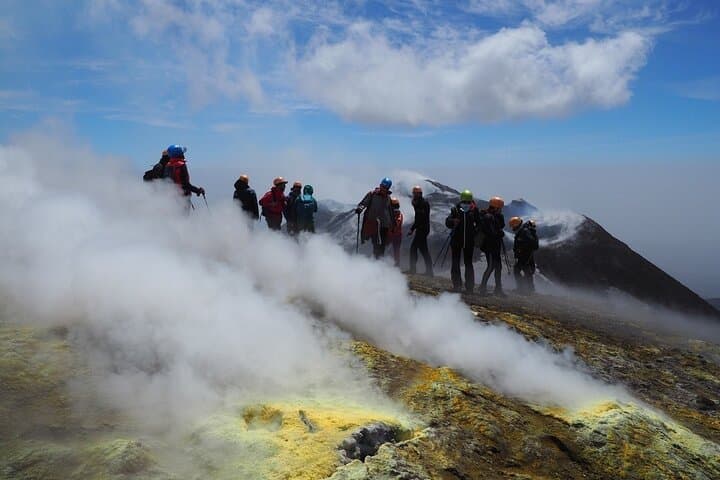
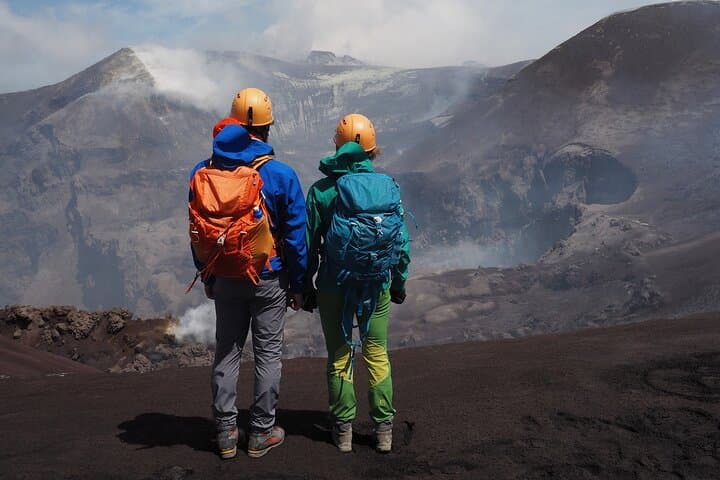
This private trekking experience pairs a short 4x4 transfer with guided hiking at high altitude, reaching summit-area craters around 2,800–3,300 m. Expect steep, loose volcanic scree, sand fields, and sections where the trail narrows at crater rims. The guide will point out recent flows, fumaroles and the Pizzi Deneri observatory where instruments watch the next change.
Practical edge: buy the mandatory 4x4 bus ticket on site, layer for rapid temperature swings, and carry water and sun protection — the air is thin and sun is strong. Footwear with good grip matters; poles help on scree descents. Plan acclimatization if you’ve been at sea level, and allow flexibility: summit access can close with bad weather. The payoff is clear: a raw, elemental landscape and close views into a living volcano that still shapes Sicily.
moderate.
4–5 hours.
Suitable for hikers with moderate fitness; must handle sustained walks on uneven volcanic terrain and short steep sections at altitude.
Tickets for the mandatory 4x4 transfer are purchased on site at Piano Provenzana prior to ascending; bring cash or card as advised by the operator.
The route is physically moderate but reaches high altitude; children and older adults should be confident walking on uneven terrain and consult the guide about fitness and health concerns.
Access to summit-area craters can be restricted for safety; guides will reroute or cancel and a full refund is offered if the provider cancels due to weather within policy.
A certified mountain volcanological guide is included; specialized safety gear beyond standard hiking equipment is provided only if required by site rules—ask the operator in advance.
Etna’s eruptions are recorded since antiquity and shaped local settlements, agriculture and folklore; the volcano has long been central to Sicilian identity.
Stay on marked routes to protect thin alpine soils and rare plants; follow guide instructions and avoid removing rocks or disturbing fumaroles.
Empeeria operates guided outdoor trips and adventures with an emphasis on safety, stewardship, and memorable experiences.
You stand at Piano Provenzana, wind biting through the last pines at 1,800 m while the volcano above breathes slow and then not. The trail begins across black sand and jagged pahoehoe, a field of recent flows that throws your senses forward — heat underfoot in warm months, the metallic tang of sulfur on cooler mornings.
You stand at Piano Provenzana, wind biting through the last pines at 1,800 m while the volcano above breathes slow and then not. The trail begins across black sand and jagged pahoehoe, a field of recent flows that throws your senses forward — heat underfoot in warm months, the metallic tang of sulfur on cooler mornings.
Mount Etna is Europe’s most active volcano, its frequent eruptions sculpting terraces, craters and the Valle del Leone on the northern flank. Geology here is readable: layered lava flows, ash benches and cone scars that map eruptions over millennia. Local culture around Etna blends pastoral mountain towns, citrus orchards below, and a long history of farmers and vulcanologists negotiating the mountain’s moods.
This private trekking experience pairs a short 4x4 transfer with guided hiking at high altitude, reaching summit-area craters around 2,800–3,300 m. Expect steep, loose volcanic scree, sand fields, and sections where the trail narrows at crater rims. The guide will point out recent flows, fumaroles and the Pizzi Deneri observatory where instruments watch the next change.
Practical edge: buy the mandatory 4x4 bus ticket on site, layer for rapid temperature swings, and carry water and sun protection — the air is thin and sun is strong. Footwear with good grip matters; poles help on scree descents. Plan acclimatization if you’ve been at sea level, and allow flexibility: summit access can close with bad weather. The payoff is clear: a raw, elemental landscape and close views into a living volcano that still shapes Sicily.