THE ADVENTURE COLLECTIVE® · Independent discovery and booking for outdoor travel

Climb above the tree line on a guided trek to Mount Etna’s summit crater rims. This 5–6 hour route uses cable car and 4x4 access, covers loose volcanic terrain and reaches crater edges with direct views of active fumaroles.
Climb above the tree line on a guided trek to Mount Etna’s summit crater rims. This 5–6 hour route uses cable car and 4x4 access, covers loose volcanic terrain and reaches crater edges with direct views of active fumaroles.
You step from the cable car into a high, thin air where the ground changes from compact trail to a field of jagged volcanic bombs and black slag. Steam hisses from fumaroles nearby; sulfur-smelling gases ride the wind and flick mineral colors across the rocks. The guide checks equipment, points to a rim that might glow on an active night, and the group moves along the crater edge.
Verified experiences and guided adventures in the surrounding area.
Operated by Guide Vulcanologiche Etna Nord · Nicolosi, Sicily
You step from the cable car into a high, thin air where the ground changes from compact trail to a field of jagged volcanic bombs and black slag. Steam hisses from fumaroles nearby; sulfur-smelling gases ride the wind and flick mineral colors across the rocks. The guide checks equipment, points to a rim that might glow on an active night, and the group moves along the crater edge.
Mount Etna’s summit zone is geologically young and constantly rewritten by eruptions — flows, cinder cones and fumaroles form and disappear over decades. The area has been central to local life for millennia: lava fields shaped farmland and folklore, while towns like Nicolosi and Zafferana grew on its flanks. Expect a stark, almost desert-like landscape at altitude, punctuated by scrub, hardy lichens and the occasional old lava tongue that records a past eruption.
Practically, this guided trek combines cable car and 4×4 approach to above 2,500 m, then a strenuous ascent to crater rims around 3,300–3,380 m depending on conditions. Routes shift with volcanic activity; guides alter plans for gas, wind or heat from the ground. Plan for 5–6 hours, roughly 9.5–13 km and ~500–600 m net ascent on loose, unstable rock. Bring layered outerwear, sturdy boots and breathable protection for ash and gas. Hydrate before you start, follow your guide’s breathing and pacing advice at altitude, and understand the guide may shorten or cancel the route if safety dictates. The real reward is close contact with an active summit, where the mountain feels alive and always in motion.
challenging.
5–6 hours.
Good aerobic fitness with experience hiking on loose, high‑altitude terrain; able to handle sustained uphill sections and uneven ground.
Guides aim for crater rims around 3,300–3,380 m when conditions allow; your cable car and 4×4 access start from roughly 1,900–2,750 m.
No technical climbing is required, but you should be experienced with high-altitude hiking and comfortable on loose volcanic terrain.
Yes — routes change daily and guides will alter or cancel excursions if gas, wind or ground heat make the summit unsafe.
This itinerary is not recommended for pregnant travelers or those with serious cardiovascular or respiratory conditions; age and fitness screening applies.
Etna’s eruptions have shaped Sicily’s culture and agriculture for millennia; historical records of major eruptions date back to antiquity and island folklore.
Access to summit areas is regulated to protect fragile volcanic soils and for safety; stay on designated routes, carry out waste and follow guide instructions to minimize impact.
Guide Vulcanologiche Etna Nord operates guided outdoor trips and adventures with an emphasis on safety, stewardship, and memorable experiences.
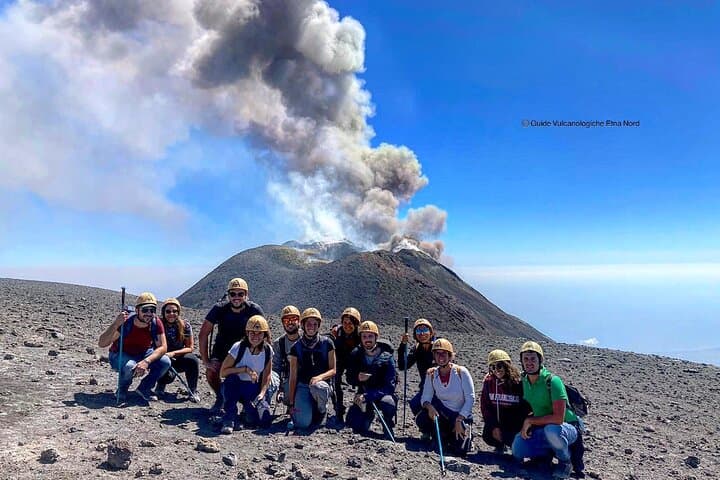
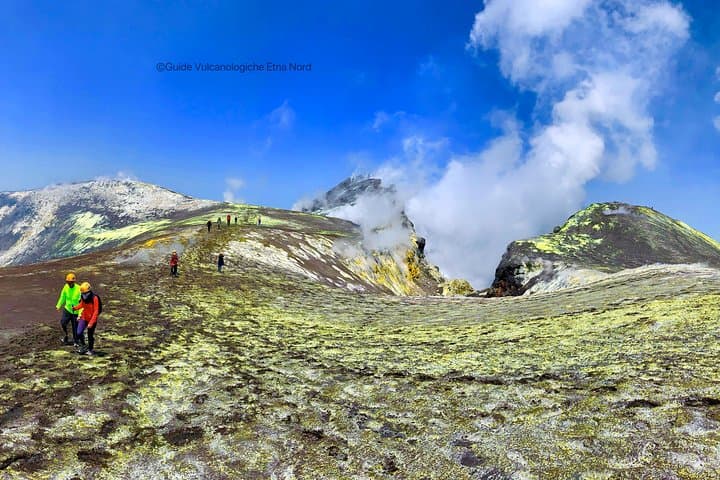
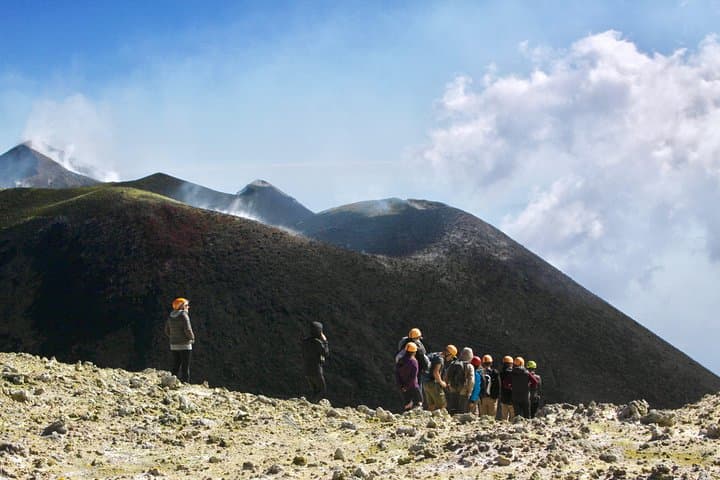
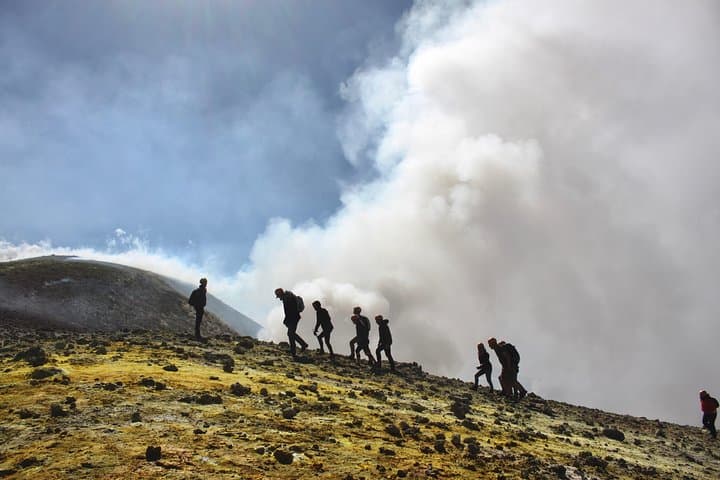
You step from the cable car into a high, thin air where the ground changes from compact trail to a field of jagged volcanic bombs and black slag. Steam hisses from fumaroles nearby; sulfur-smelling gases ride the wind and flick mineral colors across the rocks. The guide checks equipment, points to a rim that might glow on an active night, and the group moves along the crater edge.
You step from the cable car into a high, thin air where the ground changes from compact trail to a field of jagged volcanic bombs and black slag. Steam hisses from fumaroles nearby; sulfur-smelling gases ride the wind and flick mineral colors across the rocks. The guide checks equipment, points to a rim that might glow on an active night, and the group moves along the crater edge.
Mount Etna’s summit zone is geologically young and constantly rewritten by eruptions — flows, cinder cones and fumaroles form and disappear over decades. The area has been central to local life for millennia: lava fields shaped farmland and folklore, while towns like Nicolosi and Zafferana grew on its flanks. Expect a stark, almost desert-like landscape at altitude, punctuated by scrub, hardy lichens and the occasional old lava tongue that records a past eruption.
Practically, this guided trek combines cable car and 4×4 approach to above 2,500 m, then a strenuous ascent to crater rims around 3,300–3,380 m depending on conditions. Routes shift with volcanic activity; guides alter plans for gas, wind or heat from the ground. Plan for 5–6 hours, roughly 9.5–13 km and ~500–600 m net ascent on loose, unstable rock. Bring layered outerwear, sturdy boots and breathable protection for ash and gas. Hydrate before you start, follow your guide’s breathing and pacing advice at altitude, and understand the guide may shorten or cancel the route if safety dictates. The real reward is close contact with an active summit, where the mountain feels alive and always in motion.