THE ADVENTURE COLLECTIVE® · Independent discovery and booking for outdoor travel

Spend a full day on Mount Etna’s southern flank: cable car access, lava fields, crater rims and a guided hike toward 2,700 m. This tour combines geology, local flavors and hands-on volcanic terrain with practical support for high-altitude walking.
Spend a full day on Mount Etna’s southern flank: cable car access, lava fields, crater rims and a guided hike toward 2,700 m. This tour combines geology, local flavors and hands-on volcanic terrain with practical support for high-altitude walking.
You step out of the minibus at Rifugio Sapienza and the air changes — thinner, mineral-tasting, and spiced with sulphur. Dark lava fields unfurl like stitched armor beneath the cable car pylons; hikers and guides tighten jackets against a gust that seems to test your resolve. The cable car climbs, revealing rings of collapsed craters, black pahoehoe and jagged ‘aa’ flows, and the pale scrub that manages to cling to this high, wind-battered flank.
Verified experiences and guided adventures in the surrounding area.
Operated by EtnaWay · Nicolosi, Sicily
You step out of the minibus at Rifugio Sapienza and the air changes — thinner, mineral-tasting, and spiced with sulphur. Dark lava fields unfurl like stitched armor beneath the cable car pylons; hikers and guides tighten jackets against a gust that seems to test your resolve. The cable car climbs, revealing rings of collapsed craters, black pahoehoe and jagged ‘aa’ flows, and the pale scrub that manages to cling to this high, wind-battered flank.
Etna is Europe’s most active stratovolcano; its layers are records of alternating effusive and explosive eruptions that shaped eastern Sicily. The south route passes old lateral craters, fresh basalt flows and lava bombs — rounded chunks hurled during violent episodes — and offers a clear lesson in volcanic geology. Culturally, the slopes are threaded with rural traditions: honey, liqueurs and cheeses produced from terroir warmed by volcanic soils.
Practicalities are straightforward but firm: the full-day tour runs about 6–7 hours, ascending by cable car and walking toward 2,700 m where vegetation thins and weather swings quickly. Guides supply helmets, trekking poles and cable car tickets; bring sturdy boots, layered clothing, and at least 2 liters of water. Expect uneven volcanic scree, occasional steep sections and spectacular, exposed viewpoints.
Plan for sun, wind and sudden temperature drops; schedule the climb earlier in the day to avoid afternoon cloud build-up. Whether you’re fascinated by molten Earth or chasing wide, raw panoramas, Etna’s south face delivers an education and a physical challenge in equal measure.
challenging.
6–7 hours.
Moderate to good aerobic fitness recommended; expect sustained walking on uneven, high-altitude terrain.
The itinerary typically reaches around 2,700 m on the south flank; exact access depends on volcanic activity and weather on the day.
Yes — the tour inclusions list helmets and hiking sticks (trekking poles) as provided equipment.
The tour requires moderate mobility and fitness; it’s not recommended for those with spinal, heart, or pregnancy-related restrictions — check with the operator first.
Bring your own water (at least 2 liters) and enjoy the provided packed lunch; taste local products offered by guides where available.
Mount Etna’s eruptions have shaped local settlement patterns for millennia; the volcano’s frequent activity is recorded in local lore, agricultural practices and ancient chronicles.
Stay on marked routes and avoid collecting volcanic rock; fragile pioneer plants take decades to re-establish on fresh lava and visitor pressure can accelerate erosion.
EtnaWay operates guided outdoor trips and adventures with an emphasis on safety, stewardship, and memorable experiences.

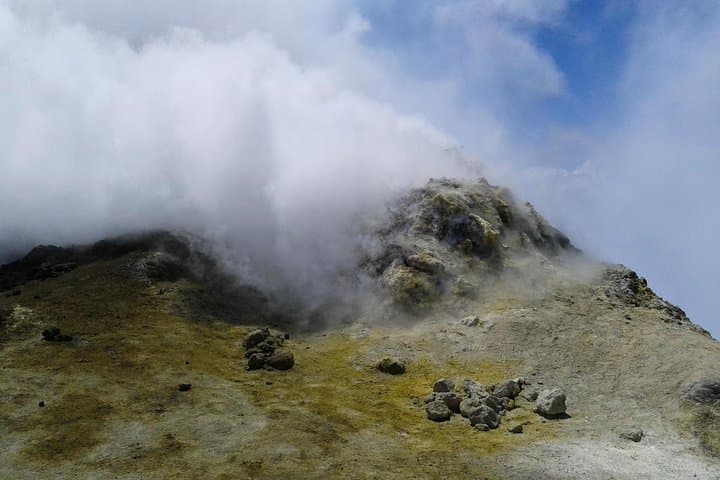


You step out of the minibus at Rifugio Sapienza and the air changes — thinner, mineral-tasting, and spiced with sulphur. Dark lava fields unfurl like stitched armor beneath the cable car pylons; hikers and guides tighten jackets against a gust that seems to test your resolve. The cable car climbs, revealing rings of collapsed craters, black pahoehoe and jagged ‘aa’ flows, and the pale scrub that manages to cling to this high, wind-battered flank.
You step out of the minibus at Rifugio Sapienza and the air changes — thinner, mineral-tasting, and spiced with sulphur. Dark lava fields unfurl like stitched armor beneath the cable car pylons; hikers and guides tighten jackets against a gust that seems to test your resolve. The cable car climbs, revealing rings of collapsed craters, black pahoehoe and jagged ‘aa’ flows, and the pale scrub that manages to cling to this high, wind-battered flank.
Etna is Europe’s most active stratovolcano; its layers are records of alternating effusive and explosive eruptions that shaped eastern Sicily. The south route passes old lateral craters, fresh basalt flows and lava bombs — rounded chunks hurled during violent episodes — and offers a clear lesson in volcanic geology. Culturally, the slopes are threaded with rural traditions: honey, liqueurs and cheeses produced from terroir warmed by volcanic soils.
Practicalities are straightforward but firm: the full-day tour runs about 6–7 hours, ascending by cable car and walking toward 2,700 m where vegetation thins and weather swings quickly. Guides supply helmets, trekking poles and cable car tickets; bring sturdy boots, layered clothing, and at least 2 liters of water. Expect uneven volcanic scree, occasional steep sections and spectacular, exposed viewpoints.
Plan for sun, wind and sudden temperature drops; schedule the climb earlier in the day to avoid afternoon cloud build-up. Whether you’re fascinated by molten Earth or chasing wide, raw panoramas, Etna’s south face delivers an education and a physical challenge in equal measure.