THE ADVENTURE COLLECTIVE® · Independent discovery and booking for outdoor travel

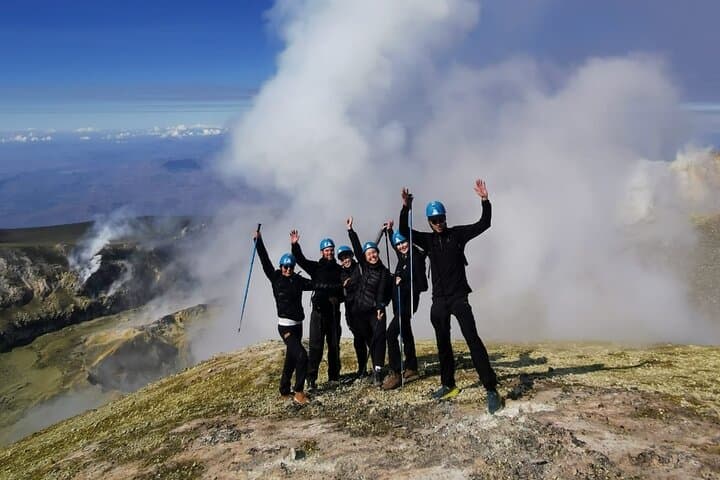
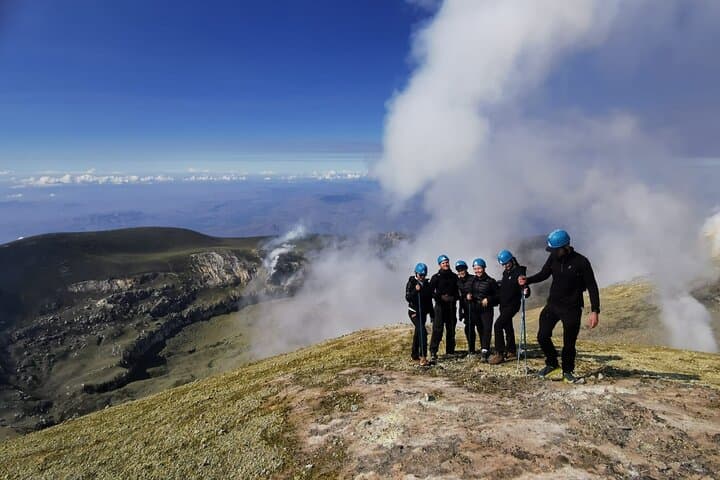
Ride a 4x4 to 2,825 m, then trek two hours to Mount Etna’s main crater rim at 3,320 m. Expect loose ash, sulfur-tinted ground, dramatic crater edges and sweeping views of the Sicilian coast.
Ride a 4x4 to 2,825 m, then trek two hours to Mount Etna’s main crater rim at 3,320 m. Expect loose ash, sulfur-tinted ground, dramatic crater edges and sweeping views of the Sicilian coast.
A wind-cold sun hits the volcanic gravel as the 4x4 grinds up from Piano Provenzana (1,800 m). You step out at Piano delle Concazze (2,825 m) into a moonscape of black scoria and sulfur-streaked rock; a narrow trail points higher and the summit lip of Etna waits above.
Verified experiences and guided adventures in the surrounding area.
Operated by Ashàra Etna & Stromboli Guides · Piano Provenzana, Sicily
A wind-cold sun hits the volcanic gravel as the 4x4 grinds up from Piano Provenzana (1,800 m). You step out at Piano delle Concazze (2,825 m) into a moonscape of black scoria and sulfur-streaked rock; a narrow trail points higher and the summit lip of Etna waits above.
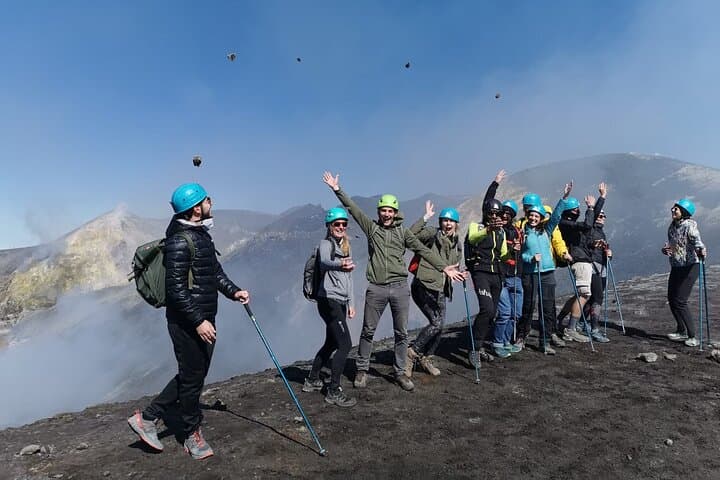
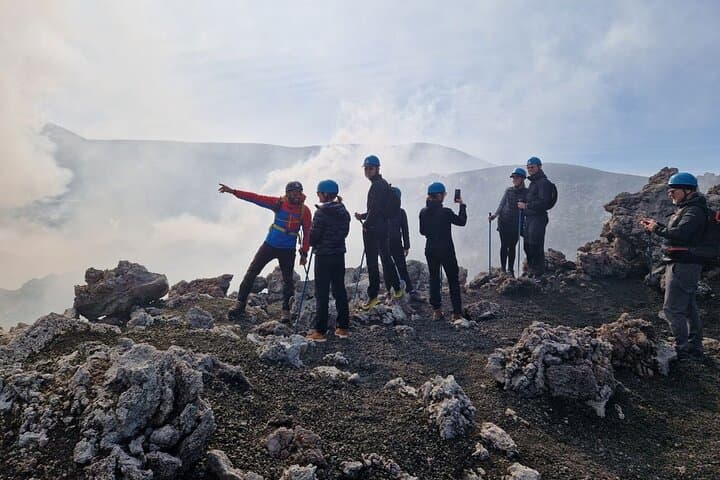
This route climbs roughly 495 m over about two hours to the main crater rim at 3,320 m. Walking along the edge you’ll pass the Central Crater, peer into the vertiginous Northeast Crater and watch the great, smoking throat of the Southeast Crater—the source of Etna’s recent eruptions. The geology is raw: loose ash, volcanic bombs, fumaroles that tint the ground with ochre and sulfur, and layers of successive lava flows carved by weather.
Etna is an active stratovolcano with a deep human history—Greek and Roman writers noted its fires—and UNESCO recognizes its geological and cultural significance. Local guides will explain eruptive cycles, recent activity, and how centuries of eruptions shaped nearby towns.
Practical notes: the ascent is steep on loose volcanic scree—sturdy boots, trekking poles, and steady footing matter. Gas emissions can be irritating; those with respiratory issues should avoid the summit. Weather changes fast above 2,800 m; dress in layers and carry water (there’s no reliable source). The guided outing lasts about five hours round-trip and includes helmets, walking sticks and a volcanological/alpine guide.
Expect panoramic views of Sicily’s coast on the descent, and a landscape that feels alive—pushing, shifting, and starkly beautiful. Plan for altitude, respect closed zones, and let the guide set the pace.
challenging.
5 hours.
Good cardiovascular fitness and experience on steep, loose terrain; comfortable with sustained uphill hiking.
It’s about 495 m of elevation over roughly two hours on loose volcanic material—steady, sometimes steep, but non-technical with a guide’s support.
Guides monitor volcanological conditions and the tour runs only when authorities deem the route safe; excursions may be canceled in case of unrest.
This trip isn’t recommended for pregnant travelers or young children due to altitude, steep terrain and potential gas exposure.
Guides adapt pace and route; if conditions become unsafe the operator will turn back and refund according to policy.
Mount Etna has been erupting for hundreds of thousands of years and is deeply woven into local culture; its active summit craters have defined Sicilian settlement patterns and myth for millennia.
The summit environment is fragile and impacted by foot traffic and litter; stick to paths, don’t collect rocks, and follow guide instructions to minimize erosion and disturbance.
Ashàra Etna & Stromboli Guides operates guided outdoor trips and adventures with an emphasis on safety, stewardship, and memorable experiences.
A wind-cold sun hits the volcanic gravel as the 4x4 grinds up from Piano Provenzana (1,800 m). You step out at Piano delle Concazze (2,825 m) into a moonscape of black scoria and sulfur-streaked rock; a narrow trail points higher and the summit lip of Etna waits above.
A wind-cold sun hits the volcanic gravel as the 4x4 grinds up from Piano Provenzana (1,800 m). You step out at Piano delle Concazze (2,825 m) into a moonscape of black scoria and sulfur-streaked rock; a narrow trail points higher and the summit lip of Etna waits above.
This route climbs roughly 495 m over about two hours to the main crater rim at 3,320 m. Walking along the edge you’ll pass the Central Crater, peer into the vertiginous Northeast Crater and watch the great, smoking throat of the Southeast Crater—the source of Etna’s recent eruptions. The geology is raw: loose ash, volcanic bombs, fumaroles that tint the ground with ochre and sulfur, and layers of successive lava flows carved by weather.
Etna is an active stratovolcano with a deep human history—Greek and Roman writers noted its fires—and UNESCO recognizes its geological and cultural significance. Local guides will explain eruptive cycles, recent activity, and how centuries of eruptions shaped nearby towns.
Practical notes: the ascent is steep on loose volcanic scree—sturdy boots, trekking poles, and steady footing matter. Gas emissions can be irritating; those with respiratory issues should avoid the summit. Weather changes fast above 2,800 m; dress in layers and carry water (there’s no reliable source). The guided outing lasts about five hours round-trip and includes helmets, walking sticks and a volcanological/alpine guide.
Expect panoramic views of Sicily’s coast on the descent, and a landscape that feels alive—pushing, shifting, and starkly beautiful. Plan for altitude, respect closed zones, and let the guide set the pace.