THE ADVENTURE COLLECTIVE® · Independent discovery and booking for outdoor travel

A guided, three-hour night hike from Piano Provenzana that walks you to the 2002 side craters of Mount Etna. Expect uneven volcanic terrain, coastal views, and a geology-first guide who explains the volcano’s recent history.
A guided, three-hour night hike from Piano Provenzana that walks you to the 2002 side craters of Mount Etna. Expect uneven volcanic terrain, coastal views, and a geology-first guide who explains the volcano’s recent history.
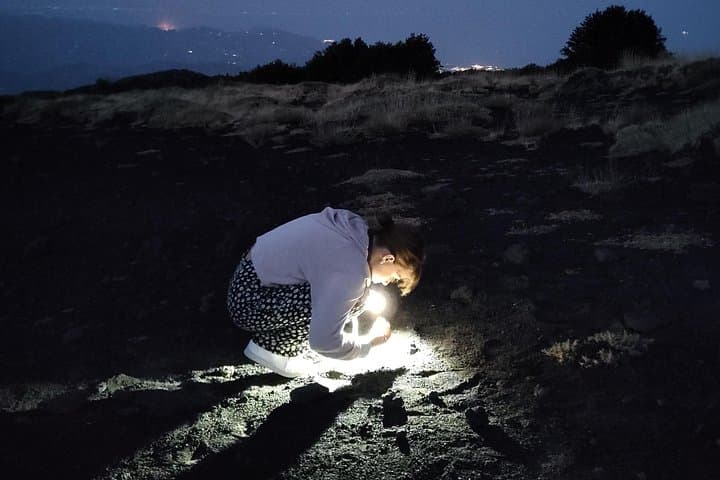
The trail opens as daylight thins and Mount Etna's northern flank cools into silhouette. Walkers gather at Piano Provenzana, 1,800 meters up, where a crisp wind cuts and the last light paints the volcanic ridges. Headlamps click on; the path becomes a band of movement across black rock and ash as the guide leads toward the 2002 Bottoniera craters.
Verified experiences and guided adventures in the surrounding area.
Operated by Vincenzo Modica | Volcanological Guide of Mount Etna · Linguaglossa, Sicily
The trail opens as daylight thins and Mount Etna's northern flank cools into silhouette. Walkers gather at Piano Provenzana, 1,800 meters up, where a crisp wind cuts and the last light paints the volcanic ridges. Headlamps click on; the path becomes a band of movement across black rock and ash as the guide leads toward the 2002 Bottoniera craters.
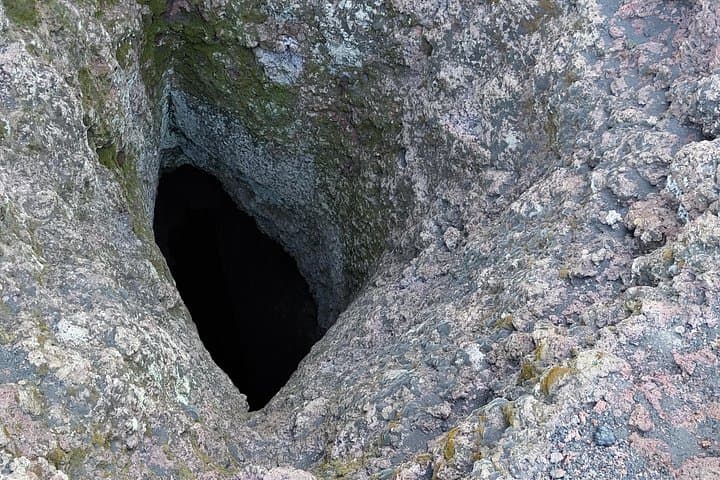
Etna is Europe’s largest active volcano — its eruptions have rewritten the coastline, rearranged forests and fed soils that support vineyards on the lower slopes. Geology here is immediate: solidified pahoehoe and jagged ʻaʻā flows, scoria cones and the fresh scars of the 2002 eruption visible in the crater rims. Culturally, locals learned to live with Etna’s moods; older farmhouses and stone terraces below show an economy shaped by lava and ash.
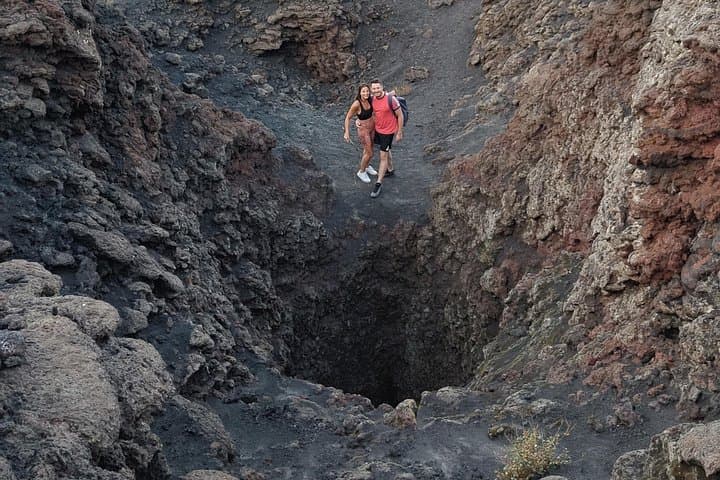
Expect uneven, rocky terrain and short steep pitches underfoot. The night hike emphasizes sensory navigation: the wind that seems to push you along ridgelines, the crunch of volcanic gravel and the way the coast lights flash far below on clear nights. Guides explain the formation of side craters and point out lava flow textures up close.
Practical guidance: wear stiff-soled hiking boots, layered clothing for mountain night chill and a reliable headlamp with spare batteries. Carry water, windproof outer layer and basic first-aid items. This is a guided, moderate three-hour outing best taken with moderate fitness and respect for fragile ground. Stick to the route, follow your guide and you'll come away with a clear sense of Etna’s ongoing story — raw, geological and alive.
moderate.
3 hours.
Moderate — able to hike uneven ground and manage short steep sections at altitude.
The guided experience lasts about three hours and starts at Piano Provenzana (approx. 1,800 m), meeting in front of Chiosco Bar Mareneve.
Not recommended for those with significant mobility limitations, small children or people with serious back or heart conditions due to uneven terrain and altitude.
You will see recent solidified lava flows and the 2002 side craters up close, but not active, flowing lava; guides keep groups a safe distance from unstable ground.
Wear layered clothing, a windproof shell, thermal mid-layer, sturdy hiking boots, and bring a headlamp and gloves — temperatures can fall quickly after sunset.
Etna’s frequent eruptions have shaped local settlement and agriculture for millennia; many communities on its slopes farm vineyards and citrus in soils enriched by volcanic deposits.
Trails cross fragile, newly formed volcanic ground — staying on the route prevents erosion and protects slow-recovering soils; use local guides to minimize impact.
Vincenzo Modica | Volcanological Guide of Mount Etna operates guided outdoor trips and adventures with an emphasis on safety, stewardship, and memorable experiences.

The trail opens as daylight thins and Mount Etna's northern flank cools into silhouette. Walkers gather at Piano Provenzana, 1,800 meters up, where a crisp wind cuts and the last light paints the volcanic ridges. Headlamps click on; the path becomes a band of movement across black rock and ash as the guide leads toward the 2002 Bottoniera craters.
The trail opens as daylight thins and Mount Etna's northern flank cools into silhouette. Walkers gather at Piano Provenzana, 1,800 meters up, where a crisp wind cuts and the last light paints the volcanic ridges. Headlamps click on; the path becomes a band of movement across black rock and ash as the guide leads toward the 2002 Bottoniera craters.
Etna is Europe’s largest active volcano — its eruptions have rewritten the coastline, rearranged forests and fed soils that support vineyards on the lower slopes. Geology here is immediate: solidified pahoehoe and jagged ʻaʻā flows, scoria cones and the fresh scars of the 2002 eruption visible in the crater rims. Culturally, locals learned to live with Etna’s moods; older farmhouses and stone terraces below show an economy shaped by lava and ash.
Expect uneven, rocky terrain and short steep pitches underfoot. The night hike emphasizes sensory navigation: the wind that seems to push you along ridgelines, the crunch of volcanic gravel and the way the coast lights flash far below on clear nights. Guides explain the formation of side craters and point out lava flow textures up close.
Practical guidance: wear stiff-soled hiking boots, layered clothing for mountain night chill and a reliable headlamp with spare batteries. Carry water, windproof outer layer and basic first-aid items. This is a guided, moderate three-hour outing best taken with moderate fitness and respect for fragile ground. Stick to the route, follow your guide and you'll come away with a clear sense of Etna’s ongoing story — raw, geological and alive.