THE ADVENTURE COLLECTIVE® · Independent discovery and booking for outdoor travel

Walk across black sand deserts, explore a 55 m lava gallery and stand beside pyroclastic cones formed in 1892. This easy guided trek on Etna blends dramatic geology with accessible hiking and provided safety gear.
Walk across black sand deserts, explore a 55 m lava gallery and stand beside pyroclastic cones formed in 1892. This easy guided trek on Etna blends dramatic geology with accessible hiking and provided safety gear.
A low sun cuts across fields of black sand as the group steps from the minivan onto Etna’s flanks. Wind pushes at jackets and the volcanic ground gives a soft crunch; the air smells faintly of sulfur and warmed rock. Whether at dawn or as the sky flushes with sunset, hikers trade city hum for a landscape that moves — lava flows that once poured like molten glass now hold patterns and gutters, and a tunnel yawns like a fossilized river.
Verified experiences and guided adventures in the surrounding area.
Operated by Etna Periperi Excursion · Catania, Sicily
A low sun cuts across fields of black sand as the group steps from the minivan onto Etna’s flanks. Wind pushes at jackets and the volcanic ground gives a soft crunch; the air smells faintly of sulfur and warmed rock. Whether at dawn or as the sky flushes with sunset, hikers trade city hum for a landscape that moves — lava flows that once poured like molten glass now hold patterns and gutters, and a tunnel yawns like a fossilized river.
Etna is one of Europe’s most active volcanoes and a UNESCO World Heritage Site; its slopes record eruptions from Roman times to the violent episodes of the 19th and 20th centuries. The Monti Rossi cones (1892) and older galleries near Monpeloso show layers of pyroclastic events and slow soil renewal. Local culture revolves around this restive neighbor: vineyards and chestnut groves cling to older lava, and mountain communities celebrate seasonal produce and resilience.
Practical guidance: expect roughly 100 m of elevation change over 1.5–2 hours of walking on uneven, often loose volcanic scree. Operators provide helmets, torches and poles, but bring sturdy hiking boots, a windproof layer and 1–2 liters of water. Start early for cooler temperatures or choose sunset for dramatic light and calmer winds; both windows avoid midday glare.
Safety notes: trails can be rerouted for security; respect closures and guides’ instructions. Keep distance from recent flows, avoid disturbing fragile lichens, and pack out trash. With modest fitness and good footwear, this trek delivers raw geology, compact history and a tangible connection to the mountain’s ongoing story.
easy.
2–3 hours (hike); 5–6 hours total including transport.
Suitable for most people who can walk on uneven ground for up to two hours; moderate stamina for altitude and loose scree
The walking is rated easy with about 100 m elevation gain over 1.5–2 hours on volcanic terrain; stable footwear and basic fitness are recommended.
Yes—operators supply helmets, torches and often poles; you still should bring a personal headlamp if you have one.
Pickup is typically from Catania city center (Piazza Borsellino); the route returns to the same area after the trek.
Yes—routes can change or be canceled for safety in poor weather or volcanic activity; follow operator guidance and avoid tight connections to flights.
The Monti Rossi cones formed during the 1892 eruption; Etna’s slopes preserve successive lava and ash layers that chart millennia of activity and human adaptation.
Stay on established trails to protect fragile colonizing plants and lichens, obey closure notices and carry out all waste—volcanic soils recover slowly.
Etna Periperi Excursion operates guided outdoor trips and adventures with an emphasis on safety, stewardship, and memorable experiences.
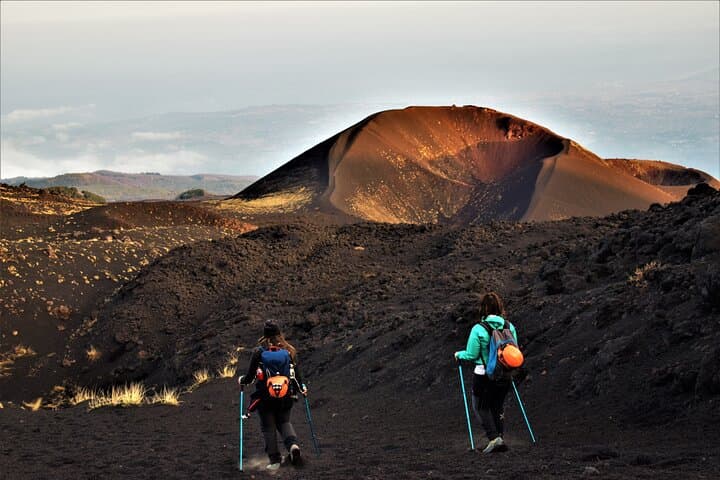
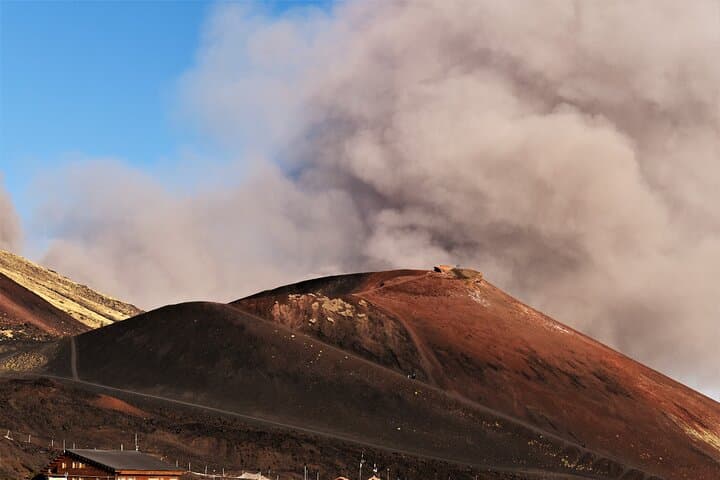
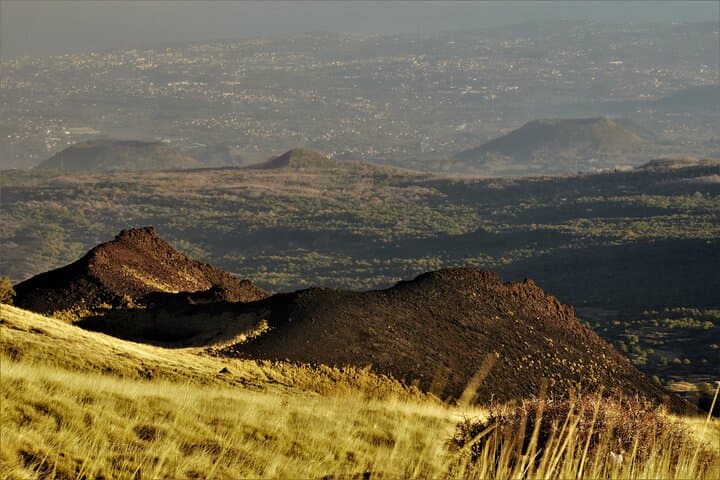
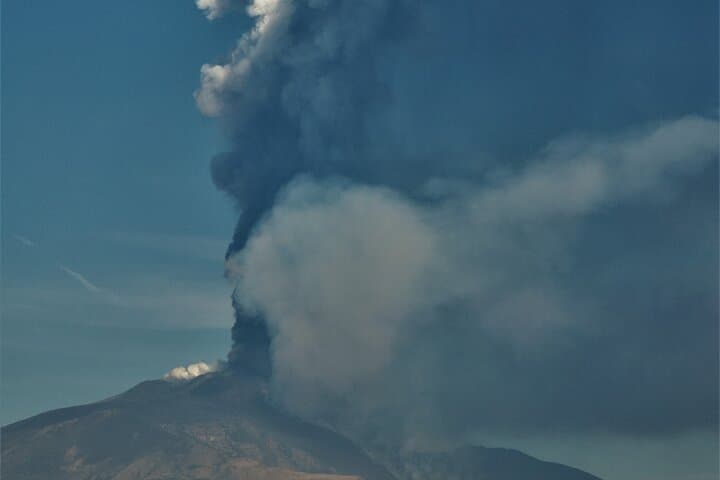
A low sun cuts across fields of black sand as the group steps from the minivan onto Etna’s flanks. Wind pushes at jackets and the volcanic ground gives a soft crunch; the air smells faintly of sulfur and warmed rock. Whether at dawn or as the sky flushes with sunset, hikers trade city hum for a landscape that moves — lava flows that once poured like molten glass now hold patterns and gutters, and a tunnel yawns like a fossilized river.
A low sun cuts across fields of black sand as the group steps from the minivan onto Etna’s flanks. Wind pushes at jackets and the volcanic ground gives a soft crunch; the air smells faintly of sulfur and warmed rock. Whether at dawn or as the sky flushes with sunset, hikers trade city hum for a landscape that moves — lava flows that once poured like molten glass now hold patterns and gutters, and a tunnel yawns like a fossilized river.
Etna is one of Europe’s most active volcanoes and a UNESCO World Heritage Site; its slopes record eruptions from Roman times to the violent episodes of the 19th and 20th centuries. The Monti Rossi cones (1892) and older galleries near Monpeloso show layers of pyroclastic events and slow soil renewal. Local culture revolves around this restive neighbor: vineyards and chestnut groves cling to older lava, and mountain communities celebrate seasonal produce and resilience.
Practical guidance: expect roughly 100 m of elevation change over 1.5–2 hours of walking on uneven, often loose volcanic scree. Operators provide helmets, torches and poles, but bring sturdy hiking boots, a windproof layer and 1–2 liters of water. Start early for cooler temperatures or choose sunset for dramatic light and calmer winds; both windows avoid midday glare.
Safety notes: trails can be rerouted for security; respect closures and guides’ instructions. Keep distance from recent flows, avoid disturbing fragile lichens, and pack out trash. With modest fitness and good footwear, this trek delivers raw geology, compact history and a tangible connection to the mountain’s ongoing story.