THE ADVENTURE COLLECTIVE® · Independent discovery and booking for outdoor travel

Ride a cable car and 4x4 up Mount Etna to 2,850m, walk across extinct craters and lava fractures, and stand above recent flows while learning about the volcano’s geology and local culture. Practical for most fitness levels with guiding and transport included.
Ride a cable car and 4x4 up Mount Etna to 2,850m, walk across extinct craters and lava fractures, and stand above recent flows while learning about the volcano’s geology and local culture. Practical for most fitness levels with guiding and transport included.
You arrive at the lava-scoured parking above the tree line and a wind that smells faintly of sulphur puts a lively edge on the sky.
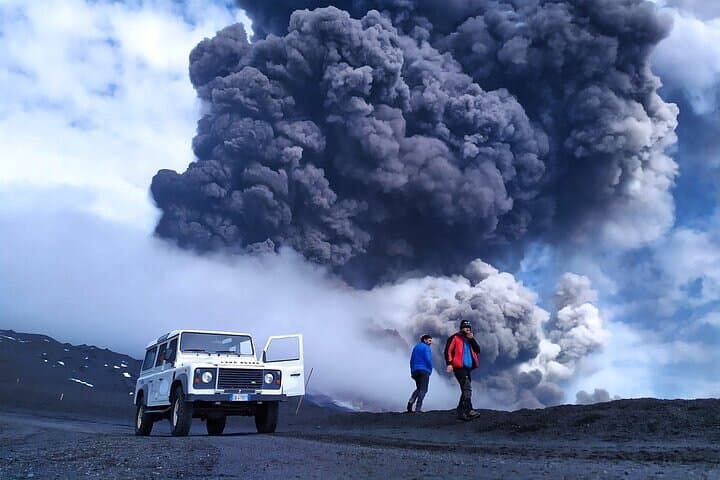
The cable car lifts you past black flanks and scattered pistachio bushes; the 4x4 bumps higher, throwing up stone dust, until you stand on the raw, cratered shoulder of Europe's most active volcano.
Verified experiences and guided adventures in the surrounding area.
Operated by Travel In Sicily Tour Operator · Nicolosi, Sicily
You arrive at the lava-scoured parking above the tree line and a wind that smells faintly of sulphur puts a lively edge on the sky.
The cable car lifts you past black flanks and scattered pistachio bushes; the 4x4 bumps higher, throwing up stone dust, until you stand on the raw, cratered shoulder of Europe's most active volcano.
This route follows Etna’s southern flank: a landscape shaped by repeated eruptions, centuries of lava layers and visible fissures that record the volcano’s recent past. Sicily’s volcanic soils host small hill towns and vineyards; many local winemakers still harvest grapes from ash-rich terraces below the massif.
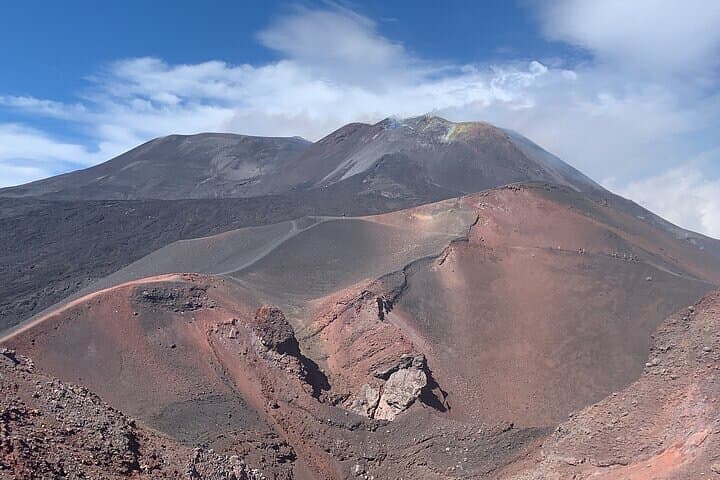
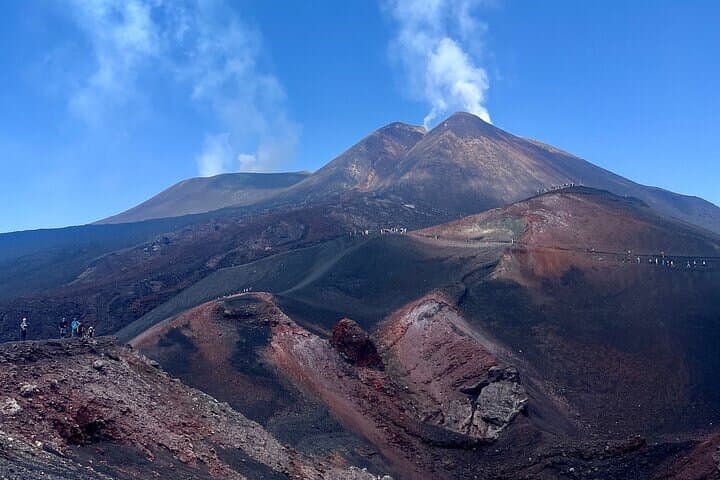
Geology is on full display—pumice beds, blocky aa flows and extinct scoria cones you can walk around and peer into. The cultural thread here is practical: shepherding, hardy agriculture, and the island’s relationship with an ever-changing mountain.
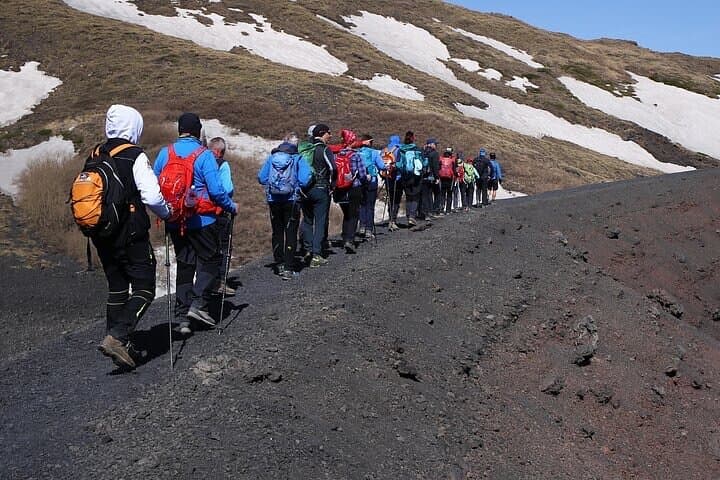
Expect an easy, guided walk from the cable car/4x4 drop at roughly 2,850m over hardened lava and loose ash to viewpoints over the summit craters and recent flows. The terrain is uneven, often coarse volcanic scree; weather can shift fast and visibility affects how close guides will let you approach active vents.
Practical notes: wear stiff-soled boots, dress in layers, bring water and sunscreen, and plan for 4–6 hours total including transfers and optional wine-tasting en route. The activity suits most fitness levels but involves short stretches of uphill walking at altitude. Guides provide tickets and drive the 4x4, so focus on footing and the view.
moderate.
5–6 hours.
Suitable for most people who can walk on uneven ground for 1–2 hours; basic stamina and steady footing required due to altitude and rough surfaces.
The cable car and 4x4 take you to approximately 2,850 meters where the guided walk begins; summit access above that depends on permits and conditions.
The walking section is described as easy, but children and older adults should be comfortable with uneven volcanic terrain and mild altitude exposure; discuss mobility needs at booking.
Guides monitor conditions and will avoid hazardous areas; tours can be altered or canceled if gas, lava activity, or visibility make the route unsafe.
Private transportation and a guide are included; language options depend on the operator—confirm at booking. Pickup from your accommodation is provided.
Etna’s eruptions have shaped local settlement and agriculture for millennia; the mountain features in Greek and Roman records and remains central to Sicilian identity.
Trails and guided routes reduce impact on fragile volcanic soils; stick to marked paths, pack out waste, and avoid disturbing vegetation or archaeological features.
Travel In Sicily Tour Operator operates guided outdoor trips and adventures with an emphasis on safety, stewardship, and memorable experiences.
You arrive at the lava-scoured parking above the tree line and a wind that smells faintly of sulphur puts a lively edge on the sky.
The cable car lifts you past black flanks and scattered pistachio bushes; the 4x4 bumps higher, throwing up stone dust, until you stand on the raw, cratered shoulder of Europe's most active volcano.
You arrive at the lava-scoured parking above the tree line and a wind that smells faintly of sulphur puts a lively edge on the sky.
The cable car lifts you past black flanks and scattered pistachio bushes; the 4x4 bumps higher, throwing up stone dust, until you stand on the raw, cratered shoulder of Europe's most active volcano.
This route follows Etna’s southern flank: a landscape shaped by repeated eruptions, centuries of lava layers and visible fissures that record the volcano’s recent past. Sicily’s volcanic soils host small hill towns and vineyards; many local winemakers still harvest grapes from ash-rich terraces below the massif.
Geology is on full display—pumice beds, blocky aa flows and extinct scoria cones you can walk around and peer into. The cultural thread here is practical: shepherding, hardy agriculture, and the island’s relationship with an ever-changing mountain.
Expect an easy, guided walk from the cable car/4x4 drop at roughly 2,850m over hardened lava and loose ash to viewpoints over the summit craters and recent flows. The terrain is uneven, often coarse volcanic scree; weather can shift fast and visibility affects how close guides will let you approach active vents.
Practical notes: wear stiff-soled boots, dress in layers, bring water and sunscreen, and plan for 4–6 hours total including transfers and optional wine-tasting en route. The activity suits most fitness levels but involves short stretches of uphill walking at altitude. Guides provide tickets and drive the 4x4, so focus on footing and the view.