THE ADVENTURE COLLECTIVE® · Independent discovery and booking for outdoor travel

Head up Etna to around 3,000 m for a guided trek across fresh lava flows and recent craters. This 5-hour outing blends dramatic geology, regional history and practical alpine guidance for hikers with solid fitness.
Head up Etna to around 3,000 m for a guided trek across fresh lava flows and recent craters. This 5-hour outing blends dramatic geology, regional history and practical alpine guidance for hikers with solid fitness.
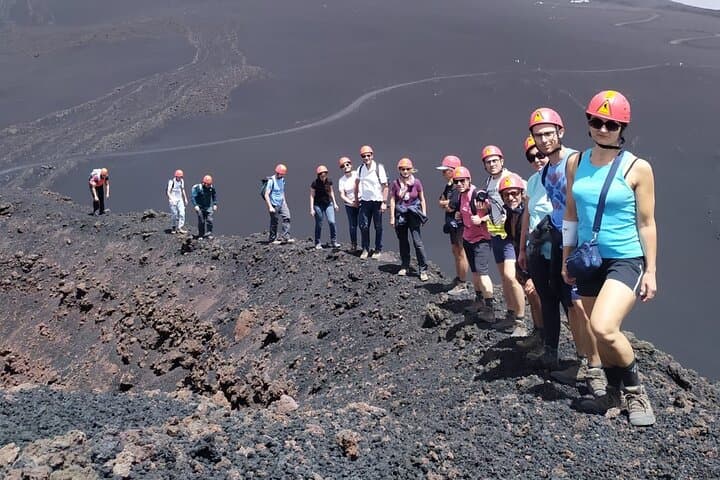
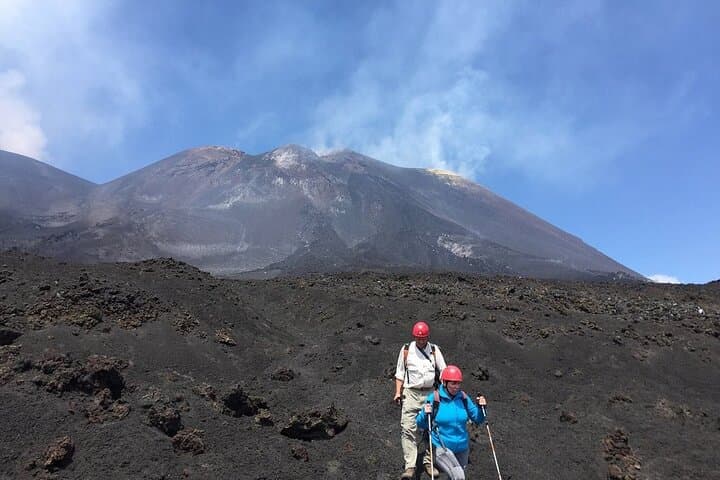
You step off the jeep and the air thins; black folds of fresh lava and dusty pumice stretch toward a ragged skyline where steam and sulfur lift from new vents. The guide checks helmets and poles, then leads the group across a surface that feels both ancient and brand-new — cooled flows from the winter 2021 eruptions overlay older scoria, and every footstep kicks up fine volcanic grit.
Verified experiences and guided adventures in the surrounding area.
Operated by Etna Esagonal Trekking Tour · Nicolosi, Sicily
You step off the jeep and the air thins; black folds of fresh lava and dusty pumice stretch toward a ragged skyline where steam and sulfur lift from new vents. The guide checks helmets and poles, then leads the group across a surface that feels both ancient and brand-new — cooled flows from the winter 2021 eruptions overlay older scoria, and every footstep kicks up fine volcanic grit.
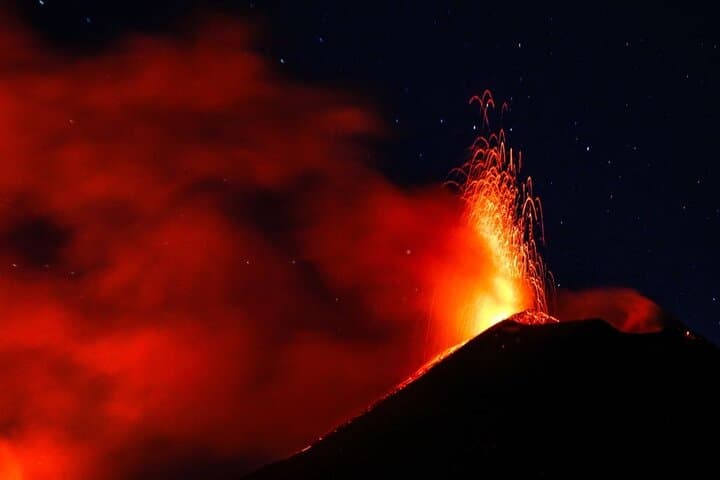
Mount Etna is Europe’s tallest active volcano, its flank scarred by centuries of eruptions that shaped local towns and soils. Geologically, the route climbs toward 3,000 metres through pahoehoe and a’a lava types, walking over draped flows and pumice fields that record recent explosive events. Culturally, the mountain feeds Sicily: lava-rich soils support vineyards and orchards on the lower slopes, and local guides pass on stories of eruptions that redirected villages and trade routes.
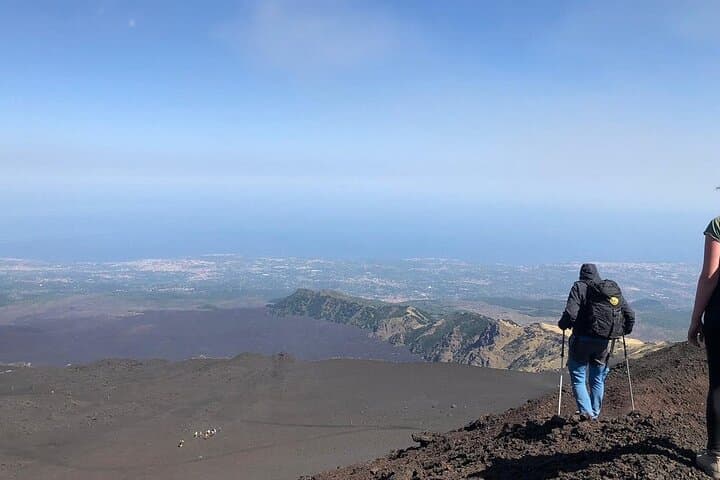
Expect dramatic contrasts — wind that cuts at higher elevations, sudden views back to the Ionian Sea, and quiet pockets where pioneering lichens cling to black glass. The trek finishes near small explosive craters formed in past decades, offering a close view of Etna’s restless heart.
Practical guidance: this is a guided, moderately strenuous 5-hour outing requiring steady footing and basic acclimatization. Wear high-traction boots, layer for wind and sun, and plan for rapid weather shifts. Guides supply helmets, poles and a windbreaker; bring water, snacks, and a compact daypack. Allow extra time in Catania or Nicolosi for transit and altitude adjustment before you set off.
challenging.
Approximately 5 hours.
Suitable for hikers with good aerobic fitness and experience on uneven, loose terrain; expect 800–1,100 m elevation change depending on exact route
The trek reaches around 3,000 m to visit summit-area craters and recent lava fields; it does not typically reach Etna’s highest central crater if ongoing activity restricts access.
Yes — guides usually supply protective helmets, trekking poles and a windbreaker as part of the tour inclusions.
Participants should have moderate to good fitness; allow a day or so at lower elevation to adjust if you arrive from sea level to reduce risk of altitude-related discomfort.
Tours may be canceled or altered for safety when bad weather or heightened volcanic activity occurs; cancellation policies typically allow full refund if called off 24 hours prior.
Etna has shaped local settlement and agriculture for millennia; repeated eruptions created fertile soils that supported unique hillside farms and small towns.
Stick to marked routes to protect fragile volcanic soils and pioneer vegetation; avoid removing rocks or disturbing fumaroles to limit human impact.
Etna Esagonal Trekking Tour operates guided outdoor trips and adventures with an emphasis on safety, stewardship, and memorable experiences.
You step off the jeep and the air thins; black folds of fresh lava and dusty pumice stretch toward a ragged skyline where steam and sulfur lift from new vents. The guide checks helmets and poles, then leads the group across a surface that feels both ancient and brand-new — cooled flows from the winter 2021 eruptions overlay older scoria, and every footstep kicks up fine volcanic grit.
You step off the jeep and the air thins; black folds of fresh lava and dusty pumice stretch toward a ragged skyline where steam and sulfur lift from new vents. The guide checks helmets and poles, then leads the group across a surface that feels both ancient and brand-new — cooled flows from the winter 2021 eruptions overlay older scoria, and every footstep kicks up fine volcanic grit.
Mount Etna is Europe’s tallest active volcano, its flank scarred by centuries of eruptions that shaped local towns and soils. Geologically, the route climbs toward 3,000 metres through pahoehoe and a’a lava types, walking over draped flows and pumice fields that record recent explosive events. Culturally, the mountain feeds Sicily: lava-rich soils support vineyards and orchards on the lower slopes, and local guides pass on stories of eruptions that redirected villages and trade routes.
Expect dramatic contrasts — wind that cuts at higher elevations, sudden views back to the Ionian Sea, and quiet pockets where pioneering lichens cling to black glass. The trek finishes near small explosive craters formed in past decades, offering a close view of Etna’s restless heart.
Practical guidance: this is a guided, moderately strenuous 5-hour outing requiring steady footing and basic acclimatization. Wear high-traction boots, layer for wind and sun, and plan for rapid weather shifts. Guides supply helmets, poles and a windbreaker; bring water, snacks, and a compact daypack. Allow extra time in Catania or Nicolosi for transit and altitude adjustment before you set off.