THE ADVENTURE COLLECTIVE® · Independent discovery and booking for outdoor travel

Ride a cable car, roll in a 4x4 and hike to Etna’s central crater at 3,345 m — an 8–9 hour guided day trip from Catania through lava fields, fumaroles and sweeping Ionian views. Practical advice and route details for planning the ascent.
Ride a cable car, roll in a 4x4 and hike to Etna’s central crater at 3,345 m — an 8–9 hour guided day trip from Catania through lava fields, fumaroles and sweeping Ionian views. Practical advice and route details for planning the ascent.
The sun breaks over basalt ridges and a wind that smells of sulfur pushes across the path as you rise toward Etna’s central crater. Starting from the Rifugio Sapienza staging area at ~1,900 m, the route moves quickly — a cable car lifts you above pine and chestnut forests, then a 4x4 threads across raw lava expanses to the permitted high point. From there a guided 5 km round-trip walk climbs to roughly 3,345 m, where fumaroles breathe and the ground hums with recent geology.
Verified experiences and guided adventures in the surrounding area.
Operated by Etna Touring · Nicolosi, Sicily
The sun breaks over basalt ridges and a wind that smells of sulfur pushes across the path as you rise toward Etna’s central crater. Starting from the Rifugio Sapienza staging area at ~1,900 m, the route moves quickly — a cable car lifts you above pine and chestnut forests, then a 4x4 threads across raw lava expanses to the permitted high point. From there a guided 5 km round-trip walk climbs to roughly 3,345 m, where fumaroles breathe and the ground hums with recent geology.
Etna is Europe’s most active stratovolcano; its slopes are layered with centuries of lava flows, cinder cones and ash that shaped local agriculture and village life below. The geology is immediate here — black pahoehoe and a’a flows, oxidized sulfur patches and jagged scoria fields. Local culture revolves around resilient farming and seasonal festivals; towns like Nicolosi and Zafferana Etnea celebrate the mountain as both threat and resource.
Practically, expect high-altitude winds, quick temperature swings and volcanic fumes near vents. The guided section includes volcanological interpretation and safety protocol; closures sometimes occur for activity or bad weather. The full excursion typically lasts 8–9 hours including hotel transfer from Catania. Wear sturdy boots, layers, and a windproof shell; bring water and sunscreen. Travelers with respiratory or severe cardiovascular issues should avoid the summit zone. Photographers will find dramatic coastal views south toward the Ionian Sea and stark foregrounds of recent lava fields — a stark, elemental landscape that rewards planning and respect.
moderate.
8–9 hours.
Should have moderate fitness — able to walk 5 km on uneven high-altitude terrain and handle short steep sections.
The guided walk is about 5 km round-trip at high altitude with uneven volcanic terrain; it’s rated moderate and requires steady pacing rather than technical climbing.
No — access depends on volcanic activity and weather; guides and operators follow local authorities and may alter or cancel visits for safety.
Yes — the excursion includes private pickup and drop-off from central Catania hotels as described by the operator.
This tour is not recommended for pregnant travelers and may be unsuitable for young children due to altitude, fumes and rugged terrain.
Etna’s eruptions have shaped local settlement patterns and farming practices for millennia; lava soils support vineyards and orchards that define the region’s cuisine.
Visitors should stick to marked routes to avoid fragile lichen and recovering vegetation; local guides enforce rules to limit impact and protect sensitive areas.
Etna Touring operates guided outdoor trips and adventures with an emphasis on safety, stewardship, and memorable experiences.
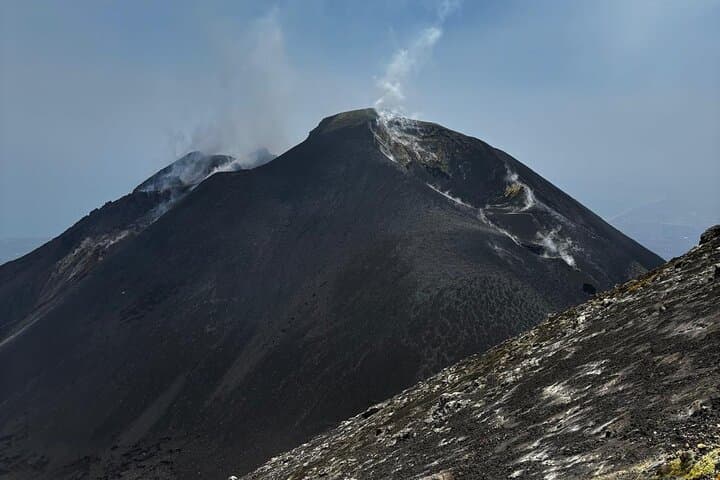
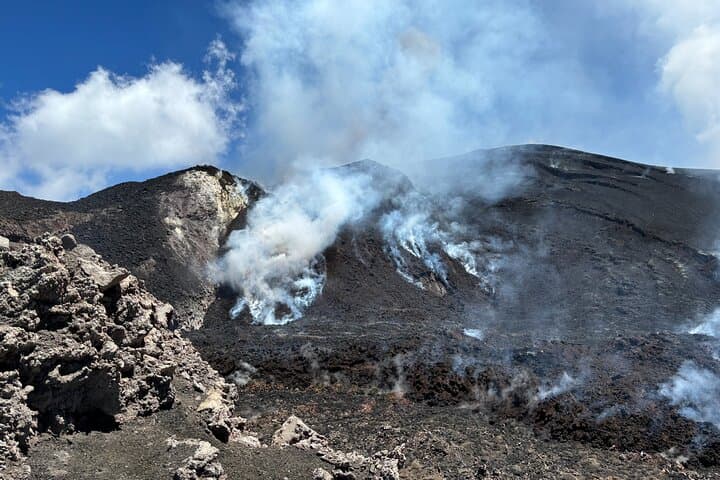
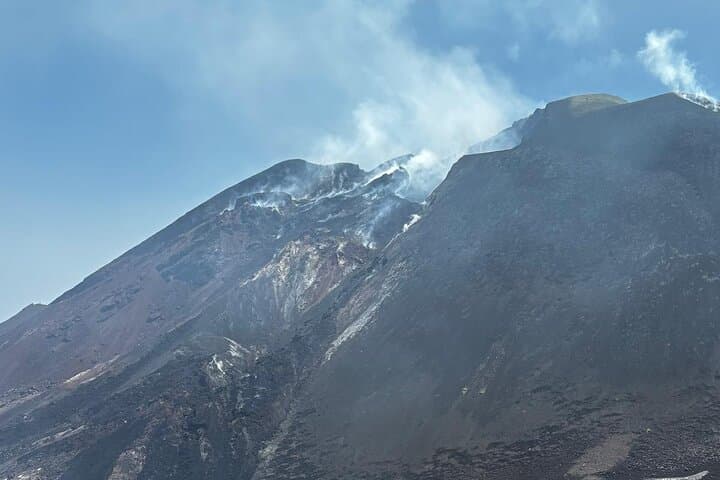
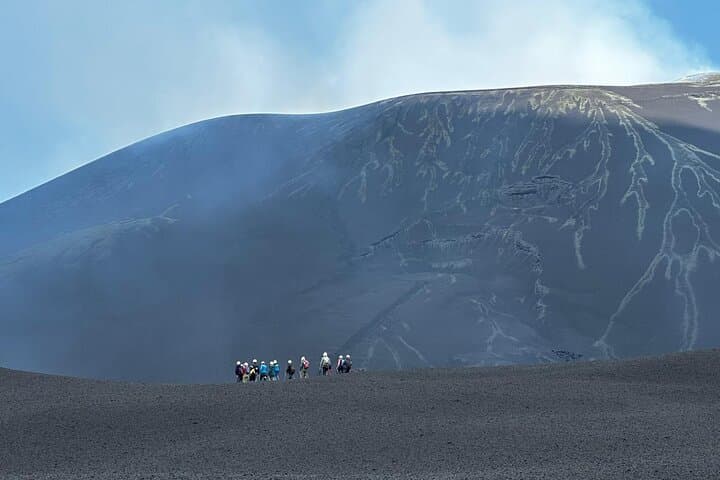
The sun breaks over basalt ridges and a wind that smells of sulfur pushes across the path as you rise toward Etna’s central crater. Starting from the Rifugio Sapienza staging area at ~1,900 m, the route moves quickly — a cable car lifts you above pine and chestnut forests, then a 4x4 threads across raw lava expanses to the permitted high point. From there a guided 5 km round-trip walk climbs to roughly 3,345 m, where fumaroles breathe and the ground hums with recent geology.
The sun breaks over basalt ridges and a wind that smells of sulfur pushes across the path as you rise toward Etna’s central crater. Starting from the Rifugio Sapienza staging area at ~1,900 m, the route moves quickly — a cable car lifts you above pine and chestnut forests, then a 4x4 threads across raw lava expanses to the permitted high point. From there a guided 5 km round-trip walk climbs to roughly 3,345 m, where fumaroles breathe and the ground hums with recent geology.
Etna is Europe’s most active stratovolcano; its slopes are layered with centuries of lava flows, cinder cones and ash that shaped local agriculture and village life below. The geology is immediate here — black pahoehoe and a’a flows, oxidized sulfur patches and jagged scoria fields. Local culture revolves around resilient farming and seasonal festivals; towns like Nicolosi and Zafferana Etnea celebrate the mountain as both threat and resource.
Practically, expect high-altitude winds, quick temperature swings and volcanic fumes near vents. The guided section includes volcanological interpretation and safety protocol; closures sometimes occur for activity or bad weather. The full excursion typically lasts 8–9 hours including hotel transfer from Catania. Wear sturdy boots, layers, and a windproof shell; bring water and sunscreen. Travelers with respiratory or severe cardiovascular issues should avoid the summit zone. Photographers will find dramatic coastal views south toward the Ionian Sea and stark foregrounds of recent lava fields — a stark, elemental landscape that rewards planning and respect.