THE ADVENTURE COLLECTIVE® · Independent discovery and booking for outdoor travel

Drive rugged Etna tracks to stand on extinct craters, explore a lava tube with helmets, then descend to a family-run winery for cellar tours and at least four wine tastings. Practical, geology-rich, and food-forward—perfect for travelers who want active exploration followed by relaxed tasting.
Drive rugged Etna tracks to stand on extinct craters, explore a lava tube with helmets, then descend to a family-run winery for cellar tours and at least four wine tastings. Practical, geology-rich, and food-forward—perfect for travelers who want active exploration followed by relaxed tasting.
The day opens with cold air at altitude and a volcanic horizon that feels like a living map. Your guide eases the off-road vehicle up rough tracks; black lava fields and scrub roll past while pine trees cling to steep slopes. At roughly 2,000 meters you step out onto an extinct crater rim—wind pushes against you, and the mountain seems to watch your route.
Verified experiences and guided adventures in the surrounding area.
Operated by EtnaExcursion.it · Nicolosi, Sicily
The day opens with cold air at altitude and a volcanic horizon that feels like a living map. Your guide eases the off-road vehicle up rough tracks; black lava fields and scrub roll past while pine trees cling to steep slopes. At roughly 2,000 meters you step out onto an extinct crater rim—wind pushes against you, and the mountain seems to watch your route.
Mount Etna is Europe’s most active volcano, sculpted by eruptions and slow soil-building processes that made this land uniquely fertile. The park’s geology reads like a layered chronicle: recent aa and pahoehoe flows, ancient basalt flows, and bowl-shaped craters. Human history here is tied to survival and adaptation—small farms and wineries coax grapes from mineral-rich soils and centuries-old cultivation techniques. Local culture prizes pragmatic hospitality: simple cellars, clear explanations, and strong, food-forward tastings.
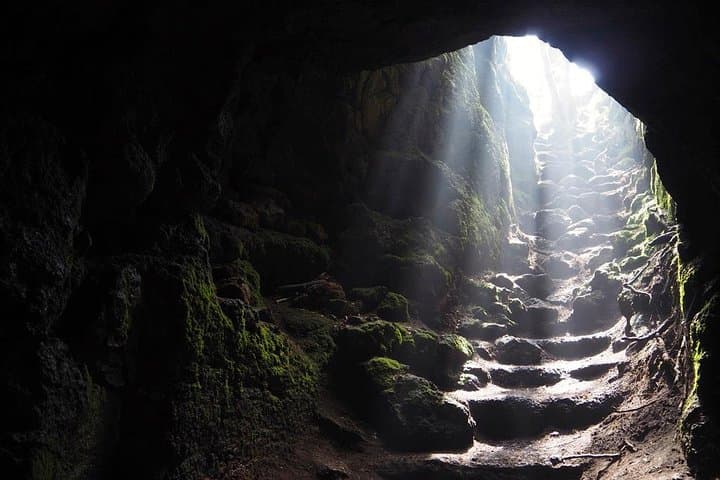
Practically, expect a mix of vehicle travel and short to moderate walks on uneven volcanic scree. You’ll visit a lava tube with helmets and lights—claustrophobic? The guides keep it safe and paced. Midday, the tour moves to a family-run winery for a cellar walkthrough and a tasting of at least four Etna wines alongside regional cheeses, olives, and breads. Timing matters: mornings are cooler for higher-altitude walks and clearer views; afternoons are better for relaxed tastings.
Bring layered clothing, sturdy footwear, sun protection, and a camera with extra battery. Hydrate before and during the tour, respect closed areas, and listen to guides when entering caves. This pairing—raw volcanic landscape followed by cultivated vineyard plots—gives a clear sense of how fire and human hands shape the same terrain.
moderate.
6–8 hours.
Light to moderate fitness; comfortable walking on uneven ground for up to 2 hours and short climbs.
Yes—guides supply helmets and headlamps and brief guests on safe entry; follow their instructions in confined spaces.
Yes—the tour includes a guided cellar visit and tasting of at least four Etna wines paired with local products; a full lunch is available on request.
The vehicle portions are accessible, but cave entry and short uneven walks may be difficult for very young children or those with limited mobility—check with the operator about specific accommodations.
Spring and fall offer cooler, clearer conditions for high-altitude walks and reliable tasting conditions; summer mornings are fine but can be hot lower down.
Etna’s eruptions have shaped local agriculture for millennia; volcanic soils are prized for unique mineral-driven wines and long-standing family viticulture.
The excursion travels inside Etna Park—stay on designated routes, don’t remove lava rock, and support local producers who practice sustainable, low-intervention viticulture.
EtnaExcursion.it operates guided outdoor trips and adventures with an emphasis on safety, stewardship, and memorable experiences.


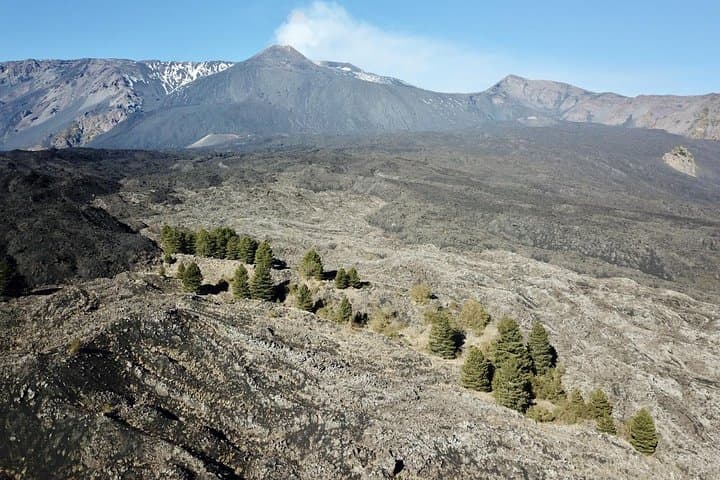
The day opens with cold air at altitude and a volcanic horizon that feels like a living map. Your guide eases the off-road vehicle up rough tracks; black lava fields and scrub roll past while pine trees cling to steep slopes. At roughly 2,000 meters you step out onto an extinct crater rim—wind pushes against you, and the mountain seems to watch your route.
The day opens with cold air at altitude and a volcanic horizon that feels like a living map. Your guide eases the off-road vehicle up rough tracks; black lava fields and scrub roll past while pine trees cling to steep slopes. At roughly 2,000 meters you step out onto an extinct crater rim—wind pushes against you, and the mountain seems to watch your route.
Mount Etna is Europe’s most active volcano, sculpted by eruptions and slow soil-building processes that made this land uniquely fertile. The park’s geology reads like a layered chronicle: recent aa and pahoehoe flows, ancient basalt flows, and bowl-shaped craters. Human history here is tied to survival and adaptation—small farms and wineries coax grapes from mineral-rich soils and centuries-old cultivation techniques. Local culture prizes pragmatic hospitality: simple cellars, clear explanations, and strong, food-forward tastings.
Practically, expect a mix of vehicle travel and short to moderate walks on uneven volcanic scree. You’ll visit a lava tube with helmets and lights—claustrophobic? The guides keep it safe and paced. Midday, the tour moves to a family-run winery for a cellar walkthrough and a tasting of at least four Etna wines alongside regional cheeses, olives, and breads. Timing matters: mornings are cooler for higher-altitude walks and clearer views; afternoons are better for relaxed tastings.
Bring layered clothing, sturdy footwear, sun protection, and a camera with extra battery. Hydrate before and during the tour, respect closed areas, and listen to guides when entering caves. This pairing—raw volcanic landscape followed by cultivated vineyard plots—gives a clear sense of how fire and human hands shape the same terrain.