THE ADVENTURE COLLECTIVE® · Independent discovery and booking for outdoor travel

Climb by 4x4 to Pizzi Deneri at 2,850 m, walk crater rims and explore a lava tube on Etna 3000. This half-day tour mixes off-road travel, volcanic geology and a guided cave descent—perfect for travelers wanting a concentrated summit experience.
Climb by 4x4 to Pizzi Deneri at 2,850 m, walk crater rims and explore a lava tube on Etna 3000. This half-day tour mixes off-road travel, volcanic geology and a guided cave descent—perfect for travelers wanting a concentrated summit experience.
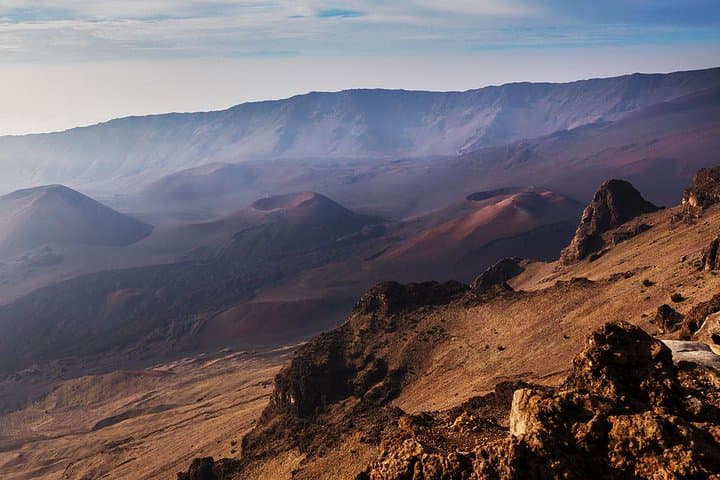
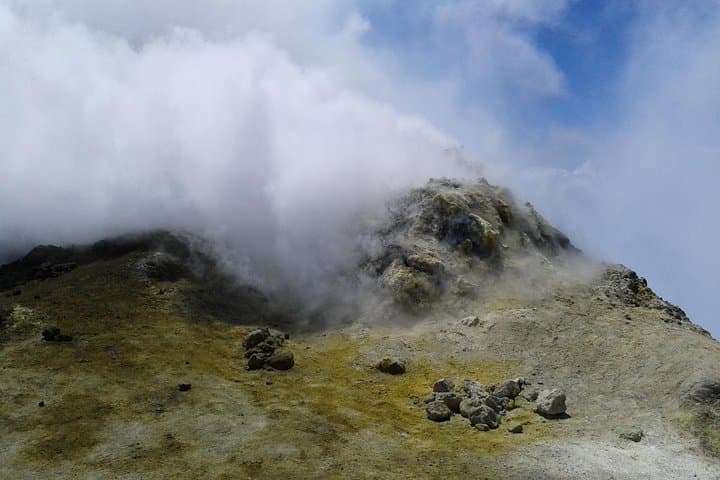
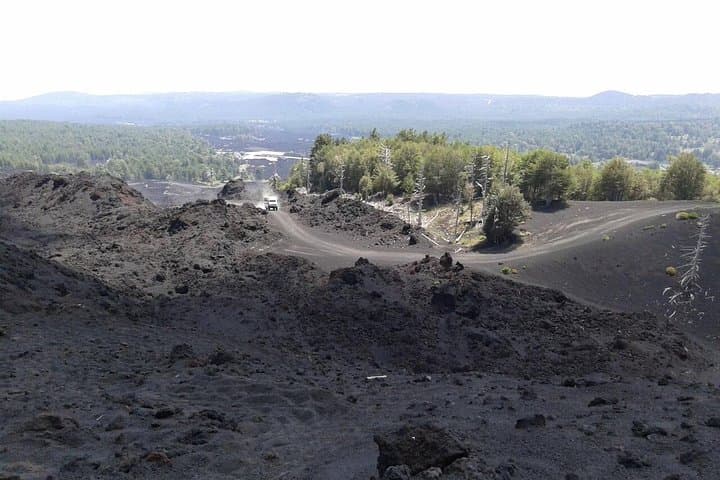
A cold wind pushes across black rock as the 4x4s climb, and the island below narrows to a patchwork of olive groves and the Ionian Sea. By the time the vehicles hit Pizzi Deneri at about 2,850 m, the summit cones—Cratere di Sud-Est and Nord-Est—stand like raw metal against the sky, and the vast Valle del Bove yawns to the east, a field of scabbed lava and braided gullies.
Verified experiences and guided adventures in the surrounding area.
Operated by EtnaWay · Catania, Sicily
A cold wind pushes across black rock as the 4x4s climb, and the island below narrows to a patchwork of olive groves and the Ionian Sea. By the time the vehicles hit Pizzi Deneri at about 2,850 m, the summit cones—Cratere di Sud-Est and Nord-Est—stand like raw metal against the sky, and the vast Valle del Bove yawns to the east, a field of scabbed lava and braided gullies.
Etna is both recent and ancient: built over some 500,000 years of eruptions, its slopes record a parade of flows, bottoniera cinder rings and vegetation zonation from chestnut wood to sparse alpine scrub. The park protects endemic plants—Etna broom and birch—and archaeological traces of how locals used ash and lava in farming. Geologically, the Valle del Bove is a collapse amphitheater carved by flank eruptions; culturally, Sicilian farmsteads and lemon coasts below frame the volcano’s human scale.
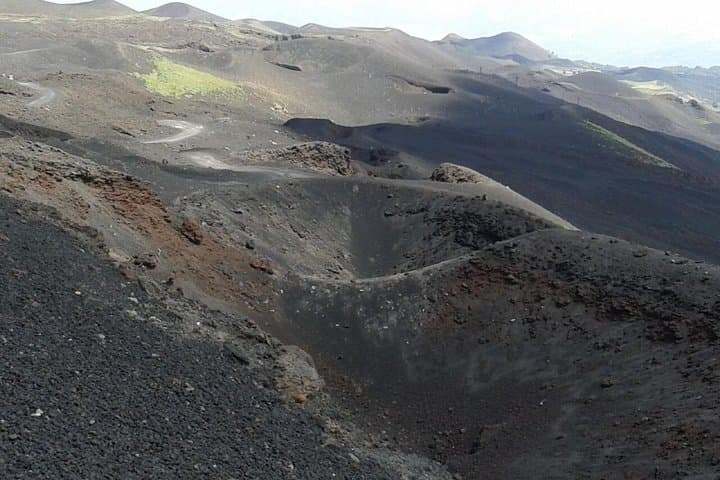
The Etna 3000 tour pairs an off-road ascent with a guided walk along lava trails to lateral craters, then a descent into a lava tube cave. Guides explain pyroclastic textures, the 2002 flows and how different lavas cool and fracture. Snacks, breakfast and tasting of local honey and liqueurs are included; helmets, lamps and trekking poles are supplied.
Practical: expect loose volcanic scree, short steep sections and brief underground passages. Dress in layers for rapid temperature swings, use sturdy boots and allow six hours for the full loop. Keep pace slow above 2,000 m to acclimatize; bring water and a camera—Etna rewards patience with raw, geological theater.
moderate.
6 hours.
Suitable for most active travelers who can handle uneven ground, short uphill walks and moderate altitude exposure.
The 4x4 portion reaches around 2,850 m at Pizzi Deneri, offering close views of the summit craters and Valle del Bove.
The lava tube visit involves walking on uneven rock with low passages; helmets and headlamps are provided and the guide manages the route—basic mobility is sufficient.
Bring sturdy footwear, a daypack, water, personal medications and layered clothing; gloves are helpful for cave grips.
Tours are subject to park closures and safety decisions; operators cancel or reroute if activity poses a risk—check with the provider for real-time updates.
Mount Etna’s activity shaped local culture and agriculture for millennia; ancient records and modern studies document frequent eruptions and lava flow impacts on settlements.
Etna Park regulates access to sensitive areas—stay on trails, avoid removing volcanic rock and support local guides who practice low-impact tourism.
EtnaWay operates guided outdoor trips and adventures with an emphasis on safety, stewardship, and memorable experiences.
A cold wind pushes across black rock as the 4x4s climb, and the island below narrows to a patchwork of olive groves and the Ionian Sea. By the time the vehicles hit Pizzi Deneri at about 2,850 m, the summit cones—Cratere di Sud-Est and Nord-Est—stand like raw metal against the sky, and the vast Valle del Bove yawns to the east, a field of scabbed lava and braided gullies.
A cold wind pushes across black rock as the 4x4s climb, and the island below narrows to a patchwork of olive groves and the Ionian Sea. By the time the vehicles hit Pizzi Deneri at about 2,850 m, the summit cones—Cratere di Sud-Est and Nord-Est—stand like raw metal against the sky, and the vast Valle del Bove yawns to the east, a field of scabbed lava and braided gullies.
Etna is both recent and ancient: built over some 500,000 years of eruptions, its slopes record a parade of flows, bottoniera cinder rings and vegetation zonation from chestnut wood to sparse alpine scrub. The park protects endemic plants—Etna broom and birch—and archaeological traces of how locals used ash and lava in farming. Geologically, the Valle del Bove is a collapse amphitheater carved by flank eruptions; culturally, Sicilian farmsteads and lemon coasts below frame the volcano’s human scale.
The Etna 3000 tour pairs an off-road ascent with a guided walk along lava trails to lateral craters, then a descent into a lava tube cave. Guides explain pyroclastic textures, the 2002 flows and how different lavas cool and fracture. Snacks, breakfast and tasting of local honey and liqueurs are included; helmets, lamps and trekking poles are supplied.
Practical: expect loose volcanic scree, short steep sections and brief underground passages. Dress in layers for rapid temperature swings, use sturdy boots and allow six hours for the full loop. Keep pace slow above 2,000 m to acclimatize; bring water and a camera—Etna rewards patience with raw, geological theater.