THE ADVENTURE COLLECTIVE® · Independent discovery and booking for outdoor travel

Two days from Kandy take you from Polonnaruwa’s stone relics to Minneriya’s elephant gatherings and the climbable fortress of Sigiriya. This private loop pairs archaeological wonder with a late‑day safari and a hands‑on village visit.
Two days from Kandy take you from Polonnaruwa’s stone relics to Minneriya’s elephant gatherings and the climbable fortress of Sigiriya. This private loop pairs archaeological wonder with a late‑day safari and a hands‑on village visit.
Dawn in Kandy is humid and sharp: temple bells cut through the fog, and a chauffeur-guide waits at the hotel entrance as the city exhales. By 06:30 you’re on the road, the air‑conditioned vehicle easing onto the low hills that give way to the flat, sun-baked plains of Sri Lanka’s Cultural Triangle. The route feels like a slow unspooling of history—fields of rice, occasional tanks of still water, and village clusters where life moves at the speed of birds.
Verified experiences and guided adventures in the surrounding area.
Operated by Lakpura LLC · Sigiriya, Central Province
Dawn in Kandy is humid and sharp: temple bells cut through the fog, and a chauffeur-guide waits at the hotel entrance as the city exhales. By 06:30 you’re on the road, the air‑conditioned vehicle easing onto the low hills that give way to the flat, sun-baked plains of Sri Lanka’s Cultural Triangle. The route feels like a slow unspooling of history—fields of rice, occasional tanks of still water, and village clusters where life moves at the speed of birds.
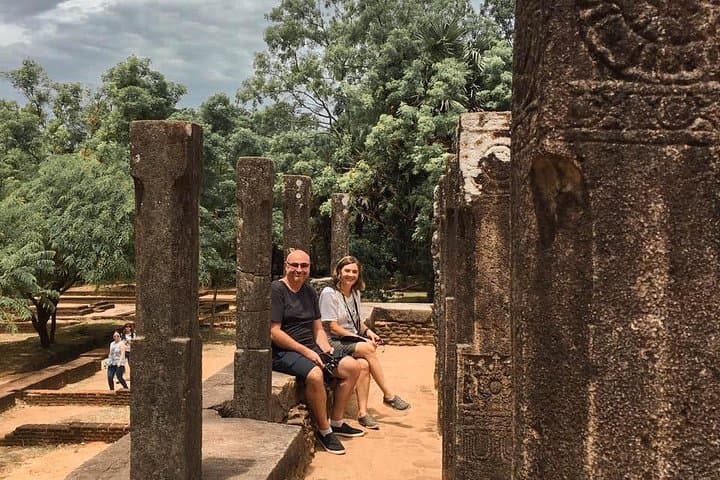
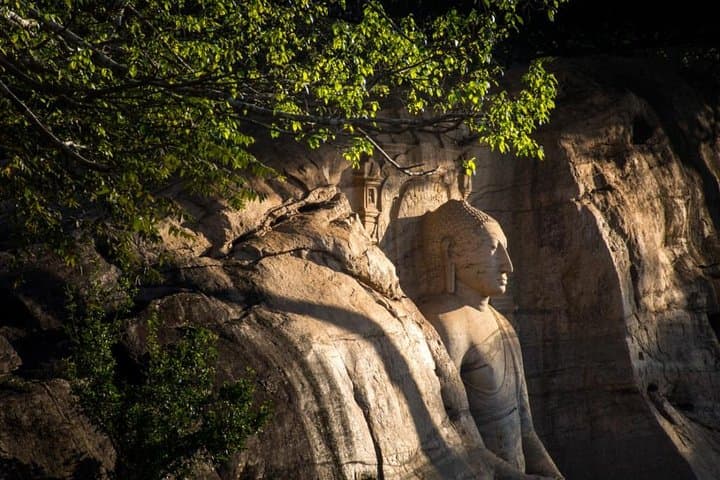
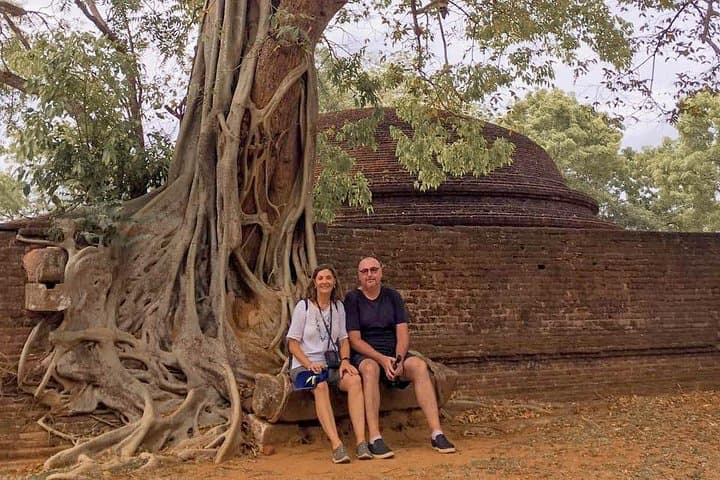
Day one stitches Polonnaruwa’s stone ruins and Gal Vihara’s monk-like granite Buddhas to an afternoon in Minneriya National Park. Polonnaruwa, the island’s 11th–12th century capital, was refashioned under King Parakramabahu I; walked here, its Vatadage, Lankathilaka, and lotus pools stop asking questions and start recounting how hydraulic engineering and royal patronage shaped an agrarian kingdom.
In Minneriya, the scrub and grasslands have agency—the land appears to gather elephants. The park is best known for the Great Elephant Gathering between May and October when hundreds of bulls, cows, and calves queue the shores of parched feeding grounds. A three‑hour jeep safari lets you watch the herd dynamics: matriarchs dictating movement, youngsters testing boundaries, and lone bulls keeping their distance.
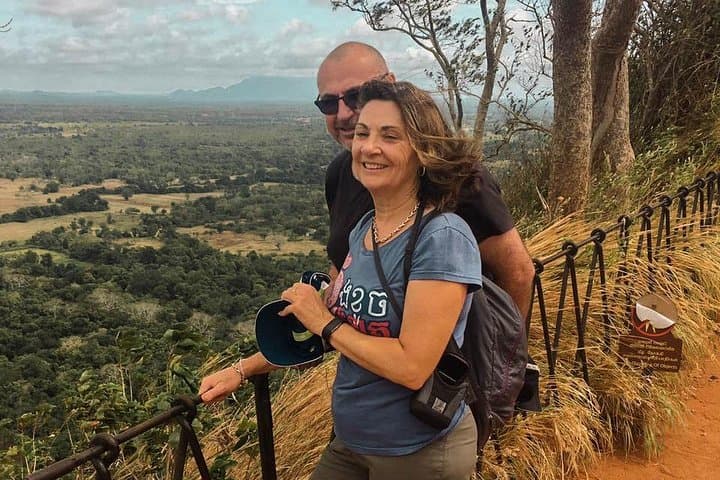
Night finds you in Sigiriya. The next morning you climb the 5th‑century Lion Rock—a royal citadel carved from a 200‑meter monolith. The ascent is steep, with iron staircases and compacted stone steps that demand concentration; the reward is panoramic views over terraced gardens and working cisterns, and the frescoes still cool from centuries of shade.
After the descent a private village tour reframes the island’s rhythm: an ox cart clacks over rutted paths, a catamaran skims a calm lake, and a wood-fire lunch arrives on lotus leaves. These moments are as informative as the ruins: they show irrigation, rice, and family economies that sustained kingdoms and continue to keep them alive today.
Practical guidance: it’s a two‑day loop—expect about four hours of guided archaeology and a 3‑hour safari, plus a one‑to‑two‑hour climb at Sigiriya. Wear sturdy walking shoes, sun protection, and insect repellent. Hydration is essential; the tour provides two 500ml water bottles per person per day but carry a refillable bottle. Start early to avoid midday heat and time the Minneriya safari for late afternoon when wildlife is most active.
Respect temple dress codes—shoulders and knees covered—and keep noise low around wildlife. If you want the Great Elephant Gathering, visit in the dry season (roughly May–October). For photographers, sunrise from Pidurangala (across from Sigiriya) or the late afternoon plains in Minneriya offer the strongest light.
This is not a rush through postcards; it’s a paced pairing of ruin and wild, of stone and herd, that shows why Sri Lanka’s landscapes still influence its culture and livelihoods.
moderate.
2 days.
Moderate fitness: comfortable walking, a steep climb on uneven stone at Sigiriya, and extended periods on safari seating.
Plan on 1–2 hours for ascent, exploration, and descent—depends on fitness and time spent at viewpoints and frescoes.
The dry season, roughly May through October, concentrates elephants around water sources and increases sighting chances.
Yes—entrance fees for Sigiriya, Polonnaruwa, Temple of the Tooth, and Minneriya National Park are included in the tour price.
Yes, but note the Sigiriya stairs are steep and Minneriya safaris can be bumpy; infants and very young children may find it tiring.
Bring small cash for village purchases, tips, or snacks—major costs and entrance fees are covered but local stalls may be cash‑only.
Yes—the tour operator asks about special requirements at booking; inform them in advance so the home‑cooked meal can be adjusted.
Sigiriya was a 5th‑century fortress and palace built by King Kasyapa; Polonnaruwa later functioned as a medieval administrative capital that perfected large‑scale irrigation.
Minneriya and adjacent parks are managed to balance tourism with elephant corridor protection—maintain distance, avoid feeding wildlife, and follow guide instructions to reduce disturbance.
Lakpura LLC operates guided outdoor trips and adventures with an emphasis on safety, stewardship, and memorable experiences.
Dawn in Kandy is humid and sharp: temple bells cut through the fog, and a chauffeur-guide waits at the hotel entrance as the city exhales. By 06:30 you’re on the road, the air‑conditioned vehicle easing onto the low hills that give way to the flat, sun-baked plains of Sri Lanka’s Cultural Triangle. The route feels like a slow unspooling of history—fields of rice, occasional tanks of still water, and village clusters where life moves at the speed of birds.
Dawn in Kandy is humid and sharp: temple bells cut through the fog, and a chauffeur-guide waits at the hotel entrance as the city exhales. By 06:30 you’re on the road, the air‑conditioned vehicle easing onto the low hills that give way to the flat, sun-baked plains of Sri Lanka’s Cultural Triangle. The route feels like a slow unspooling of history—fields of rice, occasional tanks of still water, and village clusters where life moves at the speed of birds.
Day one stitches Polonnaruwa’s stone ruins and Gal Vihara’s monk-like granite Buddhas to an afternoon in Minneriya National Park. Polonnaruwa, the island’s 11th–12th century capital, was refashioned under King Parakramabahu I; walked here, its Vatadage, Lankathilaka, and lotus pools stop asking questions and start recounting how hydraulic engineering and royal patronage shaped an agrarian kingdom.
In Minneriya, the scrub and grasslands have agency—the land appears to gather elephants. The park is best known for the Great Elephant Gathering between May and October when hundreds of bulls, cows, and calves queue the shores of parched feeding grounds. A three‑hour jeep safari lets you watch the herd dynamics: matriarchs dictating movement, youngsters testing boundaries, and lone bulls keeping their distance.
Night finds you in Sigiriya. The next morning you climb the 5th‑century Lion Rock—a royal citadel carved from a 200‑meter monolith. The ascent is steep, with iron staircases and compacted stone steps that demand concentration; the reward is panoramic views over terraced gardens and working cisterns, and the frescoes still cool from centuries of shade.
After the descent a private village tour reframes the island’s rhythm: an ox cart clacks over rutted paths, a catamaran skims a calm lake, and a wood-fire lunch arrives on lotus leaves. These moments are as informative as the ruins: they show irrigation, rice, and family economies that sustained kingdoms and continue to keep them alive today.
Practical guidance: it’s a two‑day loop—expect about four hours of guided archaeology and a 3‑hour safari, plus a one‑to‑two‑hour climb at Sigiriya. Wear sturdy walking shoes, sun protection, and insect repellent. Hydration is essential; the tour provides two 500ml water bottles per person per day but carry a refillable bottle. Start early to avoid midday heat and time the Minneriya safari for late afternoon when wildlife is most active.
Respect temple dress codes—shoulders and knees covered—and keep noise low around wildlife. If you want the Great Elephant Gathering, visit in the dry season (roughly May–October). For photographers, sunrise from Pidurangala (across from Sigiriya) or the late afternoon plains in Minneriya offer the strongest light.
This is not a rush through postcards; it’s a paced pairing of ruin and wild, of stone and herd, that shows why Sri Lanka’s landscapes still influence its culture and livelihoods.