THE ADVENTURE COLLECTIVE® · Independent discovery and booking for outdoor travel

Walk through rice terraces and spend a night with a Hmong family on this two-day ethical trek from Sapa. Learn local customs, share home-cooked meals, and support community projects while traversing bamboo forests and steep ridge climbs.
Walk through rice terraces and spend a night with a Hmong family on this two-day ethical trek from Sapa. Learn local customs, share home-cooked meals, and support community projects while traversing bamboo forests and steep ridge climbs.
The morning air in Sapa is thin and cool as you set off, rice paddies glinting like green steps carved into the hills. The trail threads through small Hmong and Dao villages, follows low ridgelines and slips into bamboo forest; a river sometimes dares you to slow down, its current pushing the rhythm of the day.
Verified experiences and guided adventures in the surrounding area.
Operated by Ethos - Spirit of the Community · Sapa, Lao Cai
The morning air in Sapa is thin and cool as you set off, rice paddies glinting like green steps carved into the hills. The trail threads through small Hmong and Dao villages, follows low ridgelines and slips into bamboo forest; a river sometimes dares you to slow down, its current pushing the rhythm of the day.
This two-day route blends cultural immersion with steady walking. Day one covers roughly 14 km—about six kilometres of undulating trails, then a sustained 2 km climb that gains several hundred metres before you stop to cook and share lunch with a host family. The sun slips behind the Hoang Lien Son foothills, and you descend to a homestay where local food and conversation are central to the experience.
Sapa sits on the northern edge of Vietnam’s Hoang Lien Son range, carved from limestone and volcanic uplift; the area’s terraced fields are both agricultural engineering and living history. ETHOS focuses on ethical tourism—tracing support to dozens of village families, training local guides, and running community workshops—so the trip is as much about social impact as scenery.
Practical guidance: expect uneven, sometimes muddy trails and basic village accommodation with shared facilities. Bring good footwear, rain protection, and a modest overnight kit. Timing matters—early light reveals the terraces at their best and afternoon clouds can roll in fast. Respect homestay customs: ask before photographing, keep noise low at night, and pack out what you bring in. This trek is a compact, grounded way to experience Sapa’s highland life while directly supporting local communities.
moderate.
2 days.
Suitable for travelers with moderate fitness able to handle 14 km of walking over uneven terrain and a sustained uphill section; regular walkers will be comfortable.
Meals listed include lunch and dinner on day one and breakfast and lunch on day two, with homestay accommodation provided in a local village—expect simple, shared facilities.
The trek is moderate: roughly 14 km on day one with undulating terrain and a sustained 2 km climb; travelers with reasonable fitness and regular walking experience should manage it.
Hosts can often adapt meals for common dietary needs if informed in advance—declare restrictions when booking so ETHOS and the host family can prepare.
The drier months (September–November and March–May) offer clearer views and firmer trails; summer brings heavy rains that make paths slippery but also greener terraces.
Sapa grew as a hill station during French colonial rule and has long been home to ethnic groups such as the Hmong and Dao, whose terrace agriculture shapes the landscape.
ETHOS emphasizes community-led tourism and supports local projects; travelers should stick to trails, avoid single-use plastics, and follow host family guidelines to minimize impact.
Ethos - Spirit of the Community operates guided outdoor trips and adventures with an emphasis on safety, stewardship, and memorable experiences.
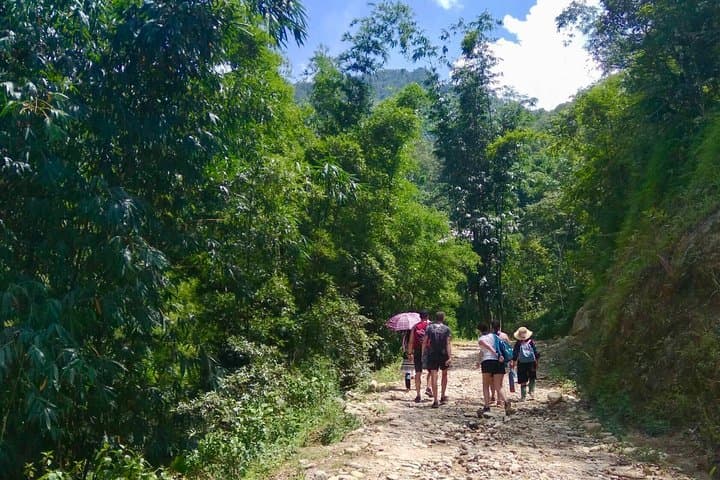
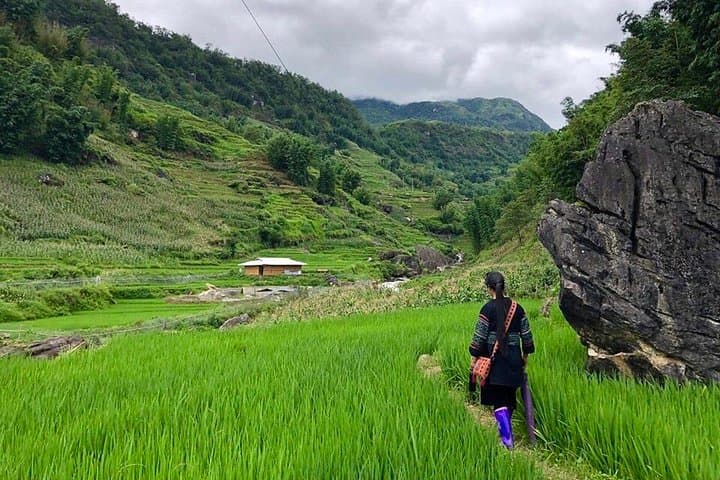
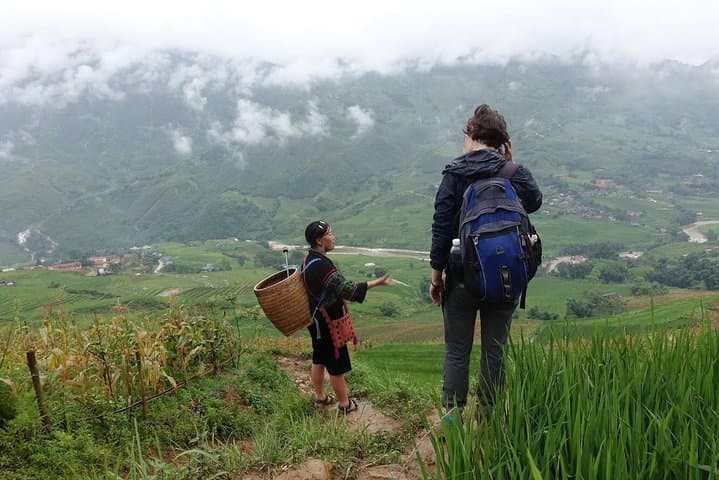

The morning air in Sapa is thin and cool as you set off, rice paddies glinting like green steps carved into the hills. The trail threads through small Hmong and Dao villages, follows low ridgelines and slips into bamboo forest; a river sometimes dares you to slow down, its current pushing the rhythm of the day.
The morning air in Sapa is thin and cool as you set off, rice paddies glinting like green steps carved into the hills. The trail threads through small Hmong and Dao villages, follows low ridgelines and slips into bamboo forest; a river sometimes dares you to slow down, its current pushing the rhythm of the day.
This two-day route blends cultural immersion with steady walking. Day one covers roughly 14 km—about six kilometres of undulating trails, then a sustained 2 km climb that gains several hundred metres before you stop to cook and share lunch with a host family. The sun slips behind the Hoang Lien Son foothills, and you descend to a homestay where local food and conversation are central to the experience.
Sapa sits on the northern edge of Vietnam’s Hoang Lien Son range, carved from limestone and volcanic uplift; the area’s terraced fields are both agricultural engineering and living history. ETHOS focuses on ethical tourism—tracing support to dozens of village families, training local guides, and running community workshops—so the trip is as much about social impact as scenery.
Practical guidance: expect uneven, sometimes muddy trails and basic village accommodation with shared facilities. Bring good footwear, rain protection, and a modest overnight kit. Timing matters—early light reveals the terraces at their best and afternoon clouds can roll in fast. Respect homestay customs: ask before photographing, keep noise low at night, and pack out what you bring in. This trek is a compact, grounded way to experience Sapa’s highland life while directly supporting local communities.