THE ADVENTURE COLLECTIVE® · Independent discovery and booking for outdoor travel

Spend two days trekking into Gunung Leuser National Park from Bukit Lawang to encounter wild orangutans, camp in the jungle and return by river tubing. This ethical trek combines wildlife viewing with community-supported conservation.
Spend two days trekking into Gunung Leuser National Park from Bukit Lawang to encounter wild orangutans, camp in the jungle and return by river tubing. This ethical trek combines wildlife viewing with community-supported conservation.
Mist hangs over the Bohorok River as your guide points into the canopy: a reddish-brown face peers down from a fig tree. This is Bukit Lawang at first light—humid jungle, sudden bird calls, and trails that demand attention with every slippery root and stream crossing.
Verified experiences and guided adventures in the surrounding area.
Operated by Sumatra Orangutan Trekking · Bukit Lawang, North Sumatra
Mist hangs over the Bohorok River as your guide points into the canopy: a reddish-brown face peers down from a fig tree. This is Bukit Lawang at first light—humid jungle, sudden bird calls, and trails that demand attention with every slippery root and stream crossing.
The trek takes you into Gunung Leuser National Park, one of Sumatra’s last tracts of lowland rainforest shaped by volcanic soils and tectonic uplift. Bukit Lawang’s recent history is tied to orangutan rescue and rehabilitation; local guides often grew up with the center that shifted the village from logging to conservation-focused tourism. Karo and Batak villages nearby still farm river terraces and trade forest products, so cultural notes punctuate the route.
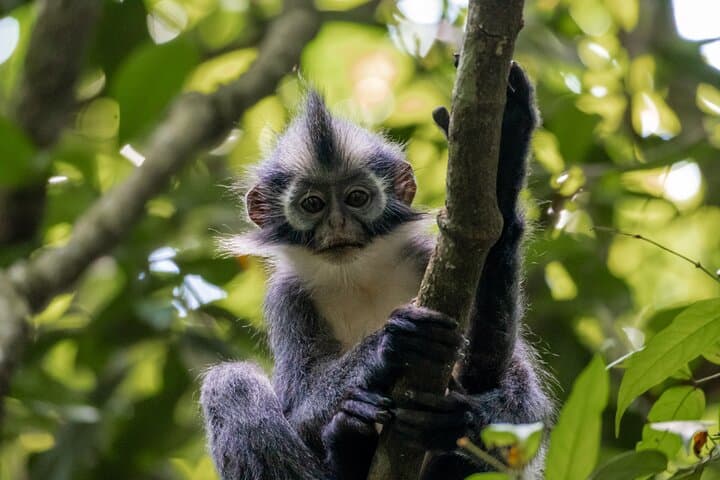
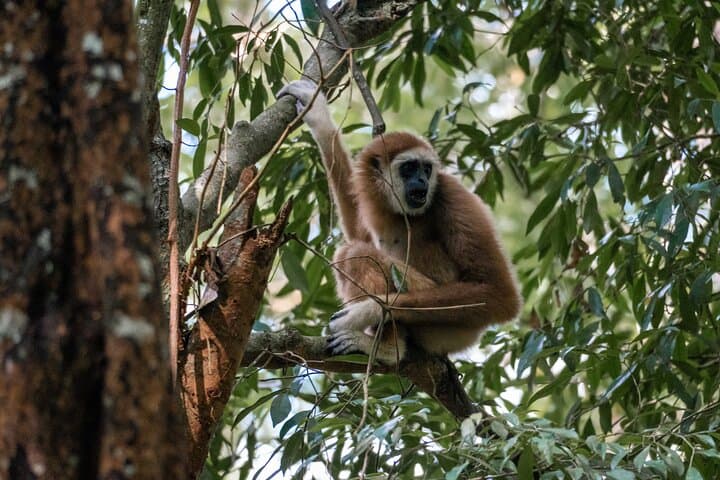
On the trail expect roughly 10–15 km over two days with short steep pitches and repeated river crossings; cumulative elevation gain is modest but the humidity makes it feel harder. You’ll camp one night in a cleared jungle site—sleeping mats and mosquito nets are typical—and end the trip tubing downriver in a “jungle taxi.” Certified English-speaking guides lead groups of up to six, scanning for orangutans, gibbons, macaques and hornbills.
Practical points: bring breathable long sleeves, waterproof jacket, sturdy ankle-support boots, and 3–4 liters of water; insect repellent and a headlamp are useful. Start early for wildlife windows, follow guide instructions around animals, and be prepared for muddy, slippery terrain. The operator donates to local schooling and emphasizes leave-no-trace practices—travel here to see wildlife, but leave the forest as you found it.
challenging.
2 days.
Good cardiovascular fitness and stamina for sustained walking in humid conditions; used to uneven terrain is recommended
The route is physically demanding due to humidity, uneven terrain and repeated short climbs; occasional hikers who are reasonably fit can manage with breaks and a light pack.
Sightings are common but never guaranteed; guides use local knowledge to increase chances and morning patrols are best for wildlife encounters.
You’ll sleep at a cleared campsite with sleeping mats and mosquito nets provided; facilities are basic and communal.
Yes—meals (breakfast, lunch, dinner) and the entrance permit to Gunung Leuser National Park are included in the tour price.
Bukit Lawang transitioned from a logging frontier to a rehabilitation and eco-tourism hub after orangutan rescue efforts shifted the local economy in the 1990s.
Tours support local conservation and community programs; visitors are asked to follow strict guidelines to reduce disease transmission and habitat disturbance.
Sumatra Orangutan Trekking operates guided outdoor trips and adventures with an emphasis on safety, stewardship, and memorable experiences.
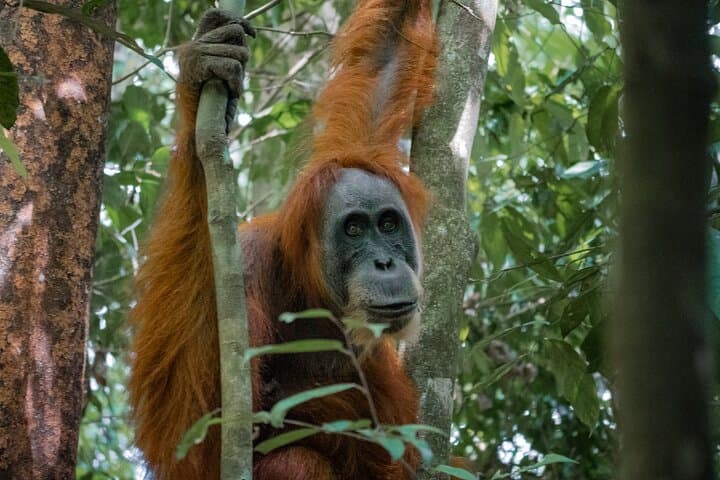
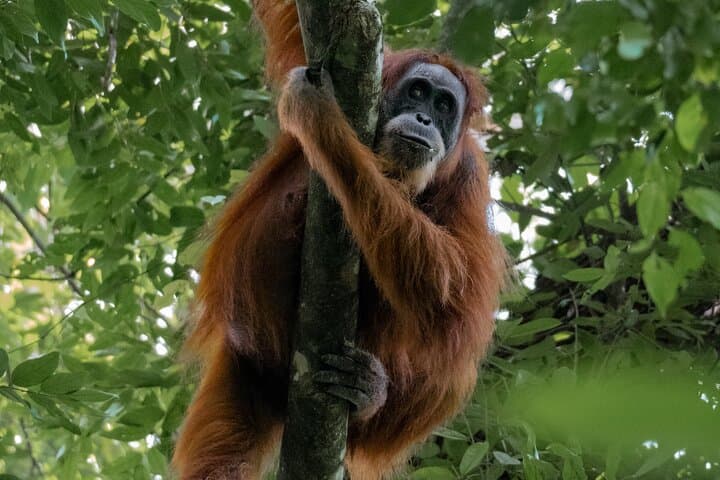
Mist hangs over the Bohorok River as your guide points into the canopy: a reddish-brown face peers down from a fig tree. This is Bukit Lawang at first light—humid jungle, sudden bird calls, and trails that demand attention with every slippery root and stream crossing.
Mist hangs over the Bohorok River as your guide points into the canopy: a reddish-brown face peers down from a fig tree. This is Bukit Lawang at first light—humid jungle, sudden bird calls, and trails that demand attention with every slippery root and stream crossing.
The trek takes you into Gunung Leuser National Park, one of Sumatra’s last tracts of lowland rainforest shaped by volcanic soils and tectonic uplift. Bukit Lawang’s recent history is tied to orangutan rescue and rehabilitation; local guides often grew up with the center that shifted the village from logging to conservation-focused tourism. Karo and Batak villages nearby still farm river terraces and trade forest products, so cultural notes punctuate the route.
On the trail expect roughly 10–15 km over two days with short steep pitches and repeated river crossings; cumulative elevation gain is modest but the humidity makes it feel harder. You’ll camp one night in a cleared jungle site—sleeping mats and mosquito nets are typical—and end the trip tubing downriver in a “jungle taxi.” Certified English-speaking guides lead groups of up to six, scanning for orangutans, gibbons, macaques and hornbills.
Practical points: bring breathable long sleeves, waterproof jacket, sturdy ankle-support boots, and 3–4 liters of water; insect repellent and a headlamp are useful. Start early for wildlife windows, follow guide instructions around animals, and be prepared for muddy, slippery terrain. The operator donates to local schooling and emphasizes leave-no-trace practices—travel here to see wildlife, but leave the forest as you found it.