THE ADVENTURE COLLECTIVE® · Independent discovery and booking for outdoor travel

Launch from Esterillos East and ride a paratrike to 3,000 feet for a guaranteed 20-minute flight over the Pacific. Expect coast-cutting views, possible whale and macaw sightings, and free photos included.
Launch from Esterillos East and ride a paratrike to 3,000 feet for a guaranteed 20-minute flight over the Pacific. Expect coast-cutting views, possible whale and macaw sightings, and free photos included.
You stand on warm black sand at Esterillos East, the ocean throat opening to the horizon. A two-seat paratrike idles behind you; the pilot’s voice is calm, the propeller’s rhythm a steady heartbeat. In one gentle run you’re airborne—breeze against your face, coastline sliding below like a living map. At 3,000 feet the Pacific flattens into a reflective sheet and the green of Cangreja National Park becomes a sculpted spine along the shore.
Verified experiences and guided adventures in the surrounding area.
Operated by Parapente Pura Vida · Jacó, Puntarenas
You stand on warm black sand at Esterillos East, the ocean throat opening to the horizon. A two-seat paratrike idles behind you; the pilot’s voice is calm, the propeller’s rhythm a steady heartbeat. In one gentle run you’re airborne—breeze against your face, coastline sliding below like a living map. At 3,000 feet the Pacific flattens into a reflective sheet and the green of Cangreja National Park becomes a sculpted spine along the shore.
The central Pacific coast here is young geologically: volcanic highs inland drop swiftly to alluvial beaches and coastal ridges. Jaco grew as a fishing-and-surf hub and today supports adventure operators who read thermal seams and coastal winds. Local guides point out macaws in the riverine forests and humpback spouts offshore during December–April migrations, a reminder that this flight is both thrill and wildlife watch.
Practical edge: the advertised 20 minutes is guaranteed flight time, but plan 30–60 minutes for briefing, gear and transport. Operators require a mandatory reconfirmation 12 hours before launch because conditions dictate safety; expect cancellations in onshore storms or strong winds. The experience is accessible—most ages and abilities can fly, but pregnant travelers and those with serious heart conditions should not. Bring sun protection, a light wind layer, and closed-toe shoes for beach launch. For clearer wildlife viewing, fly in the early morning when offshore winds are steadier and marine mammals are more active.
This is a short, high-adrenaline way to read Costa Rica’s coastline from above—equal parts photo op and environmental encounter.
easy.
30–60 minutes total (20-minute flight).
Minimal fitness required—must be able to stand briefly for launch and follow safety instructions
The paratrike guarantees 20 minutes of flight time; allow 30–60 minutes overall for briefing, gearing, and transport.
There is no strict lower age cutoff but operators pair passengers by weight and require a declared weight at booking; infants may ride in special seats—check when booking.
Flights are entirely weather dependent; the operator reconfirms 12 hours prior and will cancel or reschedule in unsafe conditions with refund rules applied if cancelled at least 24 hours before departure.
Yes—equipment and surfaces are wheelchair accessible and staff assist with boarding, but you must be able to transfer to the seat and follow safety directions.
The Jaco–Esterillos corridor developed from fishing and surf communities; tourism and adventure sports expanded as road access improved in the late 20th century.
Respect marine life viewing distances and avoid throwing anything in the water; operators often follow local guidelines to minimize disturbance to whales and coastal birds.
Parapente Pura Vida operates guided outdoor trips and adventures with an emphasis on safety, stewardship, and memorable experiences.
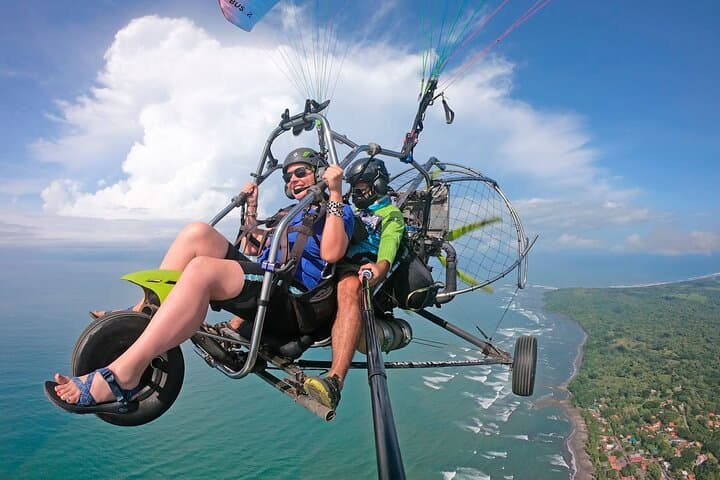
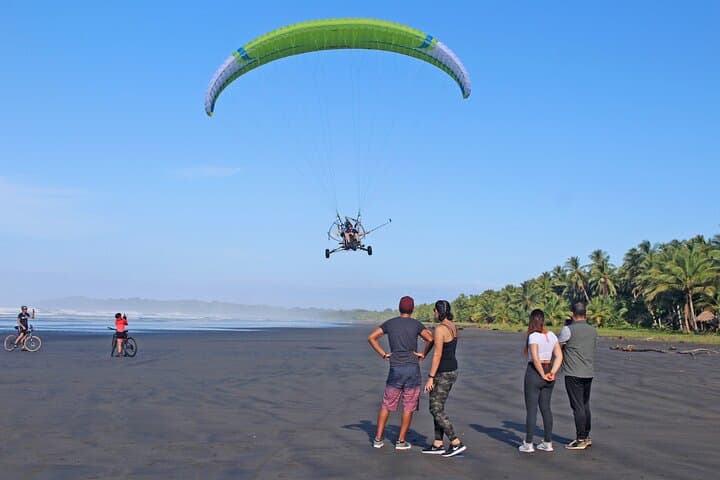
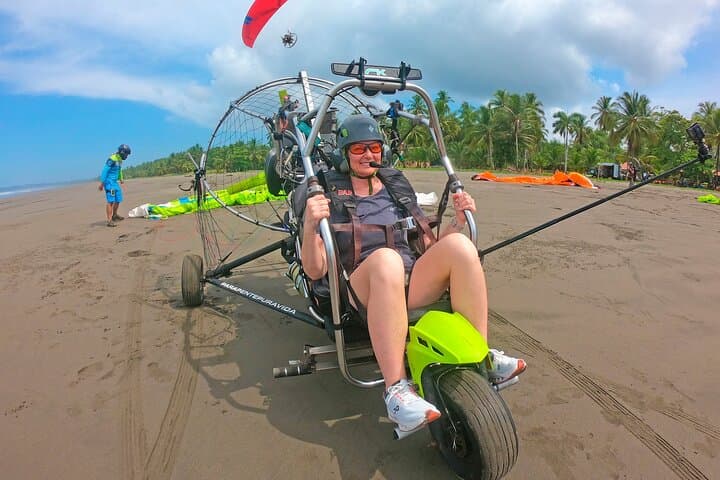
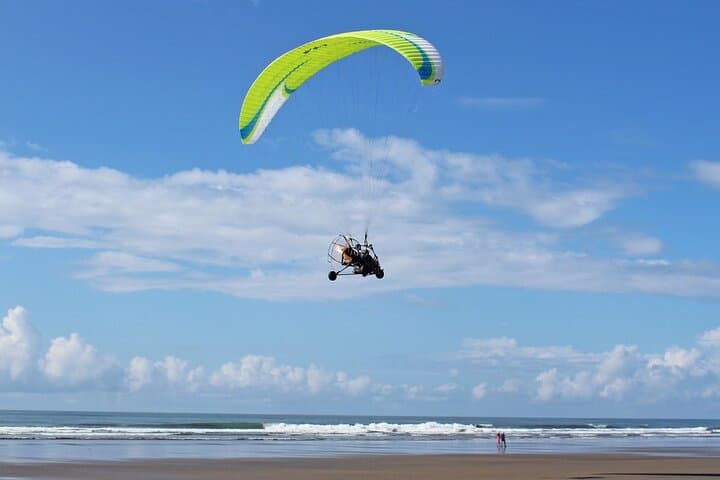
You stand on warm black sand at Esterillos East, the ocean throat opening to the horizon. A two-seat paratrike idles behind you; the pilot’s voice is calm, the propeller’s rhythm a steady heartbeat. In one gentle run you’re airborne—breeze against your face, coastline sliding below like a living map. At 3,000 feet the Pacific flattens into a reflective sheet and the green of Cangreja National Park becomes a sculpted spine along the shore.
You stand on warm black sand at Esterillos East, the ocean throat opening to the horizon. A two-seat paratrike idles behind you; the pilot’s voice is calm, the propeller’s rhythm a steady heartbeat. In one gentle run you’re airborne—breeze against your face, coastline sliding below like a living map. At 3,000 feet the Pacific flattens into a reflective sheet and the green of Cangreja National Park becomes a sculpted spine along the shore.
The central Pacific coast here is young geologically: volcanic highs inland drop swiftly to alluvial beaches and coastal ridges. Jaco grew as a fishing-and-surf hub and today supports adventure operators who read thermal seams and coastal winds. Local guides point out macaws in the riverine forests and humpback spouts offshore during December–April migrations, a reminder that this flight is both thrill and wildlife watch.
Practical edge: the advertised 20 minutes is guaranteed flight time, but plan 30–60 minutes for briefing, gear and transport. Operators require a mandatory reconfirmation 12 hours before launch because conditions dictate safety; expect cancellations in onshore storms or strong winds. The experience is accessible—most ages and abilities can fly, but pregnant travelers and those with serious heart conditions should not. Bring sun protection, a light wind layer, and closed-toe shoes for beach launch. For clearer wildlife viewing, fly in the early morning when offshore winds are steadier and marine mammals are more active.
This is a short, high-adrenaline way to read Costa Rica’s coastline from above—equal parts photo op and environmental encounter.