THE ADVENTURE COLLECTIVE® · Independent discovery and booking for outdoor travel

A concentrated five-day circuit from Amman to Petra, Wadi Rum and the Dead Sea. Expect Roman ruins, Nabatean rock-carving, Bedouin campfires, and a buoyant Dead Sea soak—packed into a practical, active itinerary.
A concentrated five-day circuit from Amman to Petra, Wadi Rum and the Dead Sea. Expect Roman ruins, Nabatean rock-carving, Bedouin campfires, and a buoyant Dead Sea soak—packed into a practical, active itinerary.
The tour opens at dawn in Amman, where city hum gives way to olive-scrub hills and the red cliffs of southern Jordan call you forward.
Verified experiences and guided adventures in the surrounding area.
Operated by Axis Destination Management · Amman, Amman Governorate
The tour opens at dawn in Amman, where city hum gives way to olive-scrub hills and the red cliffs of southern Jordan call you forward.
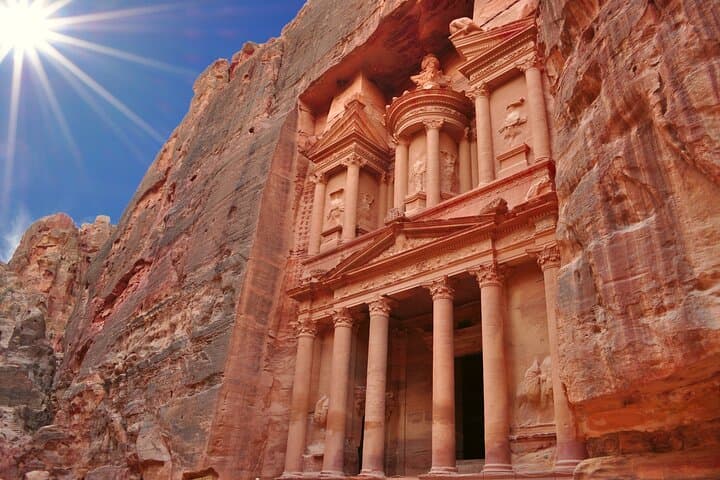
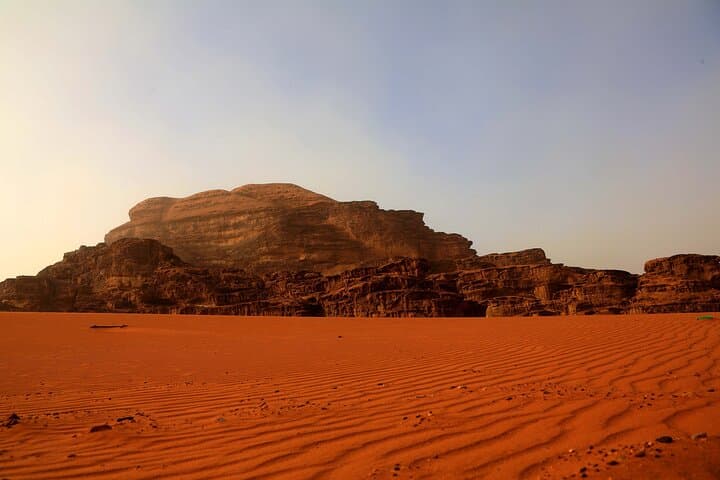
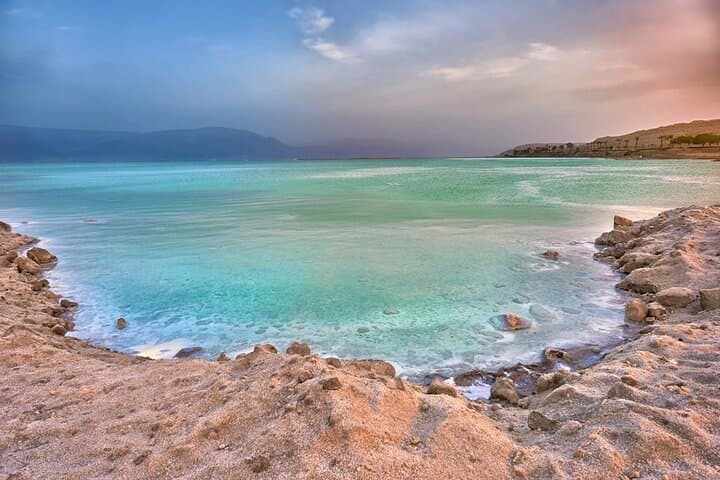
By day two you are walking Roman colonnades in Jerash, feeling the weight and workmanship of an empire underfoot. Mount Nebo crouches on a limestone ridge and offers a panoramic frame of biblical landscape; in Wadi Rum the wind writes lines across sandstone that dare you to slow down and look. Petra’s Siq narrows, then the Treasury peeks through—a sudden, raw encounter with Nabatean engineering carved from the mountain itself. The Dead Sea waits last, its salty surface obligingly buoyant.
This route threads history and geology: Bronze Age settlements, Roman urbanism in Jerash, and Nabatean stone-cutting techniques shaped by tectonic uplift and erosion. Local culture surfaces in Madaba’s Byzantine mosaics and Bedouin campfires where zarb (underground roast) is a communal ritual.
Practical guidance: expect uneven ground at Petra and in Wadi Rum camps—sturdy shoes are non-negotiable. Temperatures swing; mornings and nights can be cool even after hot days, so layer. Start Petra early to avoid crowds and heat; bring at least 2–3 liters of water per day and sun protection. If you have mobility needs, note that parts of Petra beyond the Treasury are rocky and steep; the operator provides accessible transport only to certain points.
This five-day loop is compact but active: cultural immersion, desert camping, and saline relaxation, balanced so travelers leave with a clear sense of place and the practical know-how to enjoy it.
moderate.
5 days.
Suitable for travelers in average fitness—able to walk several hours over uneven terrain and manage short hikes and stairs.
Visa requirements depend on nationality—many can obtain a visa on arrival, but check current rules before travel and carry your passport details.
Some sites like the Roman theatre and city centers are accessible, but Petra beyond the Treasury and many Wadi Rum sections involve uneven ground; contact the operator for specific accessibility arrangements.
Expect multiple short-to-moderate walks daily—2–6 hours of walking at Petra and shorter strolls at Jerash, Madaba, and Dead Sea areas.
The Jordanian dinar (JOD) is used; have small bills for guides, drivers, and local services—tipping is customary for good service.
Jordan’s route links Bronze Age sites, Roman urban centers like Jerash, and the Nabatean city of Petra—each representing layers of trade and cultural exchange across millennia.
High visitation strains Petra and Wadi Rum; visitors should stick to marked paths, avoid removing stones or artifacts, and minimize single-use plastics to protect fragile desert ecosystems.
Axis Destination Management operates guided outdoor trips and adventures with an emphasis on safety, stewardship, and memorable experiences.
The tour opens at dawn in Amman, where city hum gives way to olive-scrub hills and the red cliffs of southern Jordan call you forward.
The tour opens at dawn in Amman, where city hum gives way to olive-scrub hills and the red cliffs of southern Jordan call you forward.
By day two you are walking Roman colonnades in Jerash, feeling the weight and workmanship of an empire underfoot. Mount Nebo crouches on a limestone ridge and offers a panoramic frame of biblical landscape; in Wadi Rum the wind writes lines across sandstone that dare you to slow down and look. Petra’s Siq narrows, then the Treasury peeks through—a sudden, raw encounter with Nabatean engineering carved from the mountain itself. The Dead Sea waits last, its salty surface obligingly buoyant.
This route threads history and geology: Bronze Age settlements, Roman urbanism in Jerash, and Nabatean stone-cutting techniques shaped by tectonic uplift and erosion. Local culture surfaces in Madaba’s Byzantine mosaics and Bedouin campfires where zarb (underground roast) is a communal ritual.
Practical guidance: expect uneven ground at Petra and in Wadi Rum camps—sturdy shoes are non-negotiable. Temperatures swing; mornings and nights can be cool even after hot days, so layer. Start Petra early to avoid crowds and heat; bring at least 2–3 liters of water per day and sun protection. If you have mobility needs, note that parts of Petra beyond the Treasury are rocky and steep; the operator provides accessible transport only to certain points.
This five-day loop is compact but active: cultural immersion, desert camping, and saline relaxation, balanced so travelers leave with a clear sense of place and the practical know-how to enjoy it.