THE ADVENTURE COLLECTIVE® · Independent discovery and booking for outdoor travel

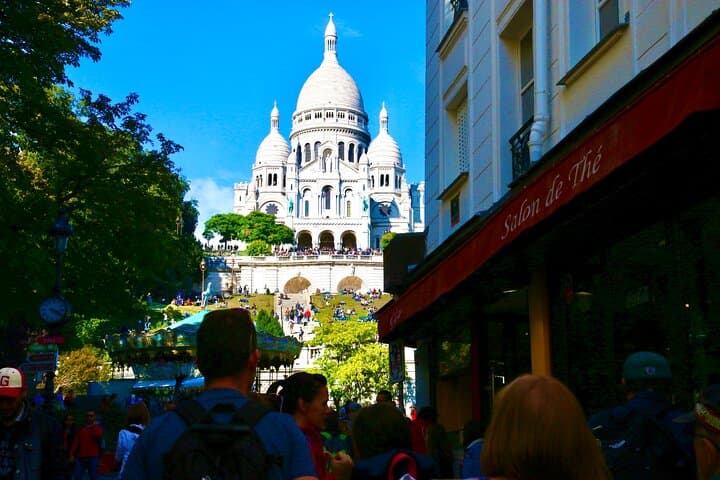
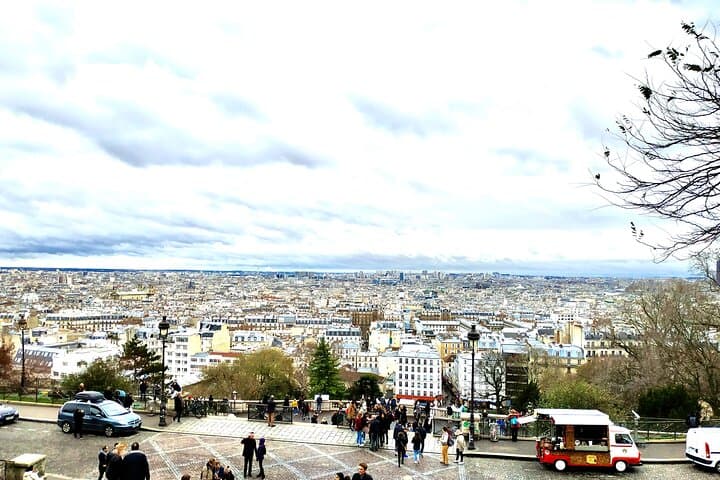
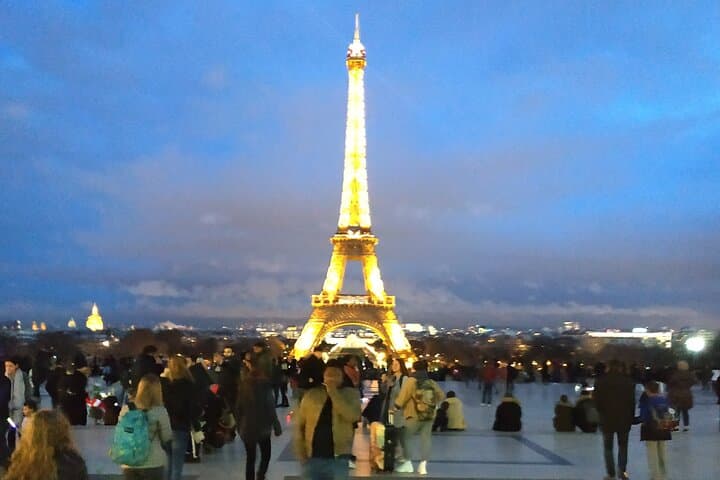
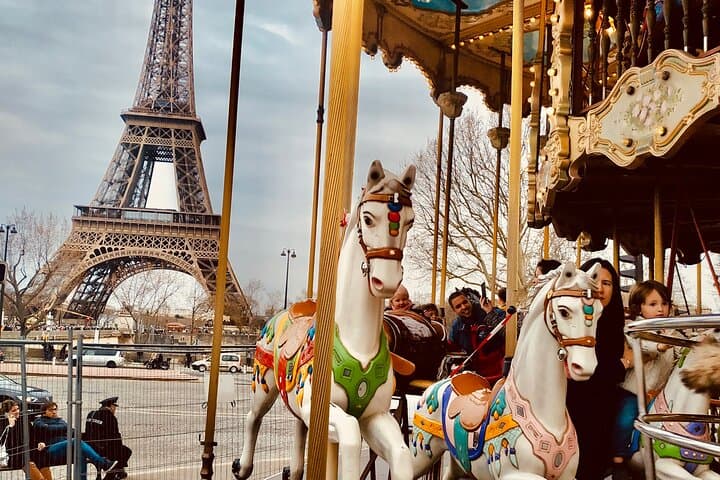
Walk Paris’s major sights in a single guided sweep: Montmartre’s artist alleys, churchyard views at Sacré‑Cœur, the Eiffel Tower from the Trocadéro and the Louvre’s exterior. Expect steady walking, rich local stories and practical route tips from a licensed guide.
Walk Paris’s major sights in a single guided sweep: Montmartre’s artist alleys, churchyard views at Sacré‑Cœur, the Eiffel Tower from the Trocadéro and the Louvre’s exterior. Expect steady walking, rich local stories and practical route tips from a licensed guide.
A brisk morning on Boulevard Marguerite de Rochechouart finds the group gathering outside Anvers metro, breath visible if it's cool, coffee cups steaming, and a licensed guide sketching a route across centuries of city life. The tour threads uphill into Montmartre where flagstones tilt beneath feet and artists’ studios recall Van Gogh and Picasso, then arcs down through Haussmann avenues to the iron lattice of the Eiffel Tower and the stone facades of the Louvre.
Verified experiences and guided adventures in the surrounding area.
Operated by Top Sights Tours · Paris, Île-de-France
A brisk morning on Boulevard Marguerite de Rochechouart finds the group gathering outside Anvers metro, breath visible if it's cool, coffee cups steaming, and a licensed guide sketching a route across centuries of city life. The tour threads uphill into Montmartre where flagstones tilt beneath feet and artists’ studios recall Van Gogh and Picasso, then arcs down through Haussmann avenues to the iron lattice of the Eiffel Tower and the stone facades of the Louvre.
Paris sits on an alluvial plain carved by the Seine; its bridges, squares and stairways trace medieval lanes and imperial ambitions. Montmartre began as a rural village and became an artists’ quarter in the 19th century; the Eiffel Tower, erected for the 1889 Exposition, turned engineering into a civic landmark. The Latin Quarter still hums with student energy and market stalls selling patisseries and cheese.
Expect 4–5 hours walking on mostly paved streets with short inclines (notably up to Sacré‑Cœur), repeated stops for stories and photos, occasional metro hops, and photo viewpoints rather than included monument admissions. Guides balance big-picture history with small local details: the covered passages, the oldest bridges, and where to find a cheap, excellent baguette.
Practical tips: wear broken‑in walking shoes, bring water, and schedule this early in your stay to orient yourself. The route is ideal in clear weather; light rain calls for a waterproof layer and flexible timing. The tour is a compact primer on Paris — social, sensory, and decidedly walkable.
easy.
4–5 hours.
Suitable for most people who can walk steadily for several hours and manage short stair climbs and cobblestone slopes.
Meet outside the information kiosk in front of Anvers metro (72 Boulevard Marguerite de Rochechouart); the tour ends near the entrance to the Louvre.
No — this walking tour provides exterior views and historical commentary; plan separate museum tickets for interior visits.
The tour is listed as physically easy and generally family‑friendly, but it’s not recommended for pregnant travelers due to the prolonged walking.
Yes — the itinerary includes metro segments; bring a valid ticket or pass and ask the guide if you need help navigating.
Montmartre transformed from a rural village into an artists’ quarter in the 19th century; the Eiffel Tower and Arc de Triomphe date from late 19th to early 19th‑century national projects.
Stick to sidewalks and marked areas, avoid feeding birds or leaving litter, and support small local cafés and artisan sellers to keep neighborhood economies healthy.
Top Sights Tours operates guided outdoor trips and adventures with an emphasis on safety, stewardship, and memorable experiences.
A brisk morning on Boulevard Marguerite de Rochechouart finds the group gathering outside Anvers metro, breath visible if it's cool, coffee cups steaming, and a licensed guide sketching a route across centuries of city life. The tour threads uphill into Montmartre where flagstones tilt beneath feet and artists’ studios recall Van Gogh and Picasso, then arcs down through Haussmann avenues to the iron lattice of the Eiffel Tower and the stone facades of the Louvre.
A brisk morning on Boulevard Marguerite de Rochechouart finds the group gathering outside Anvers metro, breath visible if it's cool, coffee cups steaming, and a licensed guide sketching a route across centuries of city life. The tour threads uphill into Montmartre where flagstones tilt beneath feet and artists’ studios recall Van Gogh and Picasso, then arcs down through Haussmann avenues to the iron lattice of the Eiffel Tower and the stone facades of the Louvre.
Paris sits on an alluvial plain carved by the Seine; its bridges, squares and stairways trace medieval lanes and imperial ambitions. Montmartre began as a rural village and became an artists’ quarter in the 19th century; the Eiffel Tower, erected for the 1889 Exposition, turned engineering into a civic landmark. The Latin Quarter still hums with student energy and market stalls selling patisseries and cheese.
Expect 4–5 hours walking on mostly paved streets with short inclines (notably up to Sacré‑Cœur), repeated stops for stories and photos, occasional metro hops, and photo viewpoints rather than included monument admissions. Guides balance big-picture history with small local details: the covered passages, the oldest bridges, and where to find a cheap, excellent baguette.
Practical tips: wear broken‑in walking shoes, bring water, and schedule this early in your stay to orient yourself. The route is ideal in clear weather; light rain calls for a waterproof layer and flexible timing. The tour is a compact primer on Paris — social, sensory, and decidedly walkable.