THE ADVENTURE COLLECTIVE® · Independent discovery and booking for outdoor travel

Leave Marrakech for a wind-carved Atlantic day: three hours of scenic driving, an argan-cooperative stop, and a relaxed afternoon wandering Essaouira’s harbor, Portuguese ramparts and lively Medina. This paced tour balances cultural insight with coastal time to explore.
Leave Marrakech for a wind-carved Atlantic day: three hours of scenic driving, an argan-cooperative stop, and a relaxed afternoon wandering Essaouira’s harbor, Portuguese ramparts and lively Medina. This paced tour balances cultural insight with coastal time to explore.
A salt-sipped wind meets the road as the minibus leaves Marrakech at first light, steering west toward the Atlantic. By the time the Atlas foothills fall away, the air tastes of brine and thyme; the city of blue-and-white houses appears like a low line on the horizon. Essaouira’s harbor cranes and weathered fortifications frame a working port where fishing skiffs and gulls jostle for space.
Verified experiences and guided adventures in the surrounding area.
Operated by Zwin Travel - Excursion Quad, Buggy & Camp Agafay Marrakech · Essaouira, Marrakech-Safi
A salt-sipped wind meets the road as the minibus leaves Marrakech at first light, steering west toward the Atlantic. By the time the Atlas foothills fall away, the air tastes of brine and thyme; the city of blue-and-white houses appears like a low line on the horizon. Essaouira’s harbor cranes and weathered fortifications frame a working port where fishing skiffs and gulls jostle for space.
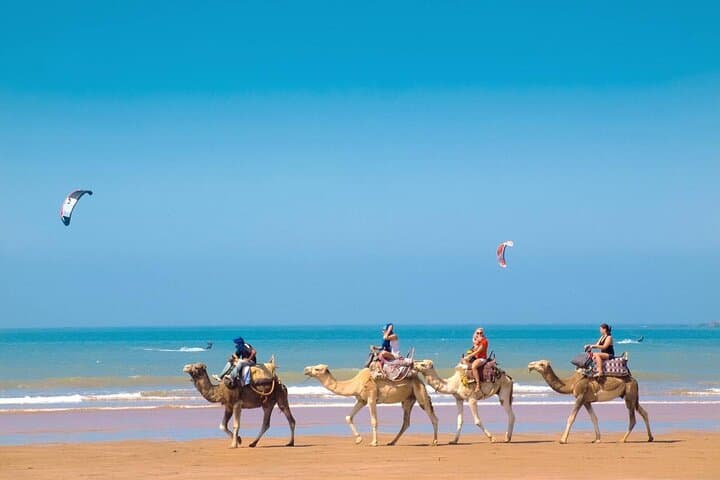
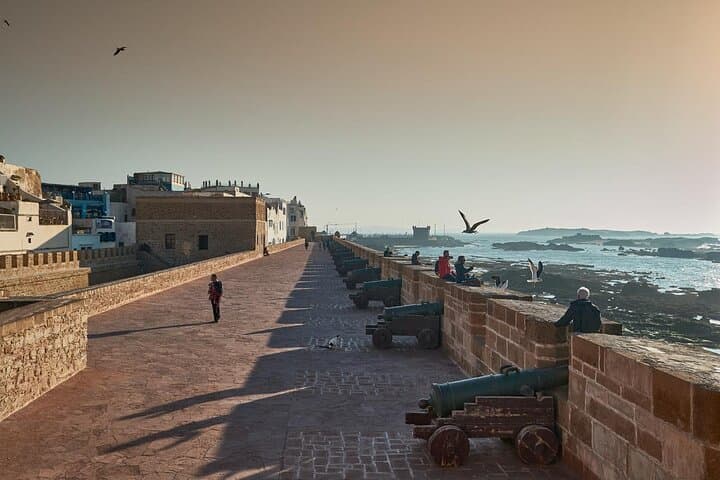
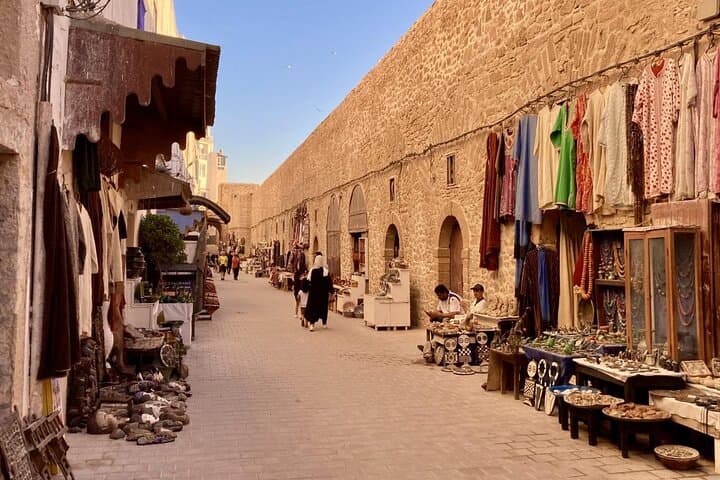
History here is visible in stone: 16th-century Portuguese ramparts and cannons guard the quays, while the Medina’s grid of narrow streets reflects centuries of trade between Europe, Africa and the Sub-Saharan caravan routes. Geologically, the coastline is a strip of wind-sculpted sand and low limestone outcrops; winds that make Essaouira a kitesurfing magnet have shaped both dunes and the city’s coastal culture. Local life pivots on the sea and argan-covered hills—the latter giving rise to women’s cooperatives that press argan oil and offer an intimate look at rural craft.
Practically, expect a full day: a roughly three-hour drive each way with scheduled comfort stops, a visit to an argan cooperative, and several hours to explore the Medina, harbor and seawalls. Bring layered clothing for the wind, sturdy shoes for cobbled streets, sun protection, and cash for small vendors and seafood lunches. Tours typically include bottled water and hotel pickup, but confirm drop-off details and dietary needs when booking.
Timing your visit for morning light on the ramparts rewards clearer photos; afternoons are breezier and excellent for watching surf and local life unfold.
easy.
11–12 hours.
Suitable for travelers in average fitness; mostly low exertion but includes walking on uneven cobbles and stairs.
Expect approximately three hours each way depending on traffic and the timing of stops en route.
The tour generally includes bottled water and pick-up/drop-off; lunch is typically not included so plan to budget for a seafood meal in Essaouira.
Yes—the itinerary is low exertion with vehicle transport and short walks, but consider the long travel time when planning for young children or mobility concerns.
Yes—most itineraries include a stop at a women’s argan cooperative and a short viewpoint where goats can be seen in argan trees along the roadside.
Essaouira (formerly Mogador) developed as a fortified Atlantic port in the 16th century with Portuguese-built ramparts and later became a hub for trade between Morocco and Europe.
Argan forests are ecologically important and under pressure; visiting cooperatives that pay fair prices supports local livelihoods and sustainable harvesting. Avoid single-use plastics and respect local wildlife habitats.
Zwin Travel - Excursion Quad, Buggy & Camp Agafay Marrakech operates guided outdoor trips and adventures with an emphasis on safety, stewardship, and memorable experiences.
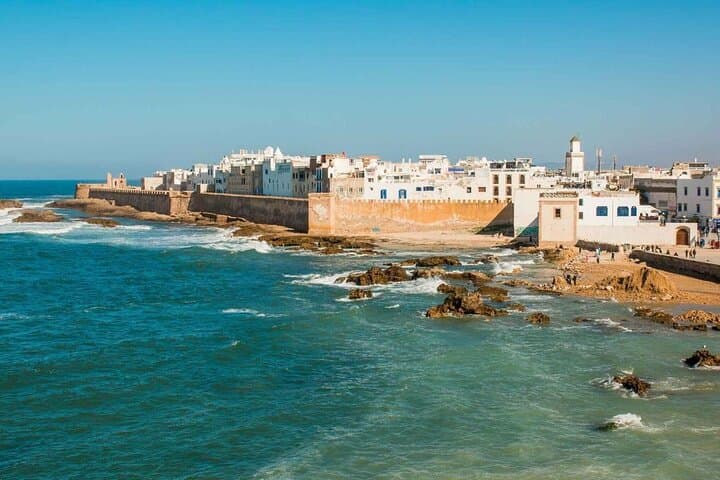
A salt-sipped wind meets the road as the minibus leaves Marrakech at first light, steering west toward the Atlantic. By the time the Atlas foothills fall away, the air tastes of brine and thyme; the city of blue-and-white houses appears like a low line on the horizon. Essaouira’s harbor cranes and weathered fortifications frame a working port where fishing skiffs and gulls jostle for space.
A salt-sipped wind meets the road as the minibus leaves Marrakech at first light, steering west toward the Atlantic. By the time the Atlas foothills fall away, the air tastes of brine and thyme; the city of blue-and-white houses appears like a low line on the horizon. Essaouira’s harbor cranes and weathered fortifications frame a working port where fishing skiffs and gulls jostle for space.
History here is visible in stone: 16th-century Portuguese ramparts and cannons guard the quays, while the Medina’s grid of narrow streets reflects centuries of trade between Europe, Africa and the Sub-Saharan caravan routes. Geologically, the coastline is a strip of wind-sculpted sand and low limestone outcrops; winds that make Essaouira a kitesurfing magnet have shaped both dunes and the city’s coastal culture. Local life pivots on the sea and argan-covered hills—the latter giving rise to women’s cooperatives that press argan oil and offer an intimate look at rural craft.
Practically, expect a full day: a roughly three-hour drive each way with scheduled comfort stops, a visit to an argan cooperative, and several hours to explore the Medina, harbor and seawalls. Bring layered clothing for the wind, sturdy shoes for cobbled streets, sun protection, and cash for small vendors and seafood lunches. Tours typically include bottled water and hotel pickup, but confirm drop-off details and dietary needs when booking.
Timing your visit for morning light on the ramparts rewards clearer photos; afternoons are breezier and excellent for watching surf and local life unfold.