THE ADVENTURE COLLECTIVE® · Independent discovery and booking for outdoor travel

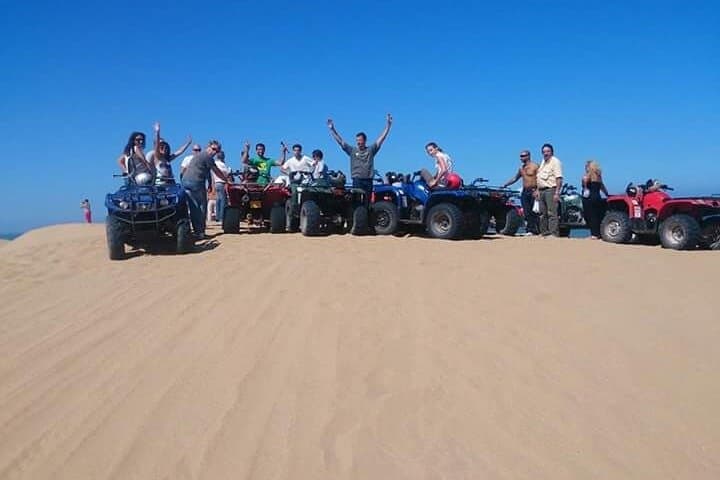
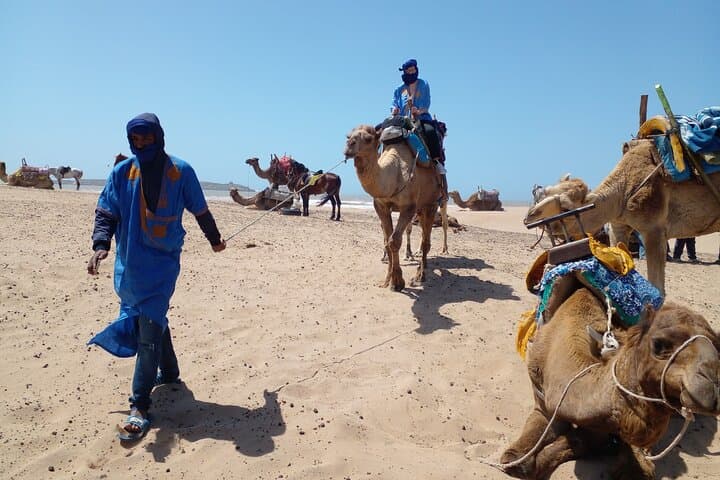
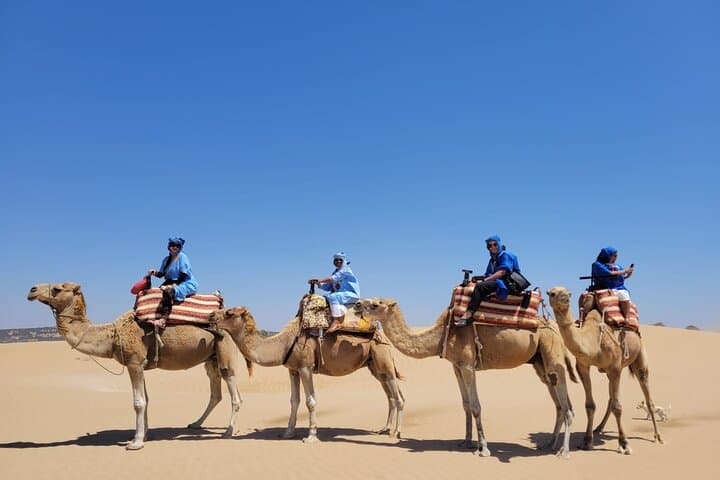
Combine a one-hour quad ride with a one-hour dromadery along Essaouira’s beaches and dunes. This compact two-hour experience pairs adrenaline with a slower-paced camel trek, ideal for travelers wanting a quick, hands-on coastal adventure.
Combine a one-hour quad ride with a one-hour dromadery along Essaouira’s beaches and dunes. This compact two-hour experience pairs adrenaline with a slower-paced camel trek, ideal for travelers wanting a quick, hands-on coastal adventure.
Sand scours the air and the Atlantic wind pushes you toward the shoreline—Essaouira greets riders with a flat horizon broken by dunes and the low rooftop line of a fishing town. The two-hour combo starts with the mechanical nudge of a quad under your hands, tires carving loose sand, then softens as you trade the throttle for the patient step of a dromadery along the water’s edge.
Verified experiences and guided adventures in the surrounding area.
Operated by Diana Dromadaires · Essaouira, Marrakech-Safi
Sand scours the air and the Atlantic wind pushes you toward the shoreline—Essaouira greets riders with a flat horizon broken by dunes and the low rooftop line of a fishing town. The two-hour combo starts with the mechanical nudge of a quad under your hands, tires carving loose sand, then softens as you trade the throttle for the patient step of a dromadery along the water’s edge.
The coast here carries layered history: fortified Portuguese ramparts, Berber villages, and the ghost of Diabat where Jimi Hendrix once stayed. Geologically, the landscape is coastal sand built by wave and wind—dunes shift daily and the beach acts as a moving margin between sea and land. Culturally, riders pass argan groves and small fishing communities where local guides speak Arabic, French, and English.
Practical guidance: the experience is short and accessible—two one-hour sections—with helmets and jackets provided. Terrain is sandy beach, compact tracks, and low dunes; expect minimal elevation change but variable traction. Plan for strong crosswinds in afternoon hours; mornings often offer lighter gusts and cleaner light for photos. Bring closed-toe shoes, sun protection, and a small water bottle; operators supply safety briefing and basic instruction for first-time quad riders.
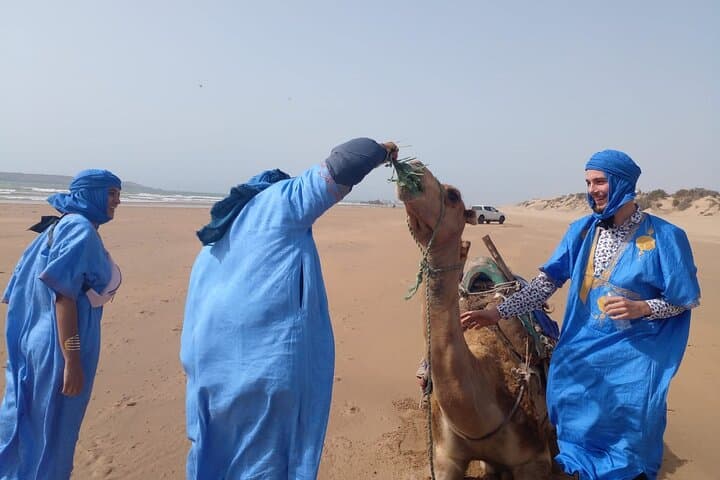
Respect animals and local paths—dromadaries need steady commands and calm riders. The route loops near Plage Tagharte and Ord Omar dunes, returning to town in about two hours total. For travellers wanting a compact, tactile encounter with Essaouira’s coastal wildlands, this pairing delivers contrast: the rush of machine and the slow rhythm of a camel, each revealing a facet of Morocco’s Atlantic edge.
moderate.
2 hours.
Basic mobility and balance required; good for people comfortable mounting animals and handling short ATV rides.
No—operators provide a safety briefing and basic instruction; quads are suitable for first-timers and camel handlers guide riders through mounting and commands.
The tour is a two-hour loop involving short stretches on dunes and beach; it’s not strenuous but requires balance and the ability to mount animals and handle a quad for an hour.
Guides commonly speak Arabic, French, and English; check booking details for language-specific requests.
Yes—helmets and jackets (and often a shawl) are provided as part of the equipment inclusions.
Essaouira has a fortified 18th-century medina influenced by Portuguese and Moroccan rulers; nearby Diabat is linked in local lore to 1960s musicians who visited the area.
Dune ecosystems are fragile—stick to designated tracks to avoid destabilizing sand and respect local grazing and argan trees; support guides who practice low-impact riding.
Diana Dromadaires operates guided outdoor trips and adventures with an emphasis on safety, stewardship, and memorable experiences.
Sand scours the air and the Atlantic wind pushes you toward the shoreline—Essaouira greets riders with a flat horizon broken by dunes and the low rooftop line of a fishing town. The two-hour combo starts with the mechanical nudge of a quad under your hands, tires carving loose sand, then softens as you trade the throttle for the patient step of a dromadery along the water’s edge.
Sand scours the air and the Atlantic wind pushes you toward the shoreline—Essaouira greets riders with a flat horizon broken by dunes and the low rooftop line of a fishing town. The two-hour combo starts with the mechanical nudge of a quad under your hands, tires carving loose sand, then softens as you trade the throttle for the patient step of a dromadery along the water’s edge.
The coast here carries layered history: fortified Portuguese ramparts, Berber villages, and the ghost of Diabat where Jimi Hendrix once stayed. Geologically, the landscape is coastal sand built by wave and wind—dunes shift daily and the beach acts as a moving margin between sea and land. Culturally, riders pass argan groves and small fishing communities where local guides speak Arabic, French, and English.
Practical guidance: the experience is short and accessible—two one-hour sections—with helmets and jackets provided. Terrain is sandy beach, compact tracks, and low dunes; expect minimal elevation change but variable traction. Plan for strong crosswinds in afternoon hours; mornings often offer lighter gusts and cleaner light for photos. Bring closed-toe shoes, sun protection, and a small water bottle; operators supply safety briefing and basic instruction for first-time quad riders.
Respect animals and local paths—dromadaries need steady commands and calm riders. The route loops near Plage Tagharte and Ord Omar dunes, returning to town in about two hours total. For travellers wanting a compact, tactile encounter with Essaouira’s coastal wildlands, this pairing delivers contrast: the rush of machine and the slow rhythm of a camel, each revealing a facet of Morocco’s Atlantic edge.